
Analyzing Intel Core M Performance: How 5Y10 can beat 5Y71 & the OEMs' Dilemma
TouchXPRT 2014 Results
TouchXPRT performs several tasks, and the workloads very much fall into the race to sleep category. There are several workloads, from adding filters to photos, to creating podcasts. The benchmark takes about ten minutes to complete, but each workload is slightly different.
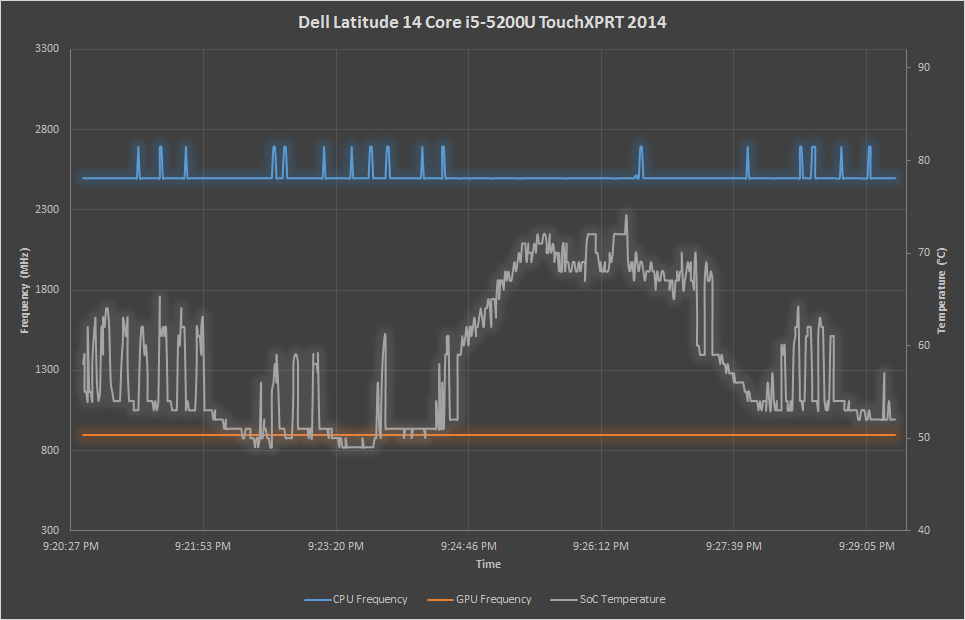
Looking at the Core i5 graph makes it very obvious where the heaviest lifting is in this benchmark, but even that one is full of bursts of work. The Dell Venue tablet is able to hit a very high frequency for many of these tasks, since it has adequate time to cool off in between. The ASUS is as consistent as always, and the Yoga 3 Pro can really stretch its legs on this benchmark.
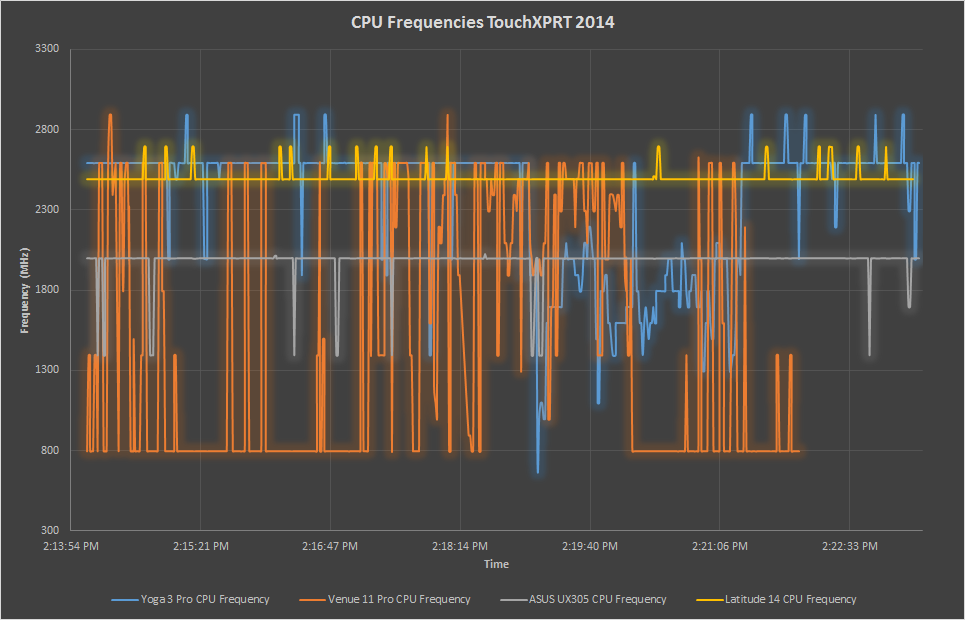
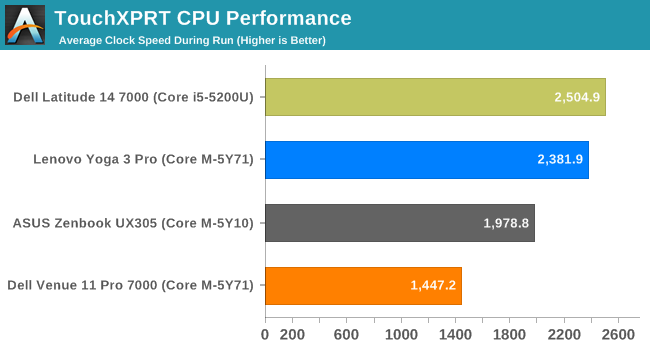
Looking at the average CPU frequency, the Yoga 3 Pro beats out the other Core M devices by a lot, and even turbo higher than the Core i5 on many occasions. If the work is short, the higher burst frequency of the 5Y71 can make a big difference. This would be very similar to web browsing, where short bursts of work get the job done. The Dell has the lowest average CPU frequency again, but as we have seen in previous results the fact that it can hit a much higher frequency than the ASUS can help it regain ground, especially on a short workload such as this one.
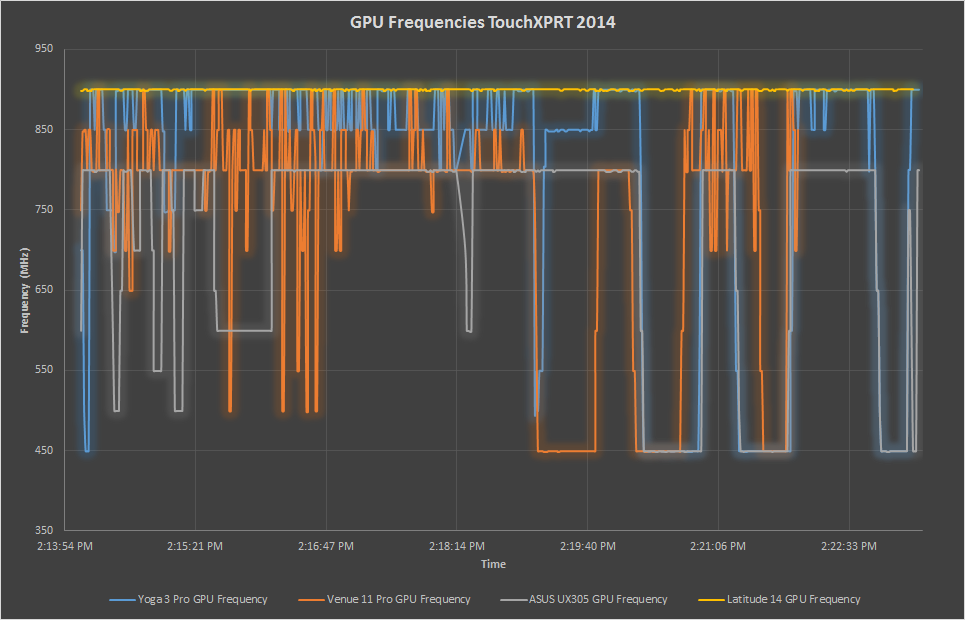
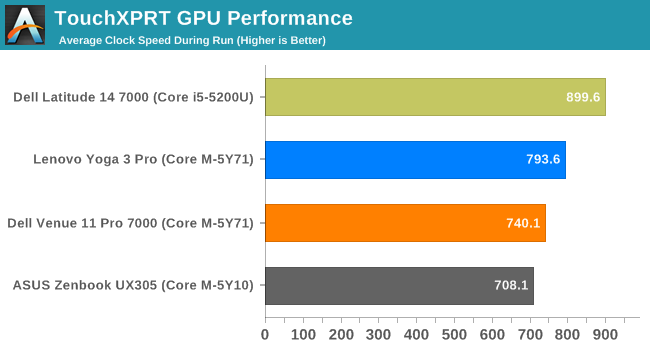
The GPU average frequencies show the disadvantage of the 5Y10. It is quite a bit under the 800 MHz turbo frequency of the chip, and it cannot turbo to the 900 MHz of the other two chips when it does have thermal headroom to make up the difference. The other two devices can be seen to jump all the way up to the 900 MHz maximum many times.
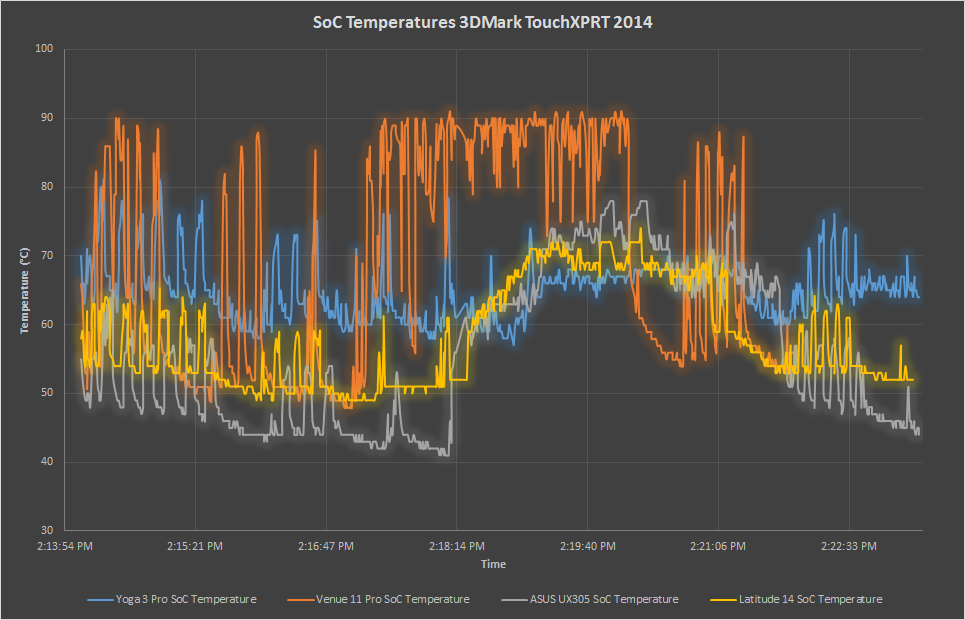
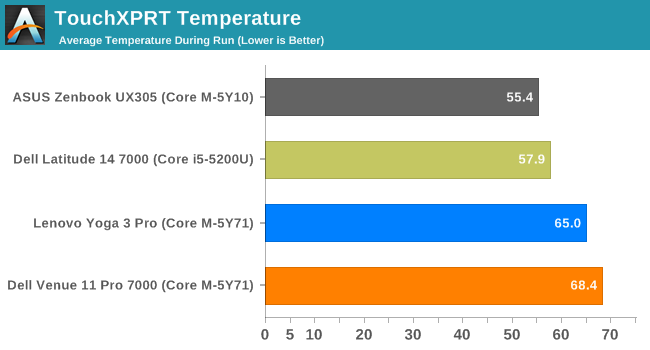
Temperatures are low, and the ASUS is the lowest again. The Yoga 3 Pro is sitting right at the 65°C target temperature, which means it was not always able to keep within that target during these quick bursts of energy needed.
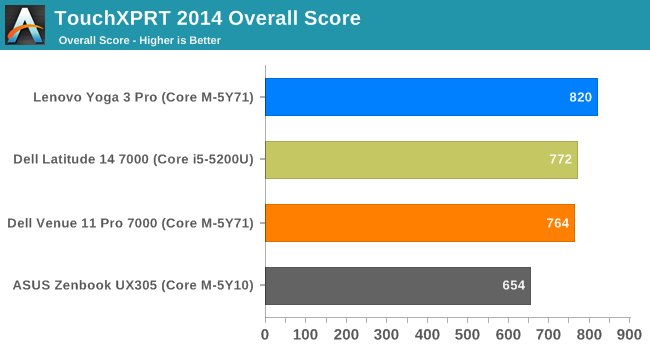
TouchXPRT is almost a perfect workload for 5Y71, and the Yoga 3 Pro outperforms even the Core i5-5200U in this test. The Venue 11 Pro also comes in right at the score of the Core i5. The ASUS UX305 is certainly hampered by its lack of turbo compared to the other devices in this test. It had the lowest average temperature, and it could not do anything with it.
Originally published at https://www.anandtech.com/show/9117/analyzing-intel-core-m-performance (Wayback Machine).