
Analyzing Intel Core M Performance: How 5Y10 can beat 5Y71 & the OEMs' Dilemma
PCMark 8 Creative Results
The Creative suite for PCMark changes the workloads out a bit, and is overall a much longer benchmark. Creative includes web browsing, photo editing, video editing, group video chat, media transcoding, and gaming workloads, so like the previous test the higher resolution of the Yoga 3 Pro will bring its scores down compared to the 1080p of all of the other devices. Like PCMark 8 Home, the work features high demand followed by low demand.
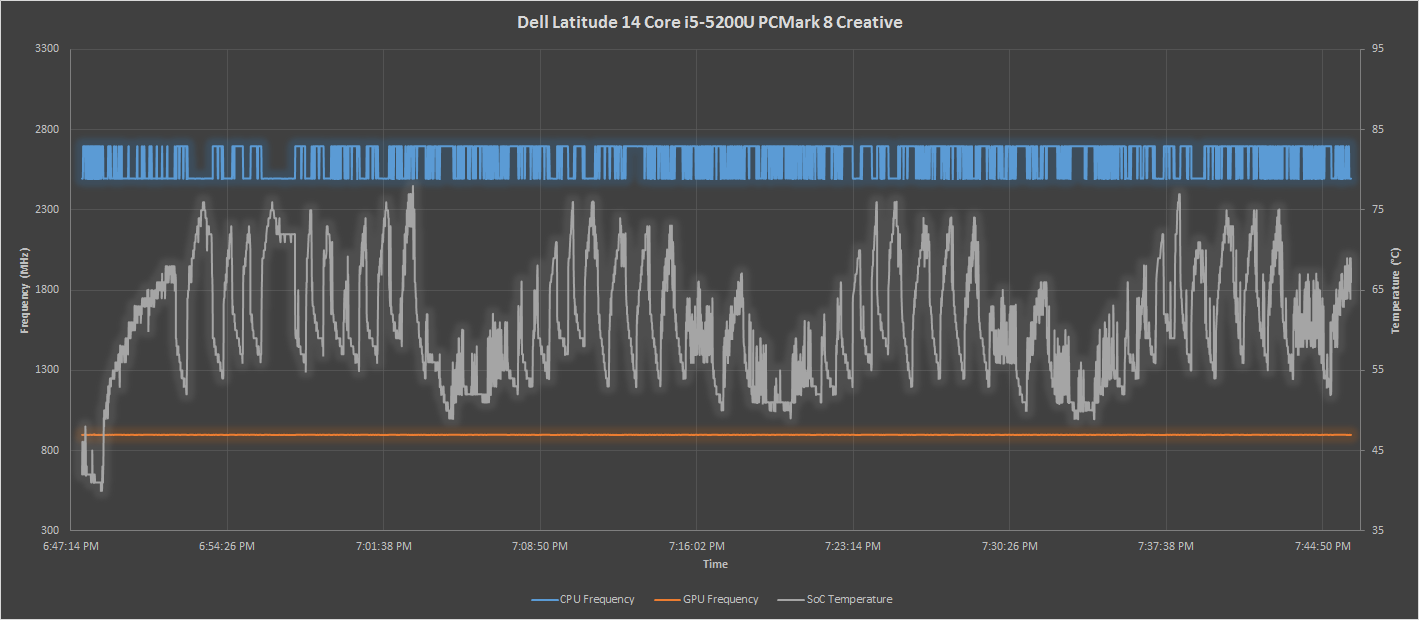
The Core i5 performs much the same as during the Home benchmark. Clearly the cooling system which is designed to get rid of 15 watts of heat can pretty easily cope with these types of workloads, and it even allows the CPU to turbo quite often to the CPU’s maximum speed of 2.7 GHz. GPU workloads are also no issue for the cooling system. None of the 4.5 watt TDP devices fare so well though, and as with the Home benchmark we see the Yoga 3 Pro having quite good CPU and GPU frequencies. The Dell is limited quite a bit more on temperature, and the ASUS is limited by its lack of maximum turbo frequency.
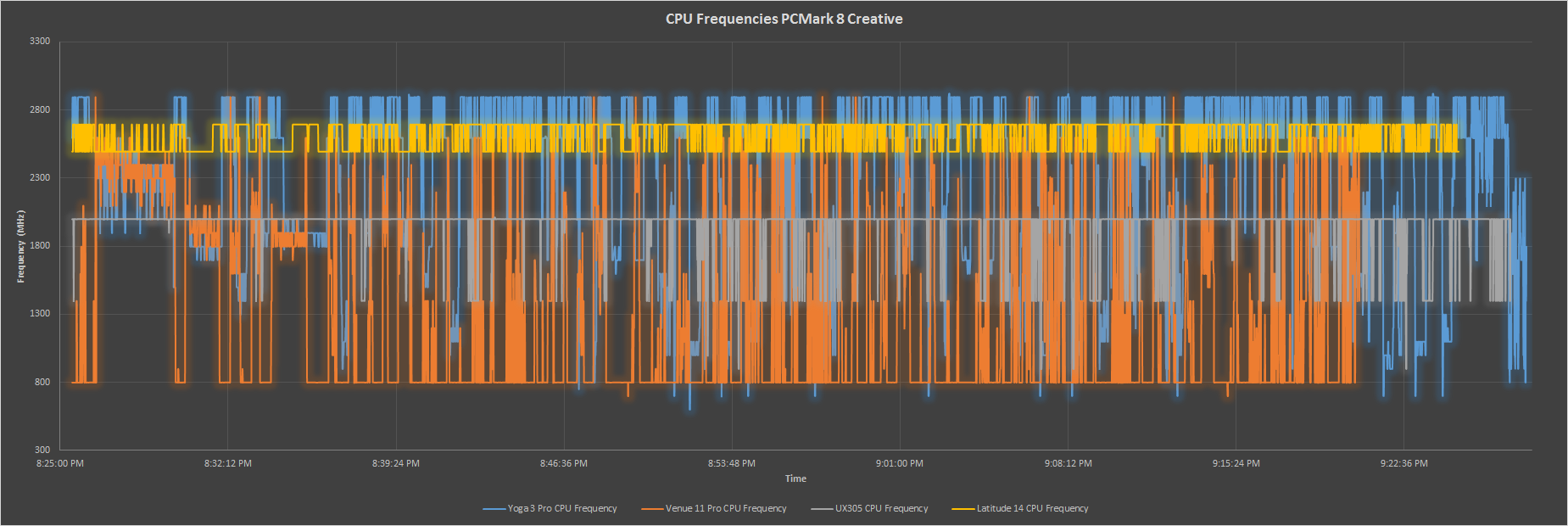
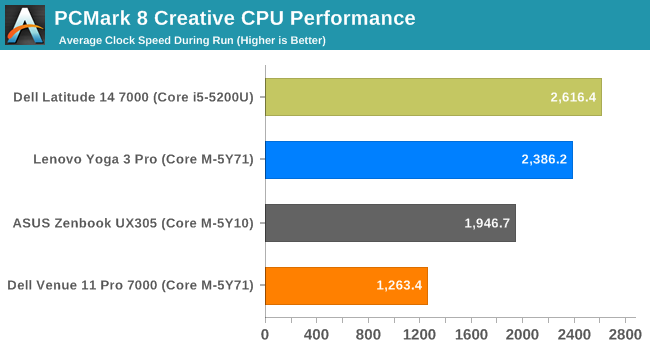
Looking at the average CPU frequency tells a big story of thermal limitations on the Dell Venue 11 Pro. With an average that is barely over its base of 1.2 GHz, the device spends a significant amount of time below its base frequency. The UX305 keeps its consistency high, with it almost reaching its maximum turbo clock, while the Yoga 3 Pro ends up quite a bit faster.
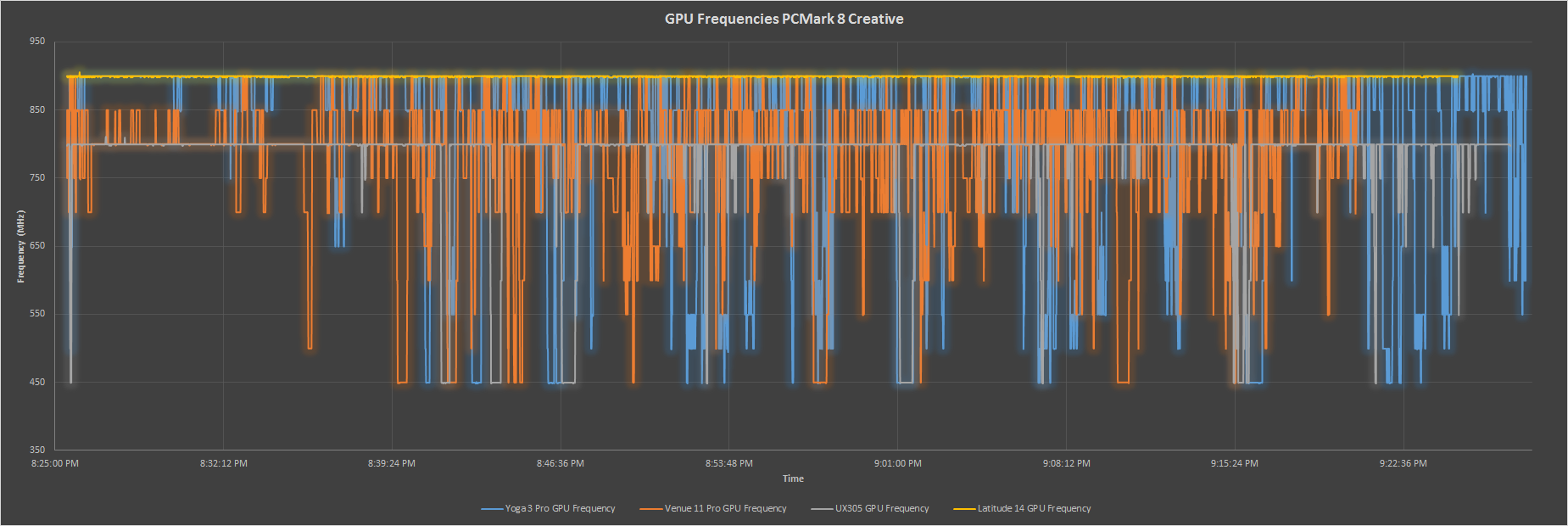
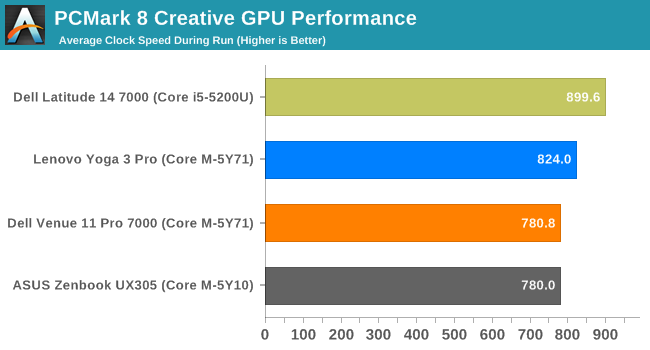
The GPU story has the ASUS bumping into its maximum GPU speed of 800 MHz, keeping pace with the Dell Venue 11 Pro which can go as high as 900 MHz. The Yoga 3 Pro is over 800 Mhz, here, showcasing its active cooling solution and meaning it is certainly spending time closer to its 900 MHz GPU turbo.
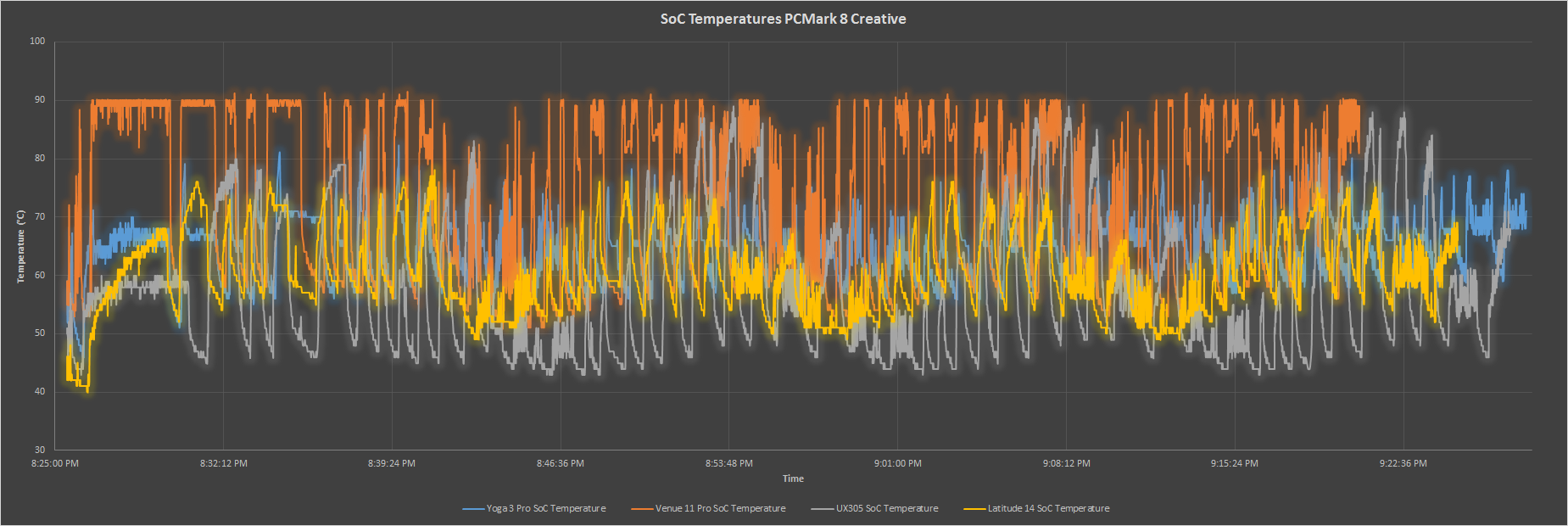
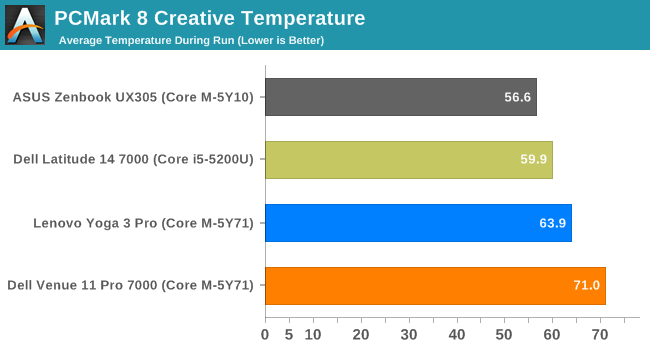
Looking at average temperatures, it is obvious why the ASUS can stay close to its maximum turbo on many workloads. After this one hour benchmark, the CPU average was just over 56°C despite the passive cooling. The active cooled Broadwell-U laptop is a bit higher, and the Yoga 3 Pro kept its average under its 65°C CPU maximum.
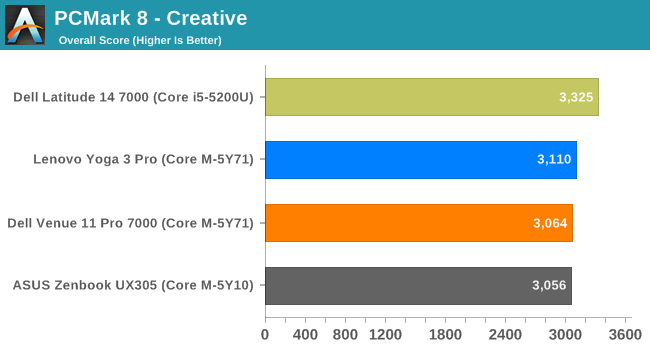
The Lenovo Yoga 3 Pro scores the highest of all three Core M devices in this benchmark despite the higher resolution display. On this type of workload where the actual work is much shorter, it keeps its CPU frequency much higher than all of the other Core M devices. The Venue 11 Pro also outscores the UX305 despite its low average CPU frequency. When needed, it was able to turbo well past the 2 GHz maximum of the 5Y10 device.
Originally published at https://www.anandtech.com/show/9117/analyzing-intel-core-m-performance (Wayback Machine).