
QNAP TS-853 Pro 8-bay Intel Bay Trail SMB NAS Review
Encryption Support Evaluation
Consumers looking for encryption capabilities can opt to encrypt a iSCSI share with TrueCrypt or some in-built encryption mechanism in the client OS. However, if requirements dictate that the data must be shared across multiple users / computers, relying on encryption in the NAS is the best way to move forward. Most NAS vendors use the industry-standard 256-bit AES encryption algorithm. One approach is to encrypt only a particular shared folder while the other approach is to encrypt the full volume. QNAP suports only volume-level encryption.
On the hardware side, encryption support can be in the form of specialized hardware blocks in the SoC (common in ARM / PowerPC based NAS units). In x86-based systems, accelerated encryption support is dependent on whether the AES-NI instruction is available on the host CPU. Bay Trail / Celeron J1900 doesn't have AES-NI capabilities. Therefore, encrypted volume processing in the TS-853 Pro is done purely via multi-threaded software.
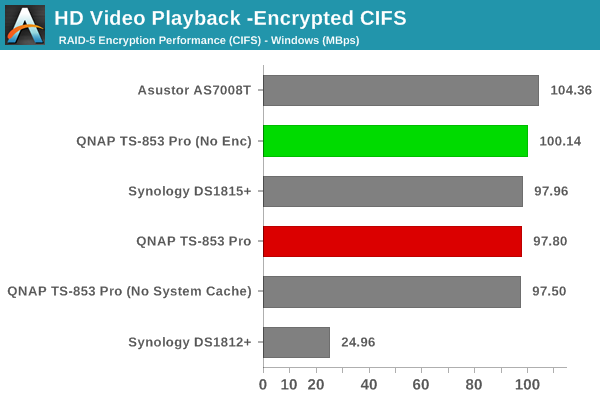
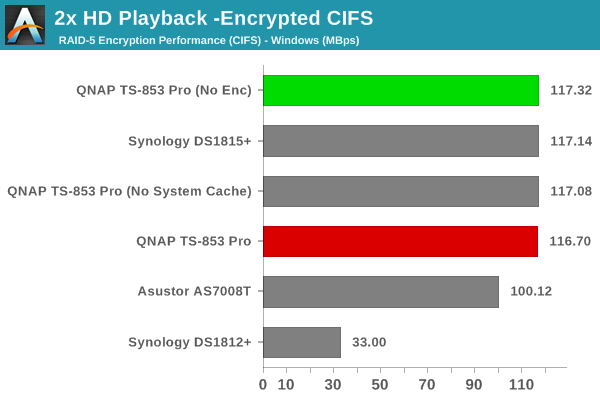
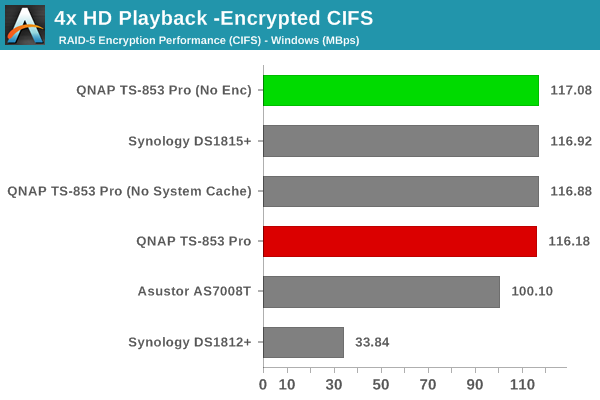
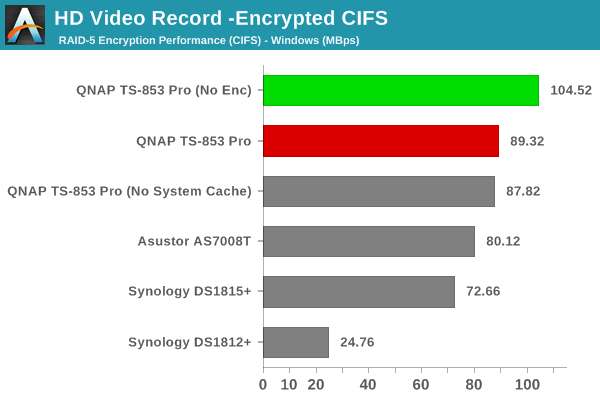
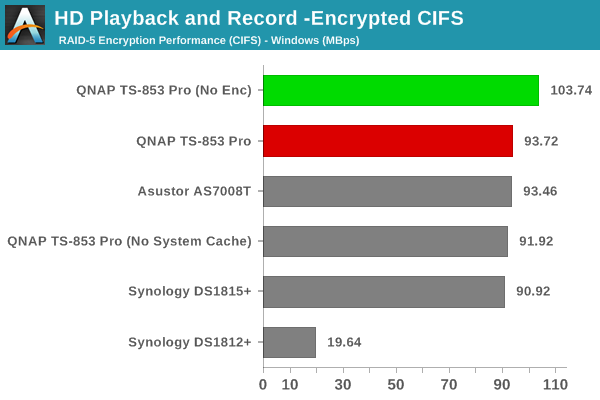
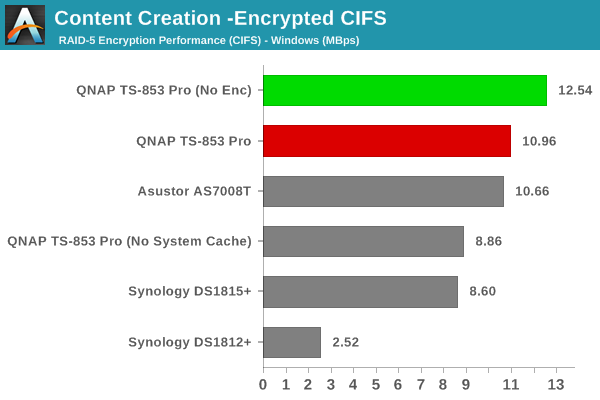
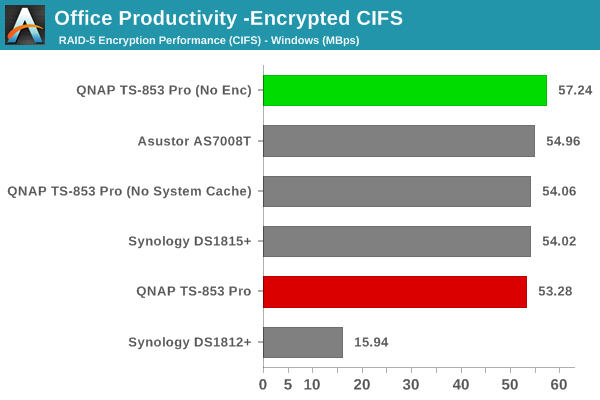
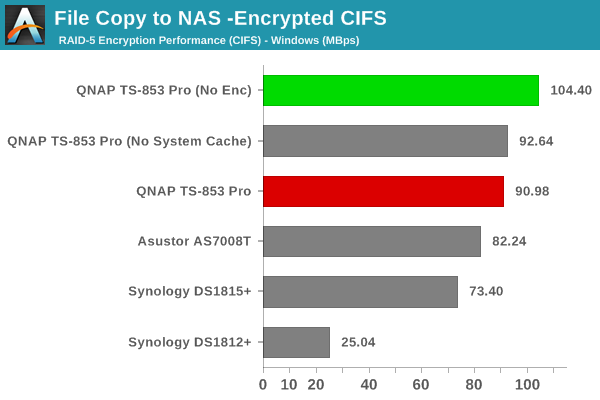
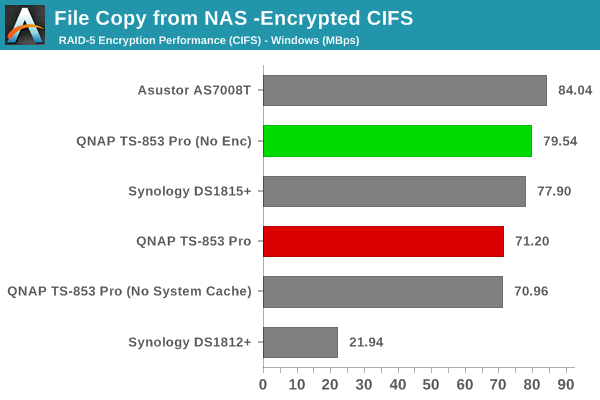
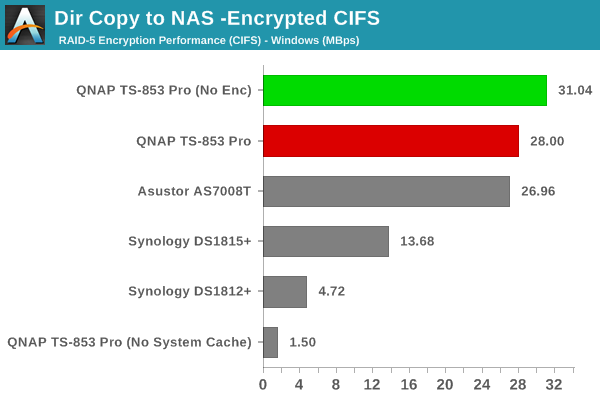
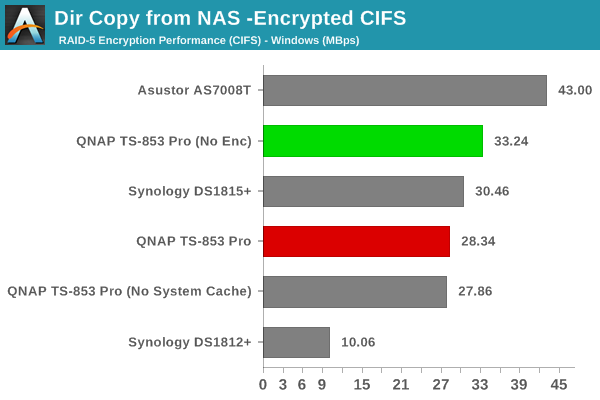
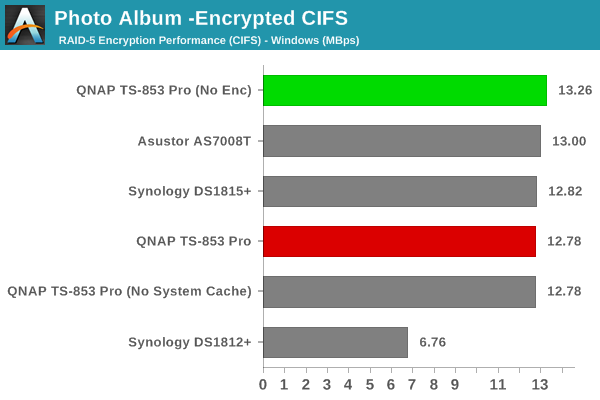
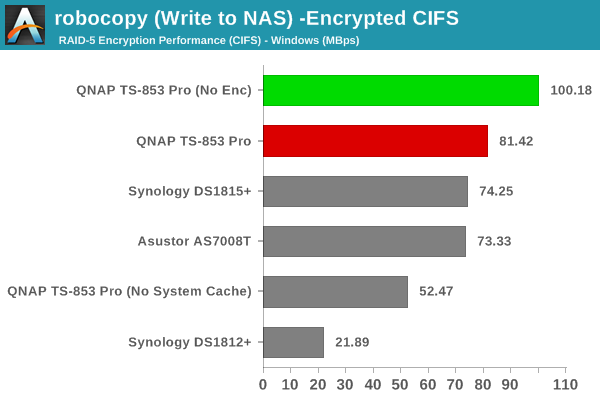
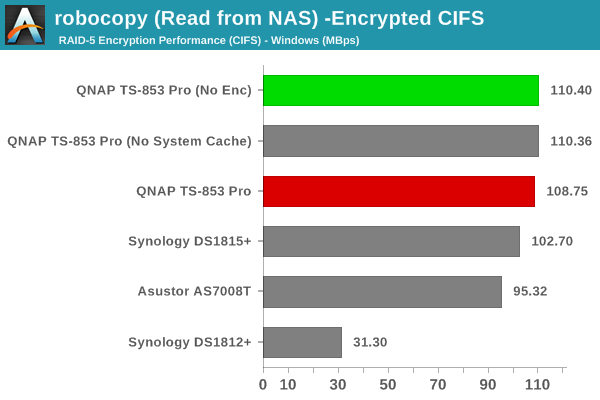
Spreading the encryption / decryption operations across four cores manages to help QNAP avoid much of a penalty when compared to the performance of a non-encrypted volume. That said, performance is bound to show marked decline with active VMs and/or simultaneous multi-client accesses.
Originally published at https://www.anandtech.com/show/8799/qnap-ts853-pro-8bay-intel-bay-trail-smb-nas-review (Wayback Machine).