
Intel 850 Motherboard Roundup: September 2001
- Posted in
- Motherboards
EPoX EP-4T2A

|
ECS P4ITA |
|
|
CPU
Interface
|
Socket-423
|
|
Chipset
|
Intel
850/ICH2
|
|
Form
Factor
|
ATX
2.03
|
|
Bus
Speeds
|
100
/ 103 / 105 / 108 / 110 / 115 / 118 / 120 / 122 / 125 / 133 MHz
|
|
Core
Voltages Supported
|
Auto
Detect
-0.1 / -0.075 / -0.05 / -0.025 / +0.025 / +0.05 / +0.075 / + 0.1 / + 0.125 / +0.150 V |
|
I/O
Voltages Supported
|
Auto Detect |
|
AGP
Voltages Supported
|
Auto
Detect |
|
Memory
Slots
|
4
184-pin RIMM Slots
|
|
Expansion
Slots
|
1
AGP Slot |
|
On-board
Audio
|
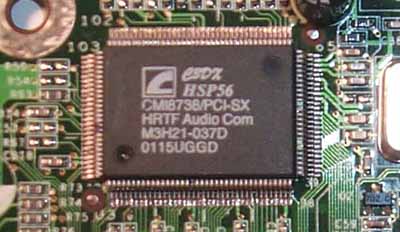
CMI8738
Hardware Sound
|
|
BIOS
|
Award
Modular BIOS 6.00PGN
|
The 4T2A we received from EPoX was also an engineering sample, complete with some hand-soldered components on the board. Nevertheless, the board was definitely in good enough shape for our battery of tests.
Recently, EPoX started to include the Phoenix Net BIOS setup on top of the common Award Modular BIOS 6.00PGN. We’ve seen quite a few complaints about Phoenix Net in the forums, so we recommend you check there before considering a board with the “feature.”
There is a set of dipswitches on the board for setting the FSB speed, although the same settings are available in the BIOS. The 4T2A does not offer as many settings as the ABIT TH7 or the ASUS P4T, but they were sufficient for us to push the board to its limits.
As far as voltage tweaks go, the 4T2A definitely offers the best selection among the boards we have here. For CPU core voltage, you can set it at default or -0.1 / -0.075 / -0.05 / -0.025 / +0.025 / +0.05 / +0.075 / + 0.1 / + 0.125 / +0.150 V. For the first time on an i850 board, we get I/O voltage tweaks as well, which can come in handy when trying to improve stability at high FSB speeds. Last, EPoX also offers voltage tweaks for the AGP bus, which can also help with system stability under overclocked circumstances as well.
With all these voltage tweaks, we were able to push our board to 125MHz without compromising stability. This was actually quite disappointing since both the ABIT TH7 and the ASUS P4T, without any I/O and AGP voltage selections, went as high as 145MHz. This could be because we were using an engineering sample or there could be other factors involved. We’ll keep you updated as we get more information. Nonetheless, the board performed reasonably well in our tests and was very stable, showing that the board is very close to release.
The 4T2A uses the same HSF mounting mechanism as the ABIT TH7 and the ECS P4ITA for easy HSF installation. The AGP slot also features a locking mechanism ensure that AGP cards remain seated during shipping.
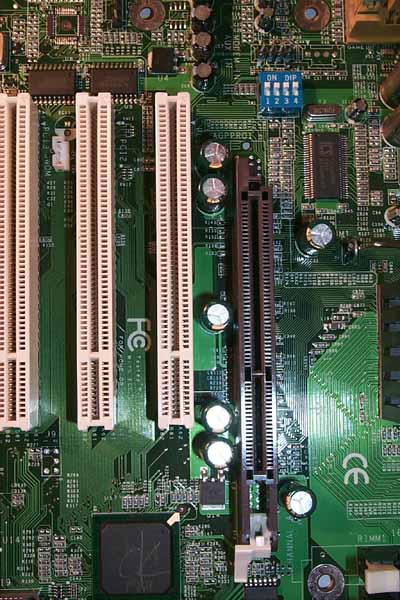
While most recent EPoX boards feature an onboard Highpoint HPT370 Ultra ATA 100 IDE RAID controller, it has not been included on the 4T2A.
In general the 4T2A is a slightly above average board, delivering respectable performance and stability. It also offers a lot of overclocking options, which could come in handy if you’re really trying to push your system to the max. Hopefully the retail version will be even better with regards to overclocking, although it probably won’t match the ABIT TH7 or the ASUS P4T in this department since the 4T2A only has settings up to 133MHz FSB.
Originally published at https://www.anandtech.com/show/827 (Wayback Machine).