
Intel 850 Motherboard Roundup: September 2001
- Posted in
- Motherboards
Gigabyte GA-8TX

|
Gigabyte GA-8TX |
|
|
CPU
Interface
|
Socket-423
|
|
Chipset
|
Intel
850/ICH2
|
|
Form
Factor
|
ATX
2.03
|
|
Bus
Speeds
|
Auto Detect 100 / 105 / 110 / 113 MHz |
|
Core
Voltages Supported
|
Auto
Detect
|
|
Memory
Slots
|
4
184-pin RIMM Slots
|
|
Expansion
Slots
|
1
AGP Slot |
|
On-board
Audio
|
Sigmatel
STAC9708T
|
|
BIOS
|
AMI
Simple BIOS Setup 1.24a
|
The GA-8TX was actually the first motherboard manufacturer to send us an i850 motherboard and our GA-8TX was also an engineering sample. Once again we see Gigabyte’s now famous blue PCB and Dual BIOS setup. Fortunately, the performance of the board is up to par with the other candidates for this roundup, which is noteworthy simply because the board was released so long ago. Further, the board was very stable during our tests; very impressive considering that we were using an engineering sample.
Unfortunately, when it comes to overclocking, the GA-8TX started to act up a little bit. The board does not feature a very long list of FSB speed settings, only 100 / 105 / 110 / 113 MHz, although we weren’t able to push the board any further than 105MHz. When we tried to set the dipswitches to 110MHz, the board wouldn’t boot up at all, but interestingly enough, when we set it to 113MHz the board booted up at 110MHz. Regardless, it couldn’t maintain any sort of stability at 110MHz.
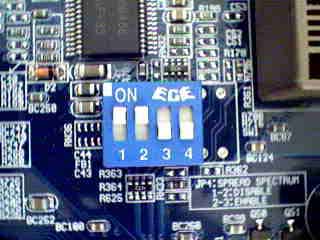
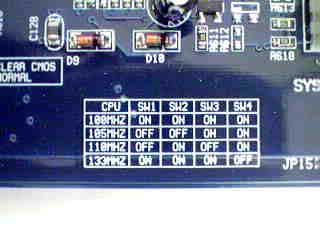
There is no support for CPU core voltage tweaking, something that is essential for overclockers. Oddly enough, Gigabyte has instead chosen to offer a memory voltage overdrive in the BIOS, although the exact voltage applied is not mentioned any where. From what we’ve seen in the past, we think Gigabyte has their priorities backwards here.
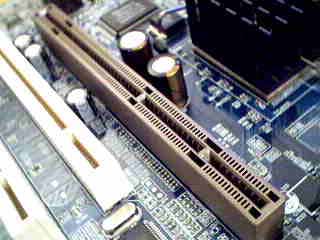
Other than overclocking, the rest of the board worked just fine. Gigabyte offers an AGP Pro slot on the board, similar to many of their recent boards. Unfortunately, they did not bother to include an onboard IDE RAID controller this time around, although they have done it in the past.
To be honest, the GA-8TX is not a particularly good choice among this group,
mainly based on its overclocking features and results. It’s possible that a
retail or later revision of the board will feature more flexible FSB speeds
as well as improved stability at higher FSB speeds. In fact, we’ve seen later
revisions of Gigabyte boards exhibit marked improvements in the past, so it’s
definitely a possibility here as well.
Originally published at https://www.anandtech.com/show/827 (Wayback Machine).