
The Neophyte's Custom Liquid Cooling Guide: How To, Why To, What To Expect
- Posted in
- Cases/Cooling/PSUs
- Systems
- G.Skill
- Corsair
- Gigabyte
- Haswell
- Water Cooling
- Plextor
- NVIDIA
- Overclocking
- Swiftech
Obviously there's a tremendous amount of information to sift through. This is without a doubt the longest article I've ever personally written; normally I leave the comprehensive works to my more gifted colleagues. I couldn't resist the challenge or the opportunities that presented themselves, though. Even as I write this, I'm testing an engineering sample i7-4770K donated by iBuyPower and finding it to be an infinitely more capable performer than the original retail chip I used. That's not a black mark on CyberPowerPC; it's not like they deliberately sent me a bad chip. It's more a reflection of the chip lottery that is a fact of life for enthusiasts.
Whether or not a custom liquid cooling loop is worth the time, effort, and expense is really going to be a matter of opinion for each individual. As someone who likes working with his hands in general, there was a lot of appeal in just building something, and a tremendous amount of satisfaction when, performance metrics be damned, the thing worked. When that pump fires up and you hear that coolant start circulating, and then after you've filled up the system just seeing the coolant cycle...that's rewarding. This is something that a lot of people have accomplished, sure, but it's much more work than just assembling a computer and sticking a CLC on the processor.
Performance wise, if you're trying to get a better overclock on the CPU, I think we're at the point where a good closed loop cooler is probably going to be enough. Dumping boatloads of voltage into it just to get incrementally higher performance past the chip's inflection point doesn't really do you any favors long term, so any increased thermal headroom a loop can offer you is somewhat negated.
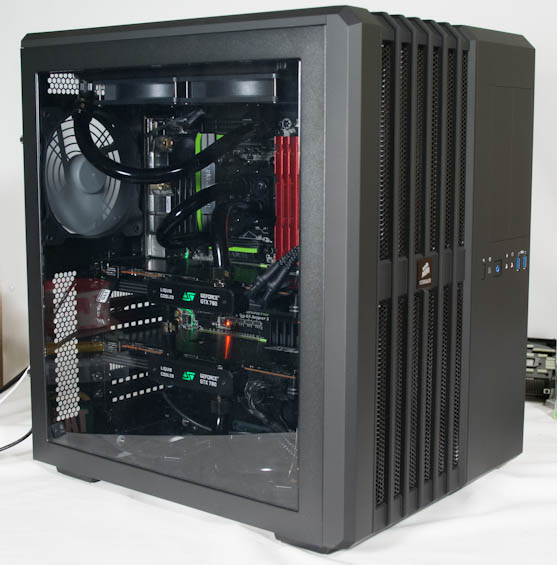
Where I think watercooling really shines is when you apply it to graphics cards. High end graphics cards are ripe for it, with air coolers that are already being pushed fairly hard. Watercooling tanks the temperatures on those, and if you're feeling adventurous, can theoretically allow you some room to play with voltage and get a healthier bump in performance. I think it's worth it just for the low thermals and substantially reduced noise, personally, but if you're looking to sandwich two or more cards together, it's also nice not to have to worry about suffocating air coolers.
Finally, it's important to accept the limitations on the hardware you have. Chip lottery means that watercooling may just not give up the performance you were hoping for. It's often said that there are no guarantees when it comes to overclocking, but in the backs of all of our minds, with each generation of hardware, what we really want to know is "what's the typical overclock." What we really think is that we can count on the "typical overclock," but that's not true, and hopefully my experience here demonstrates that. Ian has an i7-4770K in his lab that won't go any higher than 4.2GHz for love or money. Overclocking is always going to be a gamble.
There are no clear recommendations that I can offer at the end of this experience; the best I can do is present you with the information and my experience and let you decide for yourself. I will say that Swiftech in particular has been tremendously helpful, overnighting me parts when I made mistakes and being exceptionally patient in answering any questions I had so that I could pass that information along to you. With a system like this on hand, it's difficult not to want to experiment and play in this new space, so expect at least an update or two with what I've done and tried and with more information in the future.
Originally published at https://www.anandtech.com/show/7363/the-neophytes-custom-liquid-cooling-guide-how-to-why-to-what-to-expect (Wayback Machine).