
Apple iOS 5 Review
Safari

Safari, too, has gotten a UI refresh on the iPad side of things. We finally get tabbed browsing, which really makes life easy when you’re browsing - it was the single most useful feature that Honeycomb had over iOS last year. The tab bar is located underneath the URL bar, and the active tab has an “x” on the left side to close. There’s not too much more to say here other than that it’s well integrated, and being able to see all the open tabs at once really makes the multipage browsing experience quicker and more seamless. It’s a seemingly minor detail, but taking out the extra two screen presses really speeds everything up. It almost makes me wonder why Apple took so long to implement it on the iPad.


Reading List ties in very well with the other new browser feature, Reader. Reader basically takes a webpage and renders it in the most readable way possible, stripping all formatting and displaying the text and image content alone. Think of it like iBooks, except for webpages. Getting to it is pretty easy - just wait for your page to load, then hit the Reader button in the URL bar. The cool thing is that for multipage articles like the ones on AnandTech, it’ll load the next page automatically as you finish reading the previous page. It’s a relatively minor feature, but if you read a ton of longer (*cough* AnandTech) articles on your iPad or iPhone, Reader ends up being really, really useful.
Safari Performance Improvements
There's been a trend among mobile browsers recently, and that trend is increasingly fast JavaScript performance. Both iOS and Android have been trading blows for the JavaScript performance crown, and iOS 5 includes the latest set of improvements from Apple's side.
The brief outline version of this story is that each successive release of iOS has improved JavaScript performance. First, iOS 4.3 brought desktop Safari's Nitro JavaScript engine with JIT (Just In Time compilation) to MobileSafari in iOS, which gave a substantial boost to its performance in synthetics and other tests. The latest improvements in iOS are thanks in part to an update which brings MobileSafari back up to parity with Safari 5.1's codebase on the desktop side. For a while now we've been keeping track of iOS performance in SunSpider 0.9 and RightWare's browsermark, and now SunSpider 0.9.1 as well.
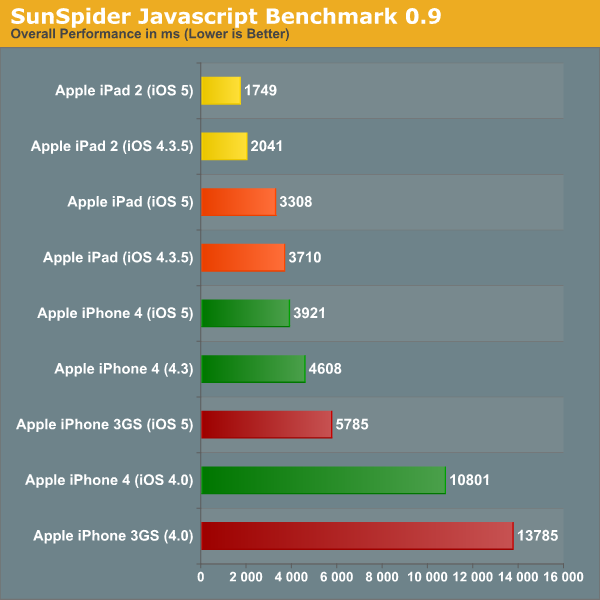
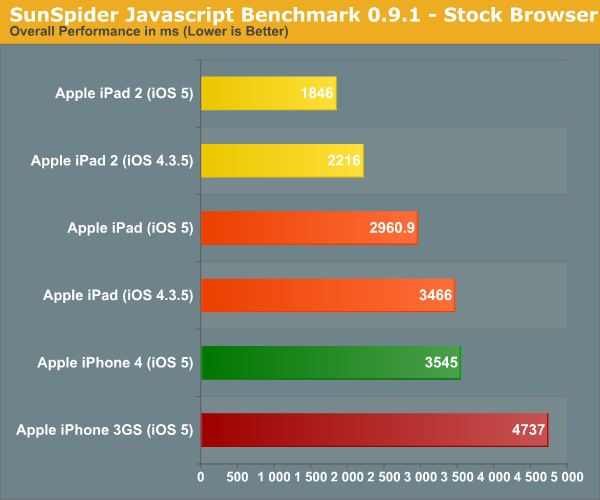
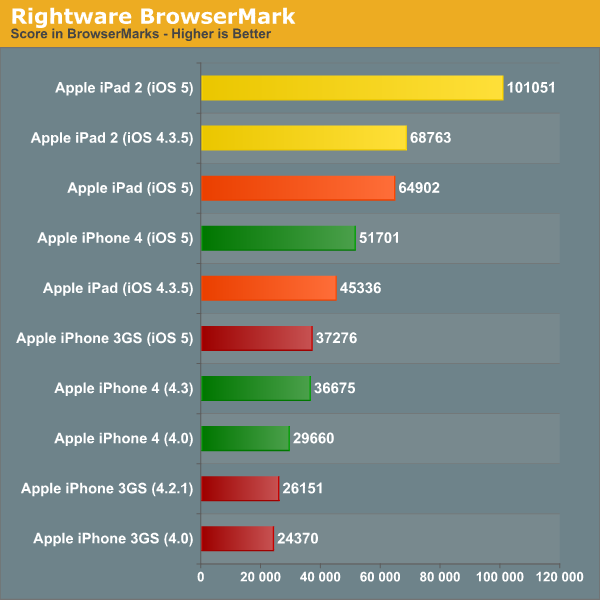
Sunspider 0.9.1 we haven't been keeping track of for very long, so we don't have as many results yet, but that will change in time. The other two graphs really tell the story of how Mobile Safari has seen steady improvements to JavaScript performance over a short history going back to iOS 4.0. Again, the 4.3 added Nitro with JIT, and 5.0 updates Nitro to the absolute bleeding edge version of the codebase, same as the desktop Safari. That said, I don't expect things to speed up much beyond this, and though I'm not showing Android results (since the context of this story is all about iOS), I expect Ice Cream Sandwich to bring Android right back up to parity with Mobile Safari's scores on similar hardware.
Originally published at https://www.anandtech.com/show/4956/apple-ios-5-review (Wayback Machine).