
400-450W PSU Roundup
- Posted in
- Cases/Cooling/PSUs
Thermaltake Purepower RX 450W
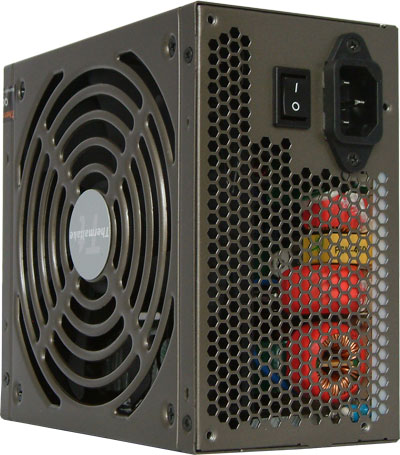
Next up is the Thermaltake TR2 RX Purepower 450W PSU, stepping into the ring wearing the standard Thermaltake silver colors. One of the more unusual aspects about this PSU is that thermal take uses punch holes for the fan grille. This looks a bit unusual, and we can't help but think that this design will impede airflow -- double the odd considering the use of a larger 140mm fan -- but most likely this was a cost-cutting measure. A normal fan grille would provide better ventilation and we definitely think it looks better, but we aren't going to try to pretend that appearance is the most important factor when it comes to picking out a power supply.
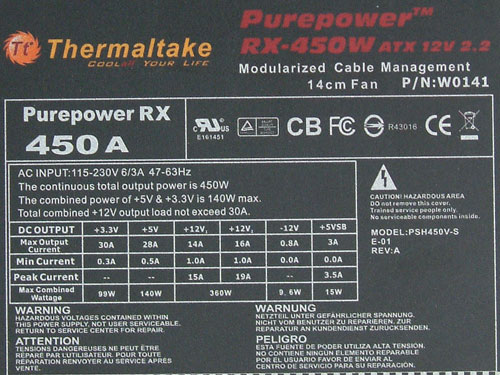
The label indicates 14A and 16A outputs on the 12V rails, which is a bit lower than we would expect, but the combined power is also 30A and the result is the same as the previous two models. The columns for the 3.3V and 5V rails are a bit confusing, as you have to read the text above to find out that the maximum combined power of these two rails is 140W. The ratings end up being similar to what we find on just about any other 450W power supply, however.
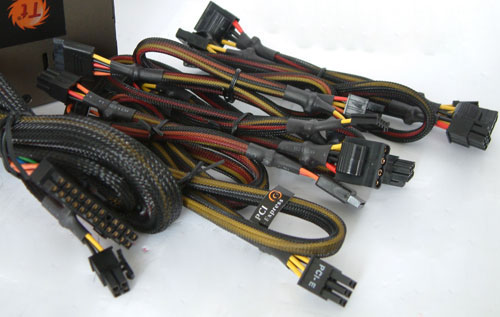
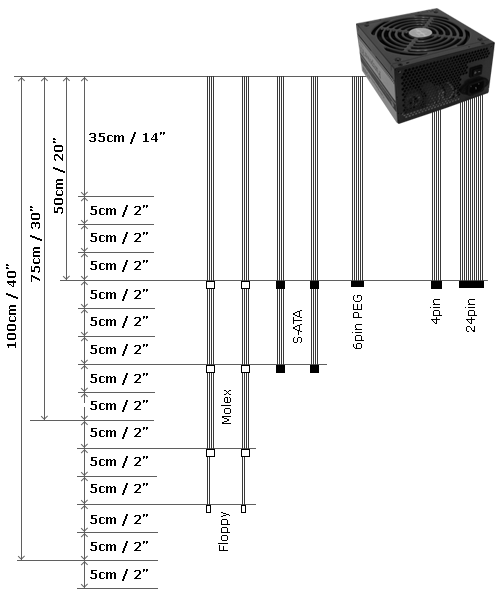
The Thermaltake unit has also all cables sleeved, even between connectors. Since this is a modular power supply, Thermaltake includes a small bag where unused cables can be stored. The main ATX cables are 50cm long, which might not be long enough for use in full tower cases. The package includes six Molex connectors and four SATA connectors plus a single 6-pin PCI-E connector. That may be inadequate for a high-end system, but it's more than sufficient for midrange computers.
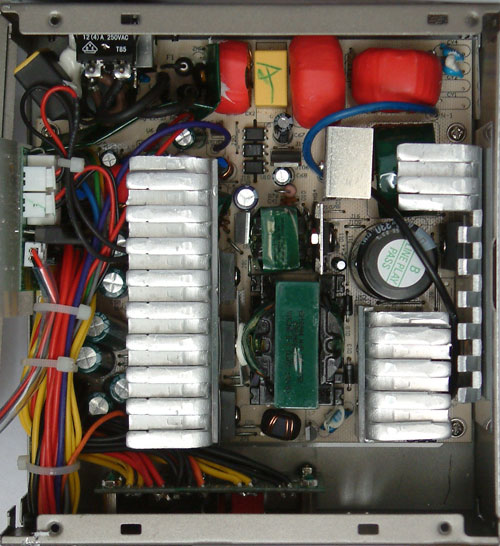
The inside is a typical CWT layout with the filtering stage in the top row and the poorly designed heatsinks all over the place. A large fan can reach most components on the PCB, but the heatsinks act like an umbrella since there is simply no space where air can come through. There are more and more Thermaltake power supplies out there, and each one has these lousy heatsinks. It's no wonder that all of these units have a bad thermal management and in most cases need to have a little piece of plastic installed under the fan to direct the air in the right direction. Only bad thermal designs need this kind of help. Instead of taking the brute force approach of a 140mm fan, it would be better for Thermaltake to spend a bit more effort on improving their heatsinks.
Next up is the Thermaltake TR2 RX Purepower 450W PSU, stepping into the ring wearing the standard Thermaltake silver colors. One of the more unusual aspects about this PSU is that thermal take uses punch holes for the fan grille. This looks a bit unusual, and we can't help but think that this design will impede airflow -- double the odd considering the use of a larger 140mm fan -- but most likely this was a cost-cutting measure. A normal fan grille would provide better ventilation and we definitely think it looks better, but we aren't going to try to pretend that appearance is the most important factor when it comes to picking out a power supply.
The label indicates 14A and 16A outputs on the 12V rails, which is a bit lower than we would expect, but the combined power is also 30A and the result is the same as the previous two models. The columns for the 3.3V and 5V rails are a bit confusing, as you have to read the text above to find out that the maximum combined power of these two rails is 140W. The ratings end up being similar to what we find on just about any other 450W power supply, however.
The Thermaltake unit has also all cables sleeved, even between connectors. Since this is a modular power supply, Thermaltake includes a small bag where unused cables can be stored. The main ATX cables are 50cm long, which might not be long enough for use in full tower cases. The package includes six Molex connectors and four SATA connectors plus a single 6-pin PCI-E connector. That may be inadequate for a high-end system, but it's more than sufficient for midrange computers.
The inside is a typical CWT layout with the filtering stage in the top row and the poorly designed heatsinks all over the place. A large fan can reach most components on the PCB, but the heatsinks act like an umbrella since there is simply no space where air can come through. There are more and more Thermaltake power supplies out there, and each one has these lousy heatsinks. It's no wonder that all of these units have a bad thermal management and in most cases need to have a little piece of plastic installed under the fan to direct the air in the right direction. Only bad thermal designs need this kind of help. Instead of taking the brute force approach of a 140mm fan, it would be better for Thermaltake to spend a bit more effort on improving their heatsinks.
Originally published at https://www.anandtech.com/show/2371 (Wayback Machine).