
Dell XPS M1710 - Overclocked
- Posted in
- Laptops
Overclocking Performance - 3DMark
Everyone is basically familiar with the 3DMark benchmarks, and while they aren't games per se, they provide a relatively consistent way of comparing system performance. They are also useful in that they run some CPU tests that tend to put a heavy load on the processor for a relatively long period of time. On the later versions of 3DMark, the CPU tests are also multithreaded, so they can utilize 100% of a dual core processor. After the QuickTime H.264 results, we wanted to see if other lengthier CPU stress tests would show similar behavior.
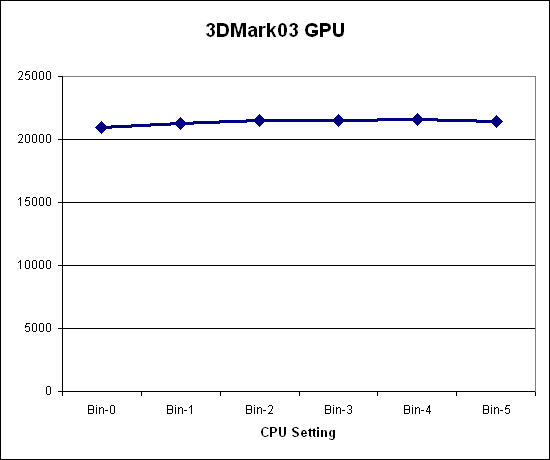
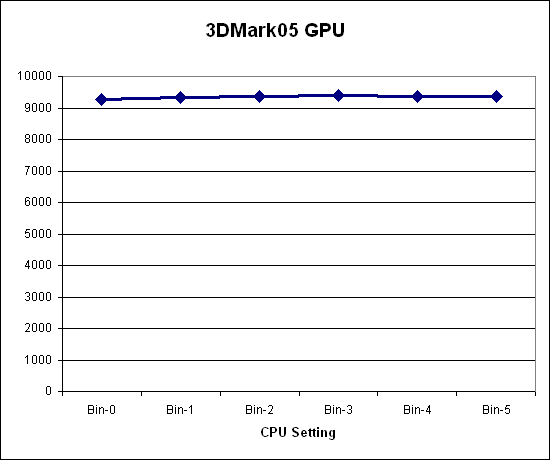
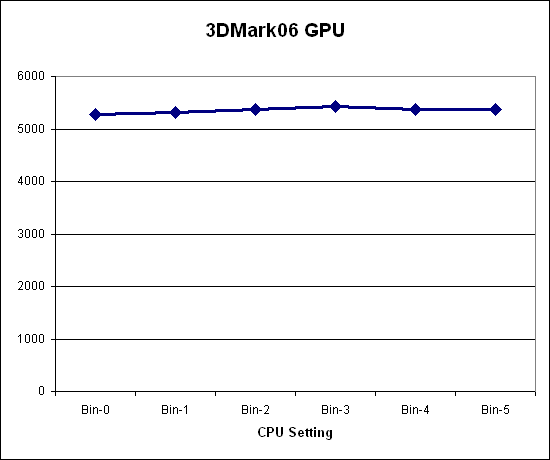
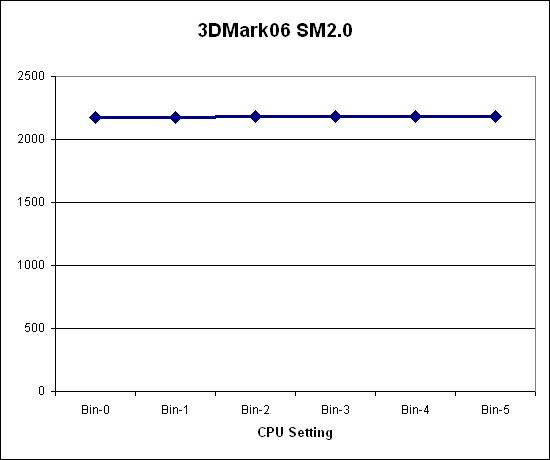
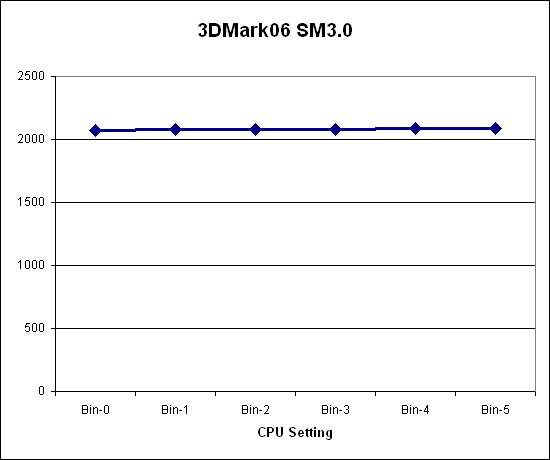
The GPU oriented tests all demonstrate the same thing: 3DMark is a great way of seeing just how fast your graphics card is. None of the graphics tests show anything more than a very slight increase in performance from the increased processor speed. If these results correlate to actual gaming performance, we shouldn't expect to see much difference in performance at the various CPU overclock settings.
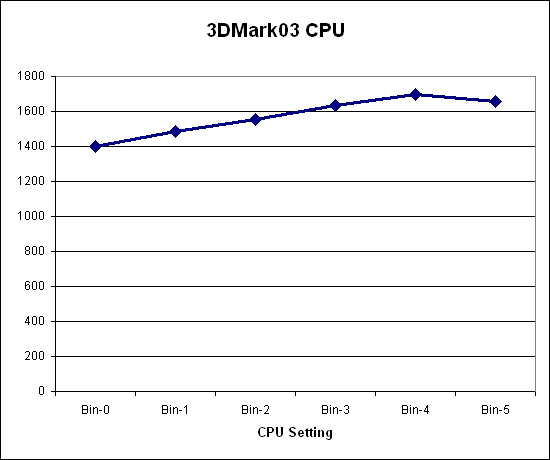
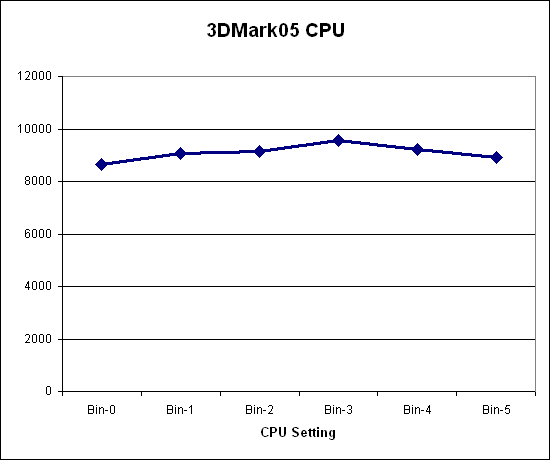
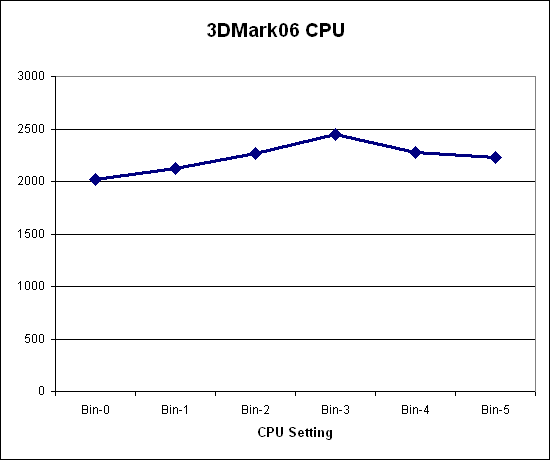
On the other hand, the CPU tests show exactly the sort of behavior we expected based on the QuickTime results. In all three CPU tests, Bin-5 scores lower than Bin-4, and in 3DMark05 and 3DMark06 Bin-3 is the best setting for maximum CPU performance. If our testing with Folding@Home holds true for all situations, users shouldn't experience CPU throttling at any of the overclock settings up through Bin-3, and it appears that some of the more CPU intensive applications may actually result in enough thermal throttling that Bin-4 and Bin-5 end up running slower than Bin-3. However, this appears to only hold true when both CPU cores are placed under 100% load for an extended period of time.
Everyone is basically familiar with the 3DMark benchmarks, and while they aren't games per se, they provide a relatively consistent way of comparing system performance. They are also useful in that they run some CPU tests that tend to put a heavy load on the processor for a relatively long period of time. On the later versions of 3DMark, the CPU tests are also multithreaded, so they can utilize 100% of a dual core processor. After the QuickTime H.264 results, we wanted to see if other lengthier CPU stress tests would show similar behavior.
The GPU oriented tests all demonstrate the same thing: 3DMark is a great way of seeing just how fast your graphics card is. None of the graphics tests show anything more than a very slight increase in performance from the increased processor speed. If these results correlate to actual gaming performance, we shouldn't expect to see much difference in performance at the various CPU overclock settings.
On the other hand, the CPU tests show exactly the sort of behavior we expected based on the QuickTime results. In all three CPU tests, Bin-5 scores lower than Bin-4, and in 3DMark05 and 3DMark06 Bin-3 is the best setting for maximum CPU performance. If our testing with Folding@Home holds true for all situations, users shouldn't experience CPU throttling at any of the overclock settings up through Bin-3, and it appears that some of the more CPU intensive applications may actually result in enough thermal throttling that Bin-4 and Bin-5 end up running slower than Bin-3. However, this appears to only hold true when both CPU cores are placed under 100% load for an extended period of time.
Originally published at https://www.anandtech.com/show/2226 (Wayback Machine).