
Dell XPS M1710 - Overclocked
- Posted in
- Laptops
Overclocking Performance - 3D and Multimedia
After looking at the results from our benchmark suites, we were interested to see what would happen in more real-world test scenarios. We were particularly interested in multimedia performance, as that's one of the areas where increased processor speeds can be useful. We also wanted to see if CPU throttling would come into play at the higher overclock settings like it did in Folding@Home comparisons. Here are the results from Cinebench 9.5 along with several encoding tests.
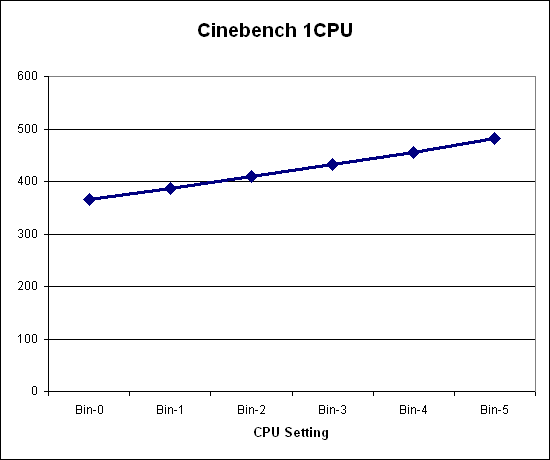
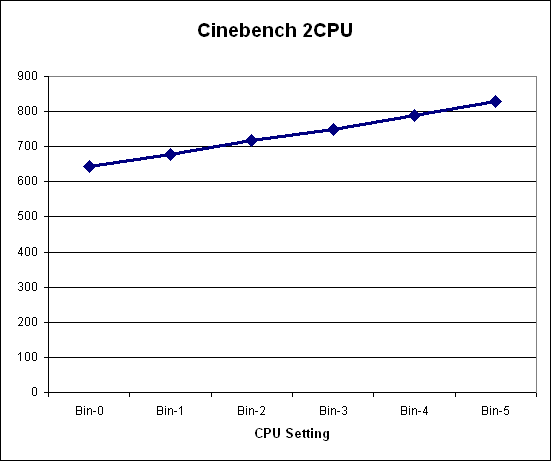
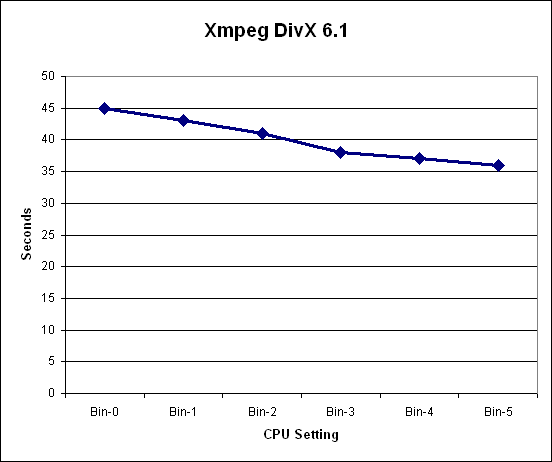
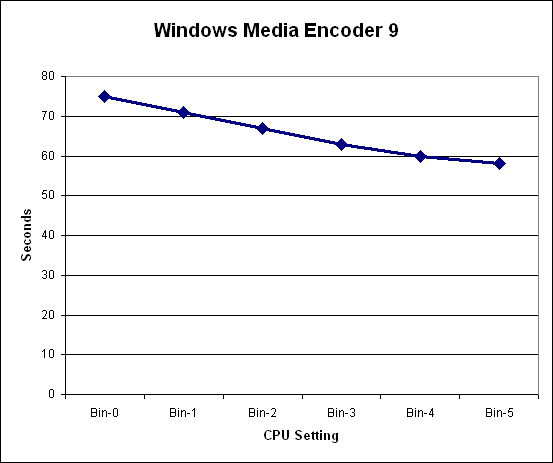
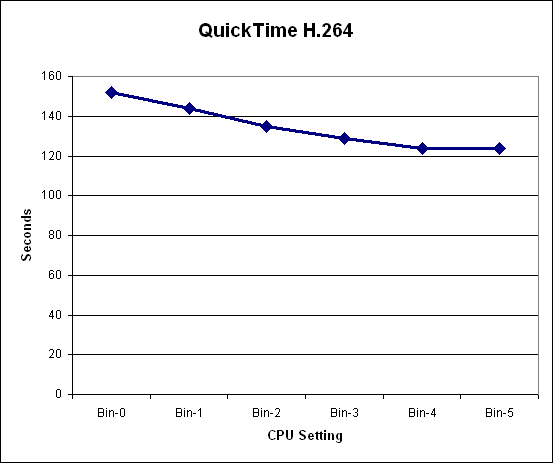
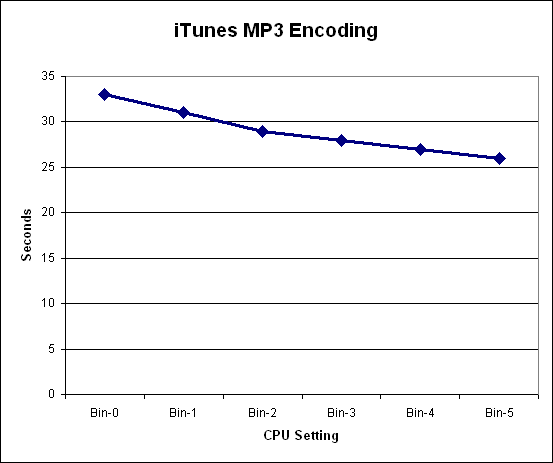
Interestingly enough, nearly all of these tests continue to scale up through the highest clock speeds, although in QuickTime H.264 and Windows Media Encoder tests the difference between Bin-5 and Bin-4 is very small. We expected the single core Cinebench results to scale almost linearly with clock speed increases, but with the higher demands of two CPU cores we thought CPU throttling might become an issue on the multi-core Cinebench test. That wasn't the case, but that doesn't necessarily mean you'll always get higher performance at Bin-5 in 3D rendering applications. The multi-core Cinebench test only takes about half a minute to finish, so it could simply be that there wasn't enough time for the CPU to get warm enough that throttling was necessary. The results from the video encoding tests seem to support that theory, as the two tests that take the longest to run (Windows Media Encoder and especially QuickTime H.264) start to show smaller improvements beyond the Bin-3 setting.
After looking at the results from our benchmark suites, we were interested to see what would happen in more real-world test scenarios. We were particularly interested in multimedia performance, as that's one of the areas where increased processor speeds can be useful. We also wanted to see if CPU throttling would come into play at the higher overclock settings like it did in Folding@Home comparisons. Here are the results from Cinebench 9.5 along with several encoding tests.
Interestingly enough, nearly all of these tests continue to scale up through the highest clock speeds, although in QuickTime H.264 and Windows Media Encoder tests the difference between Bin-5 and Bin-4 is very small. We expected the single core Cinebench results to scale almost linearly with clock speed increases, but with the higher demands of two CPU cores we thought CPU throttling might become an issue on the multi-core Cinebench test. That wasn't the case, but that doesn't necessarily mean you'll always get higher performance at Bin-5 in 3D rendering applications. The multi-core Cinebench test only takes about half a minute to finish, so it could simply be that there wasn't enough time for the CPU to get warm enough that throttling was necessary. The results from the video encoding tests seem to support that theory, as the two tests that take the longest to run (Windows Media Encoder and especially QuickTime H.264) start to show smaller improvements beyond the Bin-3 setting.
Originally published at https://www.anandtech.com/show/2226 (Wayback Machine).