
Dell XPS M1710 - Overclocked
- Posted in
- Laptops
Overclocking Performance - General Applications
We wanted to focus on the benefits of overclocking with the XPS M1710, so we'll start our performance results there. One of the first things we did when we received the notebook was to set the maximum overclock and begin stress testing, and after discovering that the system ran stable we didn't think there would be much need to test any of the other options. However, due to increased noise levels, temperatures, and periodic CPU throttling we decided it was necessary to test all six clock speed settings. We used a variety of commonly available benchmarks which we won't bother to describe here. If you need one more details about the benchmarks, feel free to ask in the comments section. Test settings for the games were generally maximum detail with 0xAA/8xAF and 4xAF where noted.
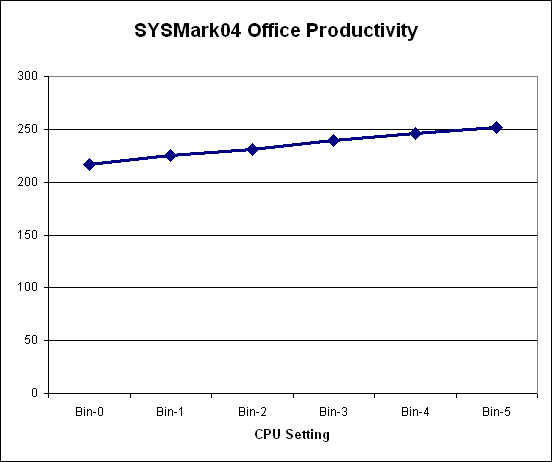
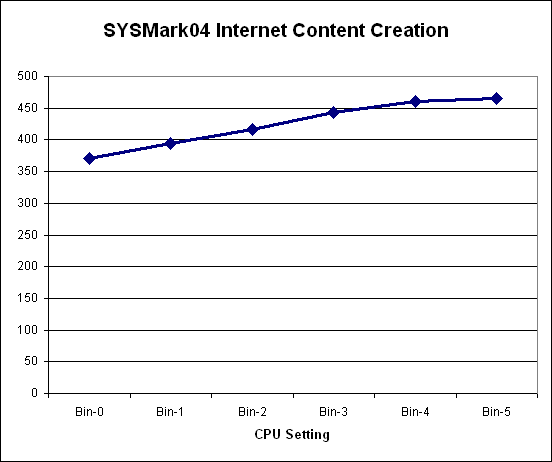
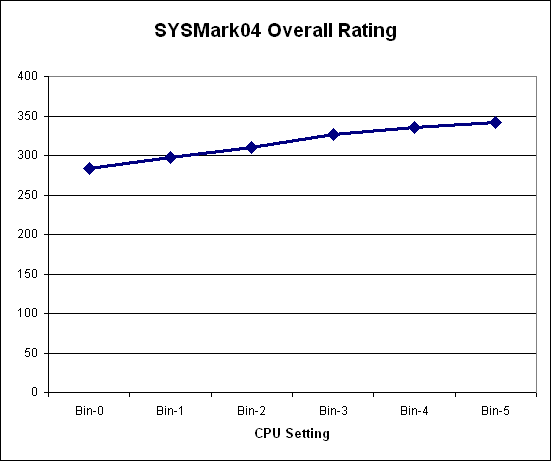
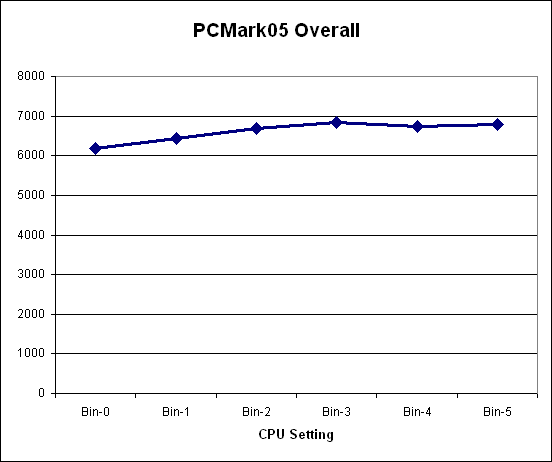
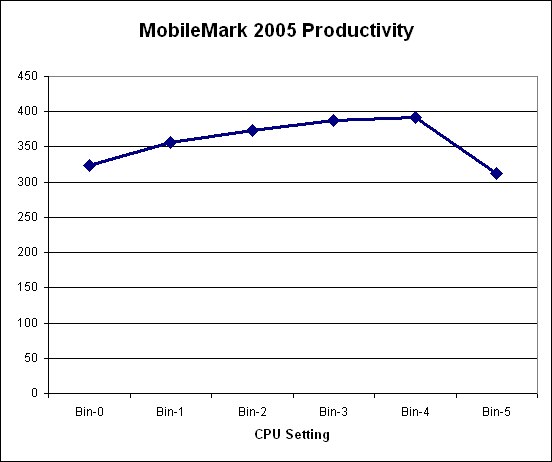
Starting with the general system performance benchmarks, we immediately get some interesting results. SYSmark 2004 appears to benefit at every clock speed increase up to the maximum, although the relative increase is less at the top two settings. Looking at the separate Internet Content Creation and Office Productivity results, the Internet Content Creation test suite hardly benefits at all with the final speed bump, whereas the Office Productivity results continue to scale well all the way through Bin-5. PCMark05 achieves its best performance at the Bin-3 setting, but MobileMark 2005 shows a serious drop off in performance at the maximum clock speed. We actually ran the MobileMark 2005 Productivity test several times at the Bin-5 setting just to verify the results, and we reported the best score out of the three individual test runs. The other two scores were 272 and 284.
The severe drop in performance in MobileMark 2005 may be a result of running on battery power, as it's possible the battery couldn't handle the load and the system was forced to reduce processor speed. This particular test represents the most severe drop in performance we measured at the maximum setting, and given the requirement that MobileMark run on battery power our conclusion for now is that users shouldn't overclock - especially to the maximum setting - if they aren't going to be plugged in. We would generally recommend that anyway, as the overclock settings are simply going to further reduce battery life and the system as it stands already has a relatively short mobile lifespan.
We wanted to focus on the benefits of overclocking with the XPS M1710, so we'll start our performance results there. One of the first things we did when we received the notebook was to set the maximum overclock and begin stress testing, and after discovering that the system ran stable we didn't think there would be much need to test any of the other options. However, due to increased noise levels, temperatures, and periodic CPU throttling we decided it was necessary to test all six clock speed settings. We used a variety of commonly available benchmarks which we won't bother to describe here. If you need one more details about the benchmarks, feel free to ask in the comments section. Test settings for the games were generally maximum detail with 0xAA/8xAF and 4xAF where noted.
Starting with the general system performance benchmarks, we immediately get some interesting results. SYSmark 2004 appears to benefit at every clock speed increase up to the maximum, although the relative increase is less at the top two settings. Looking at the separate Internet Content Creation and Office Productivity results, the Internet Content Creation test suite hardly benefits at all with the final speed bump, whereas the Office Productivity results continue to scale well all the way through Bin-5. PCMark05 achieves its best performance at the Bin-3 setting, but MobileMark 2005 shows a serious drop off in performance at the maximum clock speed. We actually ran the MobileMark 2005 Productivity test several times at the Bin-5 setting just to verify the results, and we reported the best score out of the three individual test runs. The other two scores were 272 and 284.
The severe drop in performance in MobileMark 2005 may be a result of running on battery power, as it's possible the battery couldn't handle the load and the system was forced to reduce processor speed. This particular test represents the most severe drop in performance we measured at the maximum setting, and given the requirement that MobileMark run on battery power our conclusion for now is that users shouldn't overclock - especially to the maximum setting - if they aren't going to be plugged in. We would generally recommend that anyway, as the overclock settings are simply going to further reduce battery life and the system as it stands already has a relatively short mobile lifespan.
Originally published at https://www.anandtech.com/show/2226 (Wayback Machine).