
HTPC - TV Tuner Reviews
- Posted in
- Smartphones
- Mobile
PowerColor Theatre 550 Pro PCIe
The last card that we're looking at is quite a bit different from the other two. It's one of the first truly interesting PCI Express X1 cards for home users. (LAN and SATA cards might interest higher end buyers, but most people don't need to worry much about that.) Given the number of boards that are only shipping with two or three PCI slots, plus one to three PCIe X1 slots, it's nice to finally be able to put the PCIe slots to use. Now, if only someone would get around to releasing a PCIe sound card... but I digress. PowerColor is the first to market with a PCIe TV Tuner, based on the ATI Theater 550 (or "Theatre 550" if you prefer the PowerColor/British spelling, though we'll stick with Theater).
Something else to consider is that there are no PCIe HDTV tuners at present. With most recent motherboards only including two or three PCI slots, you could put an HDTV tuner in one of those slots and place an analog tuner in an X1 slot. Assuming that you have an add-in sound card, you may not have enough PCI slots to fully accommodate your HTPC needs. The maximum number of supported tuners under Windows MCE is four: two HD and two analog. Most people probably don't go that extreme (and good luck getting a clean signal if you split a coaxial input more than four ways), but it's still something to consider.
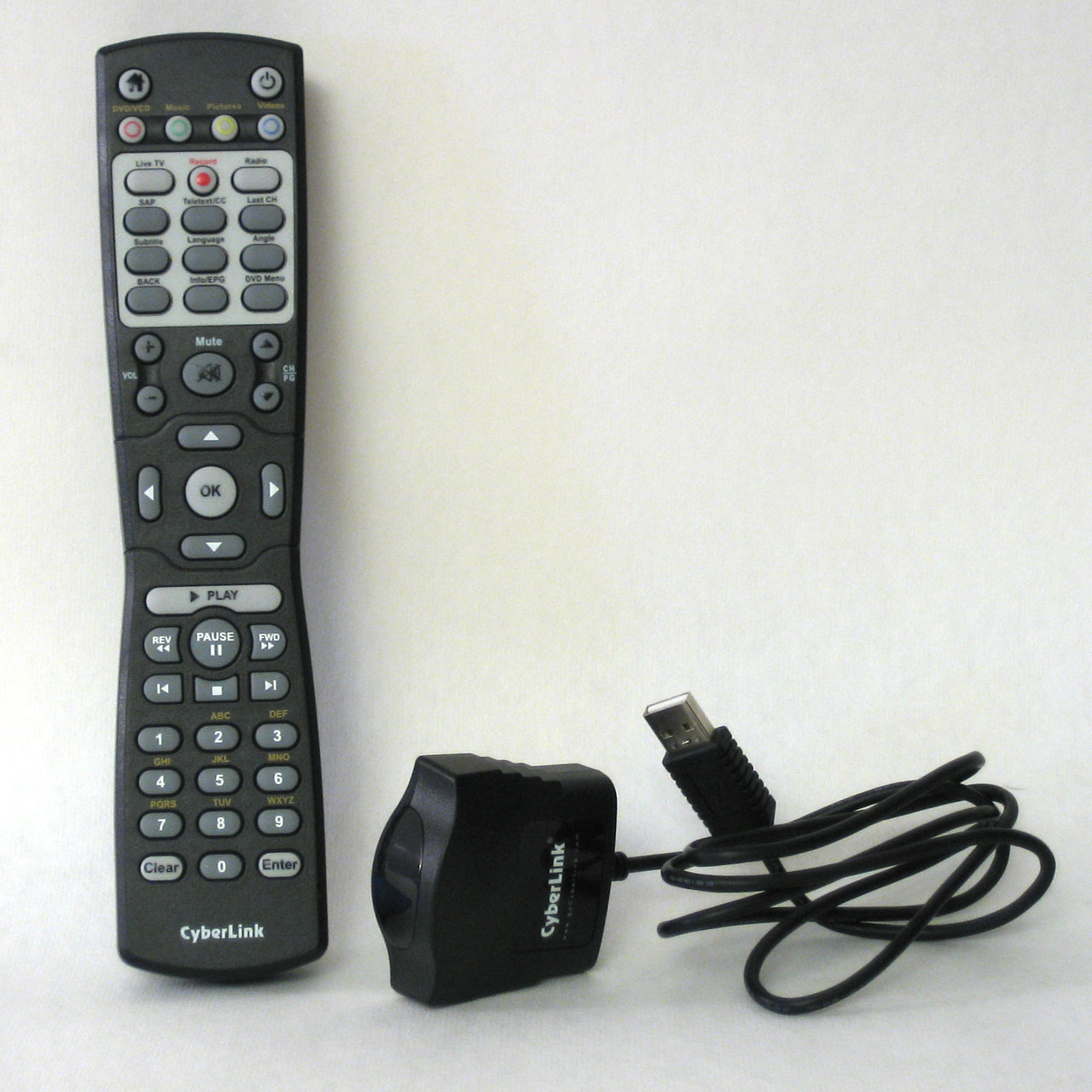
Besides the card, you once again get a remote, a USB infrared receiver, and a software bundle. There's also an input cable that allows the use of S-VIDEO or Composite sources, and you get an FM antenna and input. (Radio reception is as bad as OTA TV reception, so I didn't bother trying it. I'm not much of a radio listener anyway.) The remote is definitely more attractive than the Fusion remote, but the MyHD remote is still the smallest of the three. As with the Fusion remote, be careful of the power button, as you can accidentally shut down the PC (or put it in suspend mode) rather than just turning off the software interface. To shut down PowerCinema, you actually press the "Home" button twice. (Duh - as if that's not totally clear....) The placement of the power button on the remote makes it easier to hit, unfortunately, and on several occasions I forgot to use the Home/Power button. Some people may like the feature, but we generally just leave HTPCs running and found it to be more annoying than anything.
The software bundle of the PowerColor card is quite extensive. You get a large selection of CyberLink products with the package, and while several are "Lite" versions, they'll still suffice for most people: PowerDVD, PowerProducer DVD, PowerDirector SE+, Power2Go, MediaShow SE, and PowerCinema. Will you actually need most of that software? Probably not, but it doesn't hurt to have it. Also note that the remote is technically from CyberLink and is made to work with the above software, so if you were to purchase a different Theater 550 card, you would get some other remote. The remote is MCE compliant, though, so you can use it with either interface.
The last card that we're looking at is quite a bit different from the other two. It's one of the first truly interesting PCI Express X1 cards for home users. (LAN and SATA cards might interest higher end buyers, but most people don't need to worry much about that.) Given the number of boards that are only shipping with two or three PCI slots, plus one to three PCIe X1 slots, it's nice to finally be able to put the PCIe slots to use. Now, if only someone would get around to releasing a PCIe sound card... but I digress. PowerColor is the first to market with a PCIe TV Tuner, based on the ATI Theater 550 (or "Theatre 550" if you prefer the PowerColor/British spelling, though we'll stick with Theater).
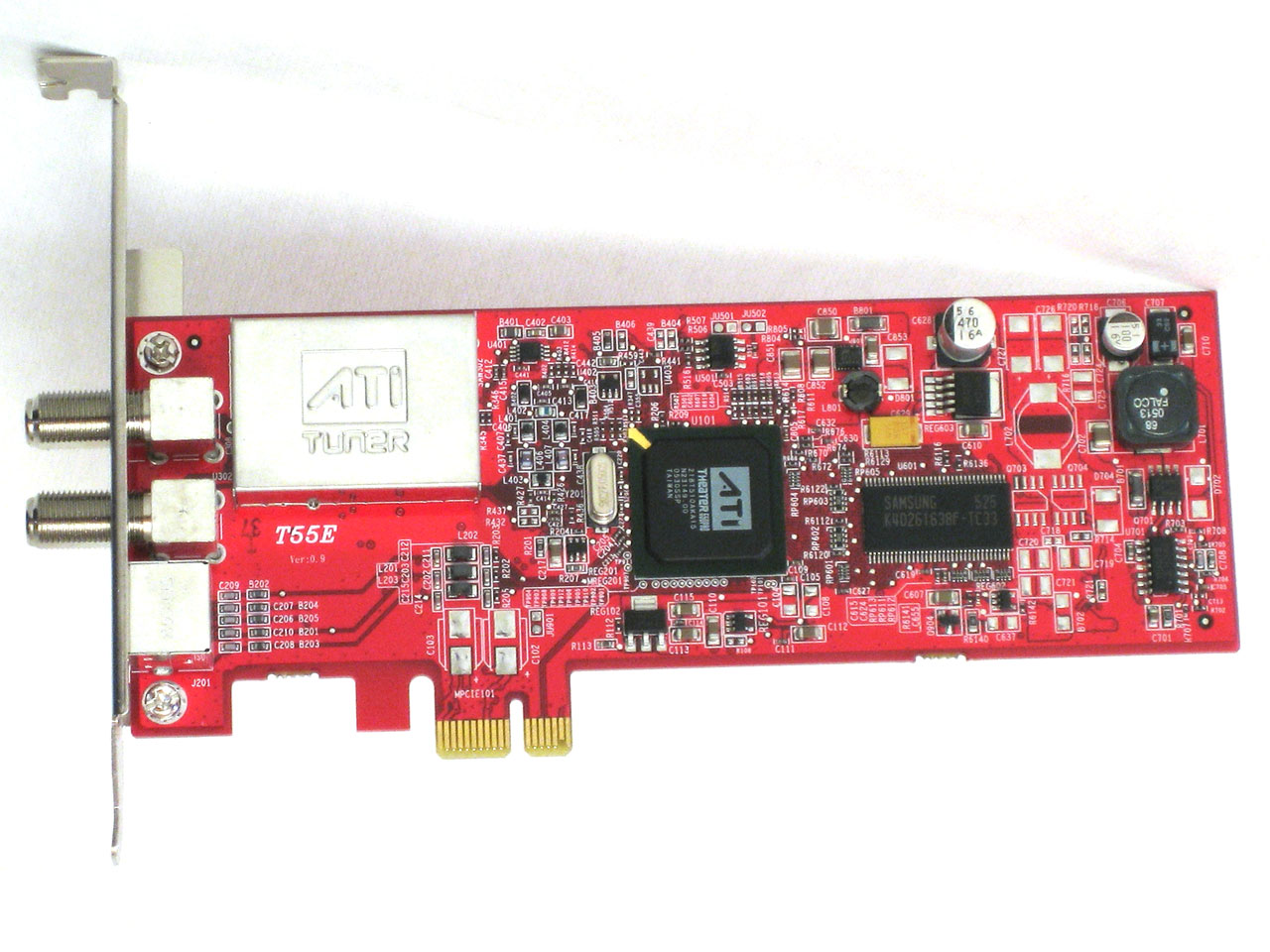
Click to enlarge.
Something else to consider is that there are no PCIe HDTV tuners at present. With most recent motherboards only including two or three PCI slots, you could put an HDTV tuner in one of those slots and place an analog tuner in an X1 slot. Assuming that you have an add-in sound card, you may not have enough PCI slots to fully accommodate your HTPC needs. The maximum number of supported tuners under Windows MCE is four: two HD and two analog. Most people probably don't go that extreme (and good luck getting a clean signal if you split a coaxial input more than four ways), but it's still something to consider.
 |
 |
| Click to enlarge. | |
Besides the card, you once again get a remote, a USB infrared receiver, and a software bundle. There's also an input cable that allows the use of S-VIDEO or Composite sources, and you get an FM antenna and input. (Radio reception is as bad as OTA TV reception, so I didn't bother trying it. I'm not much of a radio listener anyway.) The remote is definitely more attractive than the Fusion remote, but the MyHD remote is still the smallest of the three. As with the Fusion remote, be careful of the power button, as you can accidentally shut down the PC (or put it in suspend mode) rather than just turning off the software interface. To shut down PowerCinema, you actually press the "Home" button twice. (Duh - as if that's not totally clear....) The placement of the power button on the remote makes it easier to hit, unfortunately, and on several occasions I forgot to use the Home/Power button. Some people may like the feature, but we generally just leave HTPCs running and found it to be more annoying than anything.
The software bundle of the PowerColor card is quite extensive. You get a large selection of CyberLink products with the package, and while several are "Lite" versions, they'll still suffice for most people: PowerDVD, PowerProducer DVD, PowerDirector SE+, Power2Go, MediaShow SE, and PowerCinema. Will you actually need most of that software? Probably not, but it doesn't hurt to have it. Also note that the remote is technically from CyberLink and is made to work with the above software, so if you were to purchase a different Theater 550 card, you would get some other remote. The remote is MCE compliant, though, so you can use it with either interface.
Originally published at https://www.anandtech.com/show/1887/htpc-ndash-tv-tuner-reviews (Wayback Machine).