
$600 Notebook Roundup - Crowning the Affordability King
- Posted in
- Laptops
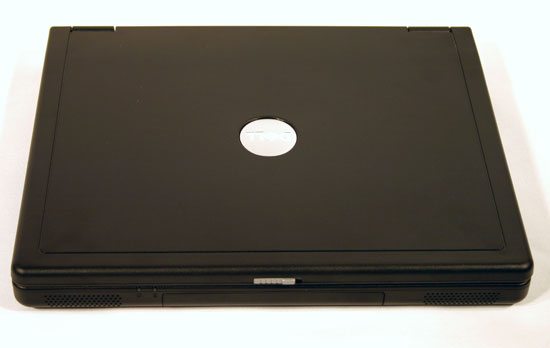
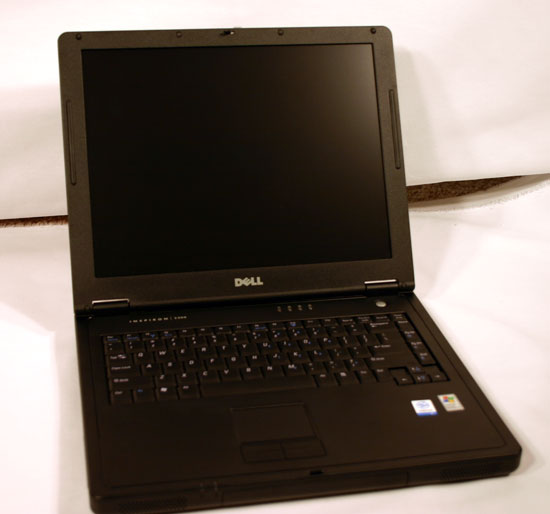
The Inspiron 2200 is fairly well built and felt quite solid, especially compared to the Compaq offerings. The unit has the most subtle and arguably sleek design out of the bunch, being completely constructed out of black plastic. While the Gateway and Compaq designs make use of silver of varying shades and sometimes mixing in black, Dell's design is a lot more plain, and honestly, it works a lot better. The design of the Inspiron 2200 is far more likely to age better and just has a lot less going on. The Inspiron 2200 accepts that it isn't going to be the best looking laptop, especially not at this price point, while the others try too hard.
The Inspiron 2200 had the absolute brightest display out of all 5 of the notebooks in this roundup. Unfortunately, the notebook only comes with a 14" XGA display, so although it may be bright, it isn't the highest resolution. That being said, most fonts/font sizes are far more legible on the Dell's 14" XGA screen than the higher resolution displays used by the widescreen Compaq and Gateway competitors. So, if you aren't used to or comfortable with smaller text sizes, Dell's XGA display may not be a bad thing.
In terms of brightness, the Inspiron 2200 at its brightest setting measured in at around 180 nits, while the rest of the systems were only able to hit in the 120 - 140 nit range; in other words, the difference is noticeable.
The Inspiron 2200 had the absolute brightest display out of all 5 of the notebooks in this roundup. Unfortunately, the notebook only comes with a 14" XGA display, so although it may be bright, it isn't the highest resolution. That being said, most fonts/font sizes are far more legible on the Dell's 14" XGA screen than the higher resolution displays used by the widescreen Compaq and Gateway competitors. So, if you aren't used to or comfortable with smaller text sizes, Dell's XGA display may not be a bad thing.
In terms of brightness, the Inspiron 2200 at its brightest setting measured in at around 180 nits, while the rest of the systems were only able to hit in the 120 - 140 nit range; in other words, the difference is noticeable.
Originally published at https://www.anandtech.com/show/1878 (Wayback Machine).