
Intel's 65nm Processors: Overclocking Preview
- Posted in
- CPUs
Power Consumption of Intel's 65nm Processors
Other than poor performance, extremely high power consumption has been a frequently voiced criticism about Intel's Prescott. Thanks to its 31+ stage pipeline and high clock speeds, the Pentium 4 and Pentium D tend to draw quite a bit of power. How does 65nm change the power consumption landscape?
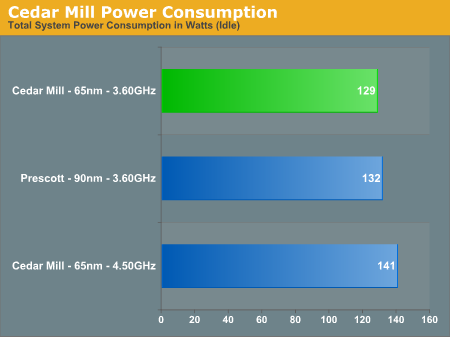
First up is Cedar Mill:
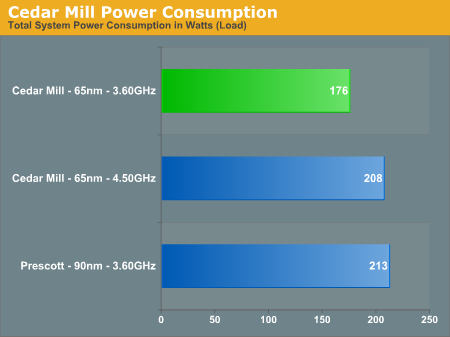
Next up, we loaded two threads of POV-ray's benchmark to fully load the CPUs and compare power consumption under load:
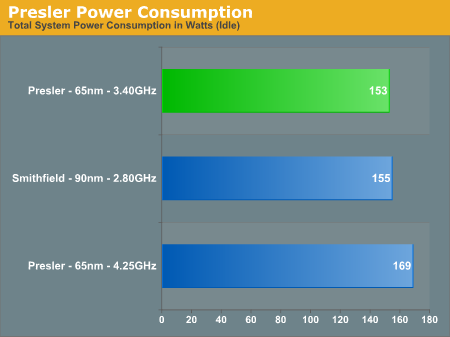
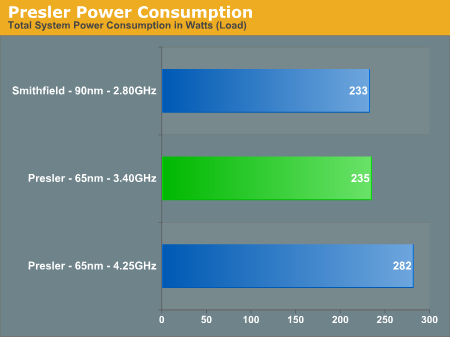
Next, we have Intel's dual core processors - Smithfield (90nm) and Presler (65nm):
Other than poor performance, extremely high power consumption has been a frequently voiced criticism about Intel's Prescott. Thanks to its 31+ stage pipeline and high clock speeds, the Pentium 4 and Pentium D tend to draw quite a bit of power. How does 65nm change the power consumption landscape?
First up is Cedar Mill:
Next up, we loaded two threads of POV-ray's benchmark to fully load the CPUs and compare power consumption under load:
Next, we have Intel's dual core processors - Smithfield (90nm) and Presler (65nm):
Originally published at https://www.anandtech.com/show/1834 (Wayback Machine).