
Intel's 65nm Processors: Overclocking Preview
- Posted in
- CPUs
Final Words
Intel's move to 65nm is very much on track; today, we are able to test working samples at shipping clock speeds of Intel's 65nm Pentium 4 and Pentium D processors. This means that quite a bit of work has taken place between two IDFs ago where we first saw Presler at 2.0GHz and today when we're able to overclock the core to 4.25GHz with minimal effort.
The new cores do definitely overclock much better than their predecessors, and they will allow any serious overclocker to reach speeds greater than 4.0GHz effortlessly. Most exciting to us was the 4.25GHz overclock that we saw on Presler, as a 4.25GHz Pentium D will truly be a formidable opponent to AMD's Athlon 64 X2. Cedar Mill offered reasonable overclocking headroom as well, but we would have liked to see a 5.0GHz overclock on standard air cooling, given that reaching 4.0GHz is possible today on Prescott.
The reduction in power consumption is impressive, but still not enough to give Intel an advantage over AMD, which makes things better, but hardly fixes the problem in our opinion. Unfortunately, we will have to wait for Intel's next-generation processors for a true competitor to AMD's low power Athlon 64s.
We have concluded this preview with one major unanswered question: how well does Intel's Presler perform compared to Smithfield, given that each core in Presler has twice the L2 cache of those in Smithfield? With our curiosities piqued, it won't be long before we try to answer that question...
Intel's move to 65nm is very much on track; today, we are able to test working samples at shipping clock speeds of Intel's 65nm Pentium 4 and Pentium D processors. This means that quite a bit of work has taken place between two IDFs ago where we first saw Presler at 2.0GHz and today when we're able to overclock the core to 4.25GHz with minimal effort.
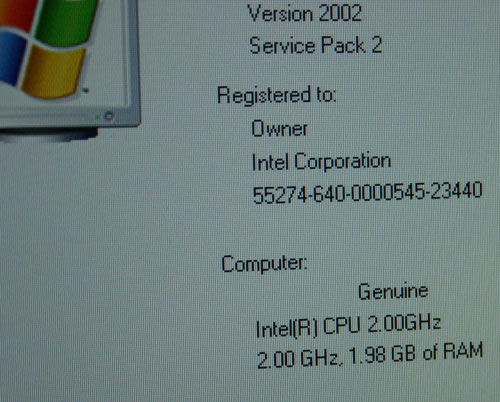
Presler was running at only 2.0GHz less than a year ago.
The new cores do definitely overclock much better than their predecessors, and they will allow any serious overclocker to reach speeds greater than 4.0GHz effortlessly. Most exciting to us was the 4.25GHz overclock that we saw on Presler, as a 4.25GHz Pentium D will truly be a formidable opponent to AMD's Athlon 64 X2. Cedar Mill offered reasonable overclocking headroom as well, but we would have liked to see a 5.0GHz overclock on standard air cooling, given that reaching 4.0GHz is possible today on Prescott.
The reduction in power consumption is impressive, but still not enough to give Intel an advantage over AMD, which makes things better, but hardly fixes the problem in our opinion. Unfortunately, we will have to wait for Intel's next-generation processors for a true competitor to AMD's low power Athlon 64s.
We have concluded this preview with one major unanswered question: how well does Intel's Presler perform compared to Smithfield, given that each core in Presler has twice the L2 cache of those in Smithfield? With our curiosities piqued, it won't be long before we try to answer that question...
Originally published at https://www.anandtech.com/show/1834 (Wayback Machine).