
Vendor Cards: BFG GeForce 7800GTX OC
- Posted in
- GPUs
Power
We measure the power load of the system (with the card installed) in three different states: while the system is idle, while running tests with the clock speeds unmodified, and then again with the card overclocked manually. We then stress test the card by looping multiple Battlefield 2 demos for 45 minutes.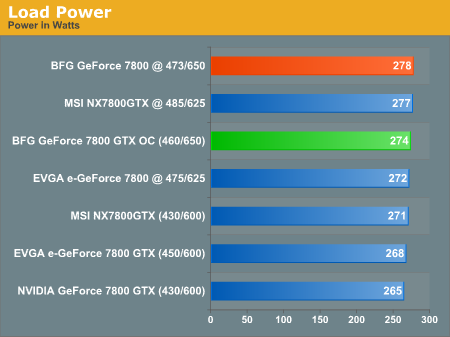
Heat
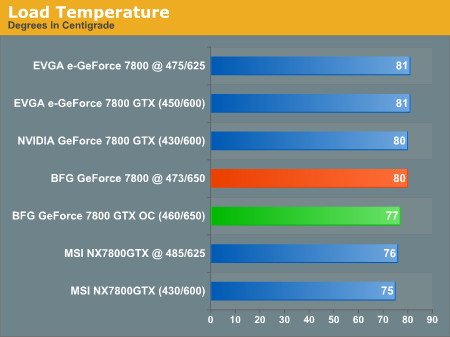
Noise
To recap our noise testing procedures, users can't generally isolate the noise of the graphics card from the rest of the system, but it does have an impact. The formula that we used to determine noise levels for the 7800GTX cards is as follows (all sound measurements are made at a stationary position one meter from the system):gpufactor = (10( SPLsys / 20))2 - (10 ( SPLamb+cpu / 20))2SPLsys is the measured SPL of the entire system.
SPLamb+gpu = 20 log( sqrt( gpufactor + (10( SPLamb / 20))2))
SPLamb is the SPL of the room with the computer shut down.
SPLamb+ cpu is the measured SPL of the system without the graphics card installed.
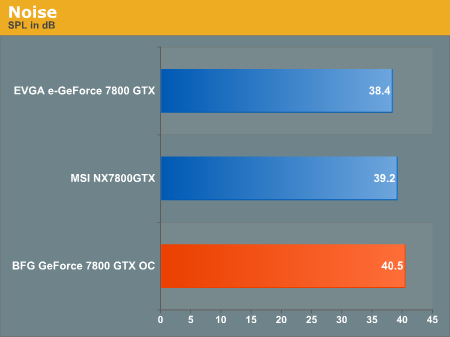
Because all of these cards have the same style heat sink, it's no surprise that we haven't noticed any glaring differences in noise level. Most likely, all of the 7800 cards with stock HSFs will have similar levels, and you will probably not be able to discern any differences using just your ear. A difference of 2 dB isn't significant – noticeable, perhaps, but the rest of the system components will often contribute more noise than the GPU. 2 dB is also small enough that we may simply be picking up a variance between the fans used, as even two fans off the same production line may not be 100% identical. We will keep testing to see how noise levels compare between all of the cards and report on anything unusual that we may find. For now, the cards all perform very close to one another.
Originally published at https://www.anandtech.com/show/1746 (Wayback Machine).