
The TeamGroup L5 LITE 3D (480GB) SATA SSD Review: Entry-Level Price With Mainstream Performance
Whole-Drive Fill
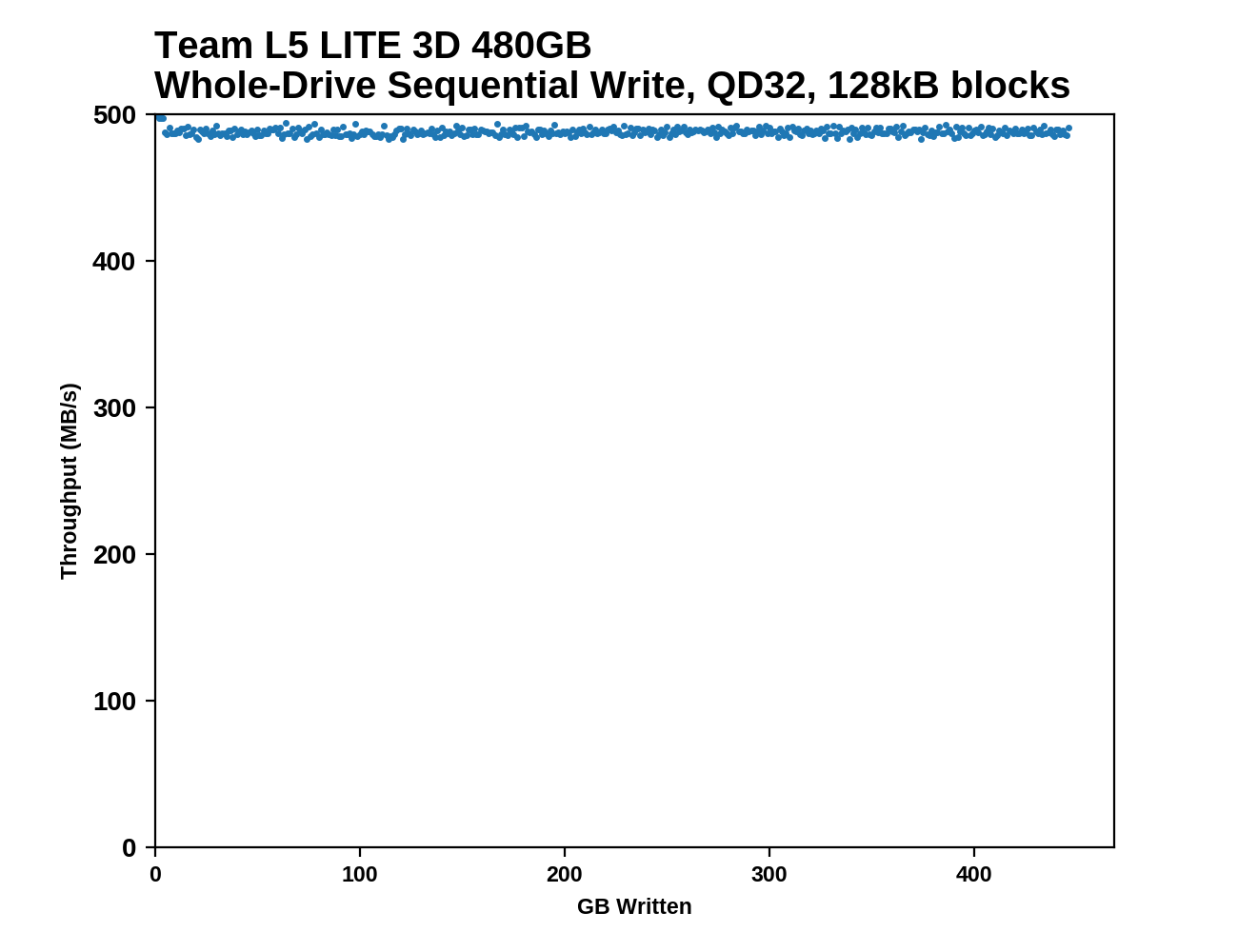
This test starts with a freshly-erased drive and fills it with 128kB sequential writes at queue depth 32, recording the write speed for each 1GB segment. This test is not representative of any ordinary client/consumer usage pattern, but it does allow us to observe transitions in the drive's behavior as it fills up. This can allow us to estimate the size of any SLC write cache, and get a sense for how much performance remains on the rare occasions where real-world usage keeps writing data after filling the cache.
 |
|||||||||
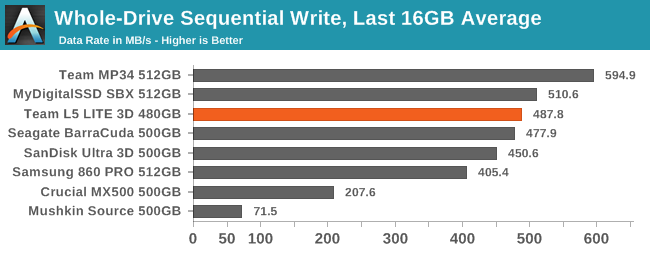
The ATSB tests already showed that the TeamGroup L5 LITE 3D doesn't lose much performance when it is full, but actually plotting its performance through the process of filling it up is surprising. The sequential write throughput does drop slightly after about 5GB, but only by 10-15MB/s, and there are no further performance drops for the rest of the fill process. This is a lot more consistent than most drives, and provides more evidence that SLC caches running out aren't a problem for this SSD.
 |
|||||||||
| Average Throughput for last 16 GB | Overall Average Throughput | ||||||||
Working Set Size
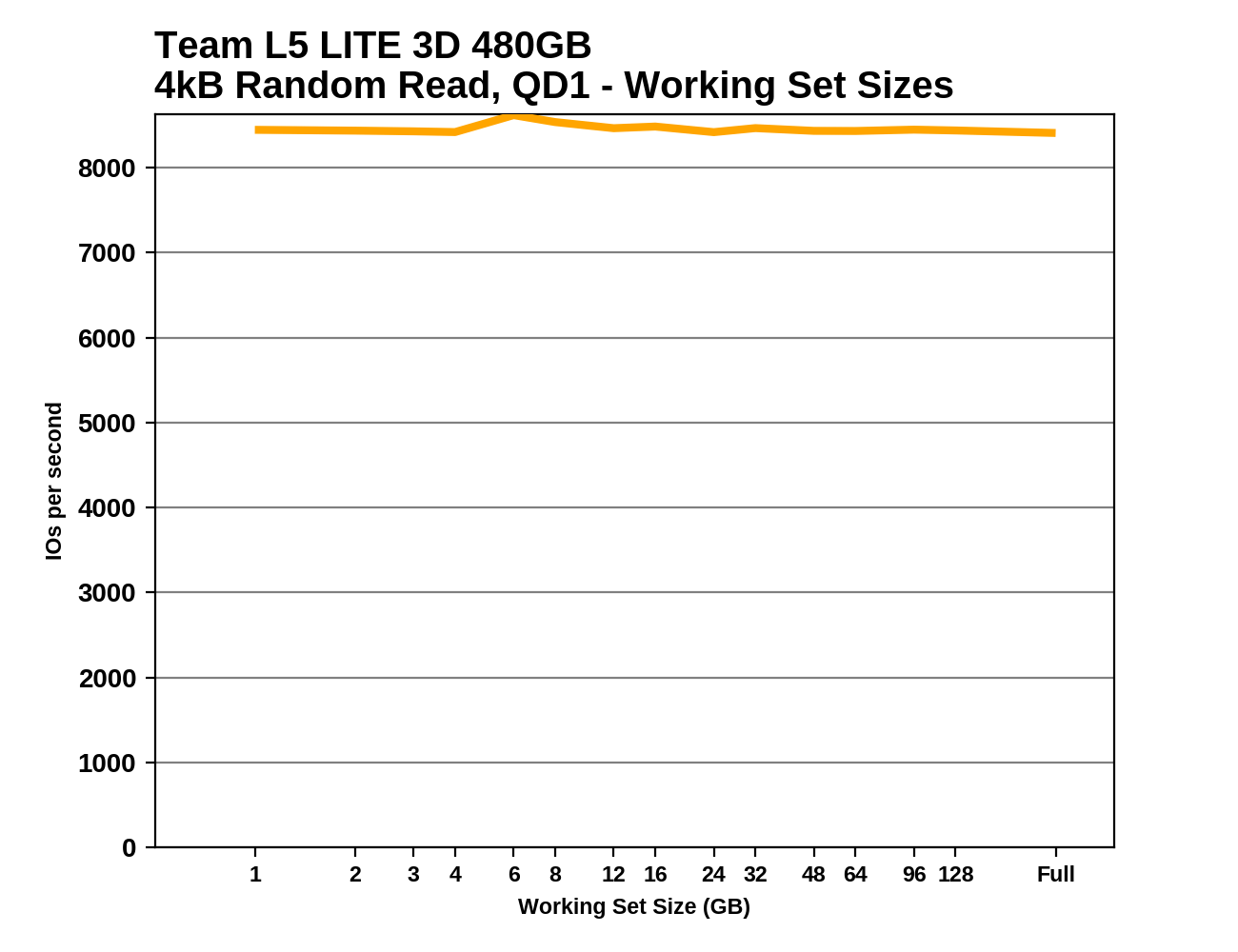
When DRAMless SSDs are under consideration, it can be instructive to look at how performance is affected by working set size: how large a portion of the drive is being touched by the test. Drives with full-sized DRAM caches are typically able to maintain about the same random read performance whether reading from a narrow slice of the drive or reading from the whole thing. DRAMless SSDs often show a clear dropoff when the working set size grows too large for the mapping information to be kept in the controller's small on-chip buffers.
 |
|||||||||
As expected, the L5 LITE 3D maintains fairly steady random read performance regardless of working set size. The DRAMless Mushkin Source starts off with significantly lower random read IOPS and declines even more as working set sizes grow to more than a few GB of active data. The three drives here with Phison controllers (one SATA, two NVMe) all show at least some decline in performance with large working set sizes, even though those drives all have the usual 1GB DRAM to 1TB NAND ratio.
Originally published at https://www.anandtech.com/show/14874/the-team-l5-lite-3d-sata-ssd-review (Wayback Machine).