
The CUBOT H1 Smartphone Test: A Month with 3-4 Days of Battery per Charge
- Posted in
- Smartphones
- Mobile
- Battery
- CUBOT
Final Words
I'll be brutally honest - while I keep a good tab on some elements of the smartphone market, more so on the business side, when it comes to deep dive analysis I leave it in the hands of Josh, Andrei and Brandon. That doesn't mean I don't need a device though, and despite their suggestions it seems I wanted a lot and wasn't prepared to spend the money. As a technical editor, my search for a smartphone caused a series of positive and negative feedback loops - some days I'd decide that DRAM was the most important, whereas others it would be the display resolution or the storage capacity. In the end it comes down to compromise and what is good and within range at the time I was looking. At one point I was adamant I wanted something more powerful than a Snapdragon 600 series, but I've ended up with a quad core MediaTek A53 device running at low frequency. There were some no-brainers – it had to be big enough and good enough to work on when I have short 20 minute public transport trips, and support dual SIM so I don’t have to keep losing my SIM card each time I travel.

The CUBOT H1 was the result of the search. It’s a smartphone that boasts 5200 mAh of battery, which is 3.4x the size of the battery in the iPhone 5c or 2x the battery in the Galaxy S6. When combined with the 1280x720 screen and the 1 GHz quad-core SoC, it gave 4 days of standard use battery which translated to 15 hours and 26 minutes on the PCMark battery test that runs from 100% to 20%, beating the Zenfone 2 by over nine hours. That is pretty much pre-2000 smartphone territory, more akin to what we used to have when playing games like Snake.
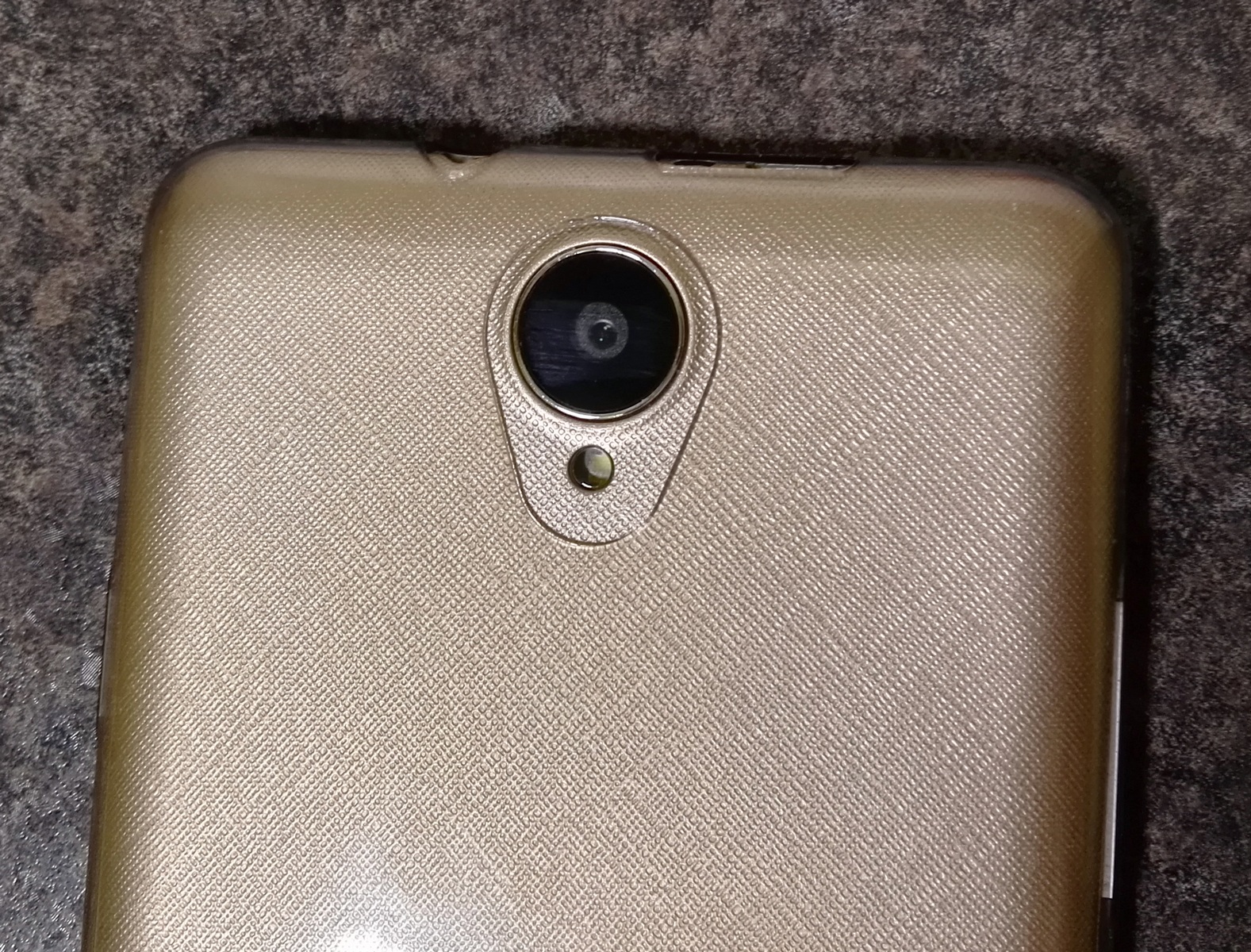
My smartphone use case has adapted over time – I want it to do work on. That means writing, switching between apps, being somewhat responsive, and always being available. The SoC means it doesn’t break any sort of record for performance, but ultimately so much of my use doesn’t require performance but rather latency in app switching and updates. Having enough memory to keep apps available means a lot, so moving up from 1GB to 2GB was a big enough change to notice, as well as the bump up to Android 5.1. The 16GB storage model is pretty basic, and the microSD compatibility is only at 32GB, rather than something bigger, and I know it will fill over time with the consistent photographing of my cats. But that is a risk that I’m going to have to take, or synchronize with Dropbox.

Without the silicone case that comes free with the phone, I will grant that despite the patterned edge, it does feel like the plastic the rear is made from, and arguably it slips out of the hand too easily. With the silicone case, it just feels like a smartphone with a case, which a lot of people use anyway. The raised power and volume buttons helps discern their location, and the fixed buttons is something I like to have on my device, even if it means giving up screen real estate.
It is clear that the cameras are not for taking glamour shots. But at a trade show, as long as you are in the front row, and have a second or two between shots, taking pictures of slides to work on later is good enough. To get a good shot taking advantage of the EIS though, you really need to use the burst mode which supports 40 shots at 13 MP each. The video is also an afterthought. That comes down to the price and what needs to be cut to meet that price. I purchased the device, brand new from Amazon, for £125 which translates to $160 pre-tax. Almost everyone I showed the phone to, probably due to the battery life argument, thought it was more expensive. The only people who guessed under (and only by $10) were a pair of senior ARM employees. But truth be told, I could buy four of these a year and it would still be cheaper than an S6. Of course, there are obvious caveats with that comparison.
I would say that this is going to be my phone for the next two years. But since I purchased it in October, two extra high end smartphones that others at AnandTech have tested have both landed on my desk for similar experiential testing. It almost seems sad to shelve the Cubot H1 immediately unless I adapt to carry two phones at once, with the H1 as that long-battery backup.
| CUBOT H1 | ||
| SoC | Mediatek MT6735P 4x ARM Cortex-A53 at 977 MHz ARM Mali-T720 MP2 at 400 MHz |
|
| RAM | 2GB LPDDR3 at 533 MHz | |
| Storage | 16GB NAND | |
| Display | 5.5” 720p IPS | |
| Modem | 2G / 3G / 4G LTE UE Category 4 DC-HSPA+, TD-SCDMA, CDMA2000 1x/EVDO Rev. A, EDGE |
|
| Networks |
TDD LTE | None |
| FDD LTE | B1 / B3 / B7 / B20 | |
| UMTS | 900 / 1900 / 2100 | |
| GSM | 850 / 900 / 1800 / 1900 | |
| Dimensions | 154.5 (h) x 76.6 (w) x 9.2 (d) mm, 201 grams* Weight Measured by AnandTech, conflicting numbers online |
|
| Cameras | Rear | 12.8MP ( 4128 x 3096 ) |
| Front | 8MP ( 3264 x 2448 ) | |
| Battery | 5200 mAh (19.76 Whr) | |
| OS | Android 5.1 | |
| Connectivity | 802.11a/b/g/n 2.4GHz BT 4.0, GPS, A-GPS, Micro-USB |
|
| SIM Size | Micro-SIM (FDD-LTE, WCDMA, GSM) Nano-SIM (GSM Only) Also Separate MicroSD slot, up to 32GB |
|
| MSRP (UK) | 16GB | $160
£125 as purchased |
So the final question becomes ‘how is it pronounced?’ Do we say cue-bot? Or perhaps cub-bot, or cue-bow? After writing this review, and looking at their online ‘CUBOT enterprise propaganda film’ on YouTube, it turns out to be coo-bot.
Originally published at https://www.anandtech.com/show/9868/cubot-h1-smartphone-test-5200-mah (Wayback Machine).