
The CUBOT H1 Smartphone Test: A Month with 3-4 Days of Battery per Charge
- Posted in
- Smartphones
- Mobile
- Battery
- CUBOT
Benchmarks
It seems somewhat silly to run performance benchmarks when most media outlets talk about high performance smartphones most of the time, but my point to consider is my old phone, and whether moving from quad core Krait 300 at 1.7GHz to a MediaTek quad core A53 chipset at 1.0 GHz but running a newer Android is better or worse. For some of the regular smartphone tests I don’t actually own the prerequisite hardware of our smartphone team, but here are some tests I was able to run, and the devices I had to hand at the time:
| Devices on Hand for Testing | |
| Cubot H1 | MediaTek 6735P |
| HTC Desire 610 | Snapdragon 400 |
| HTC One Max | Snapdragon 600 |
| Huawei Mate S | Kirin 935 |
| Huawei Nexus 6P | Snapdragon 810 |
| Google Nexus 7 2013 | Snapdragon S4Pro |
| Amazon Fire HD 6 (Limited) | MediaTek MT8135 |
| OnePlus X | Snapdragon 801 |
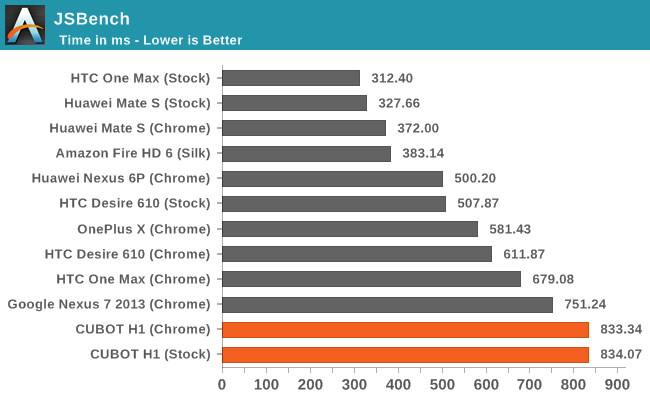
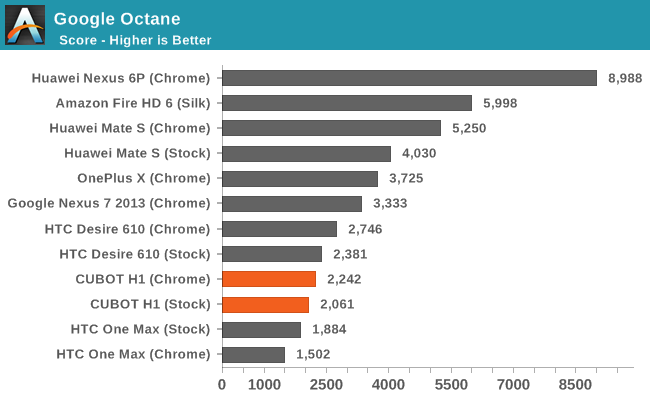
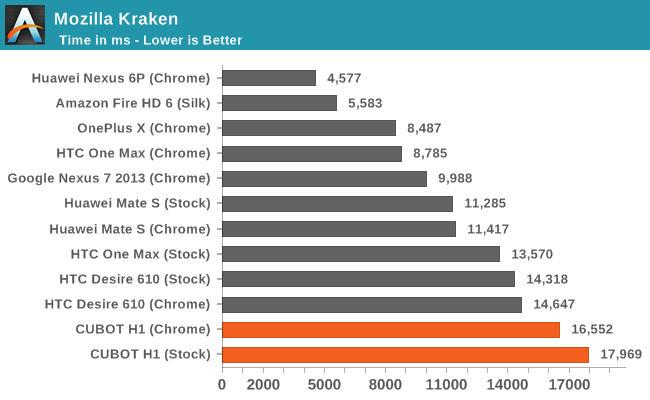
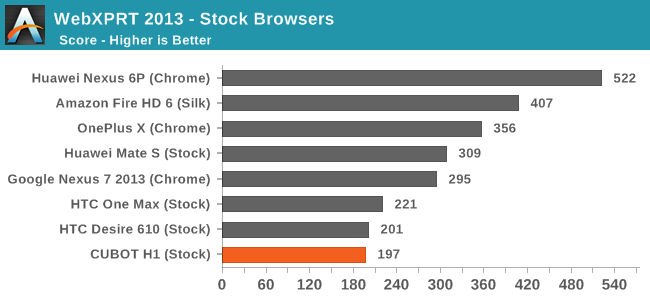
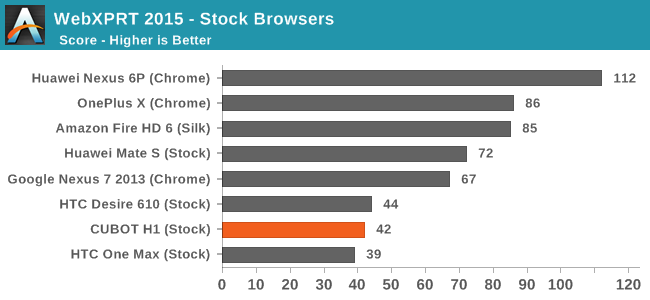
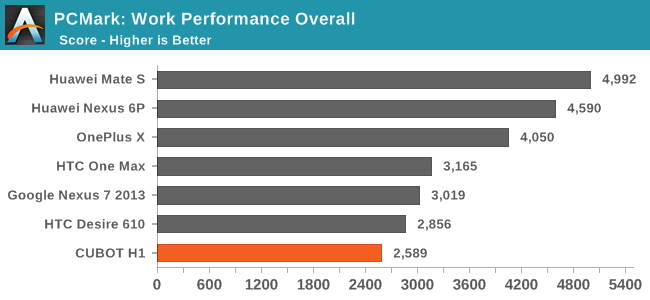
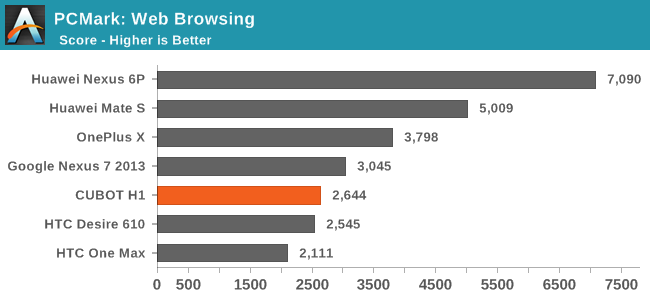
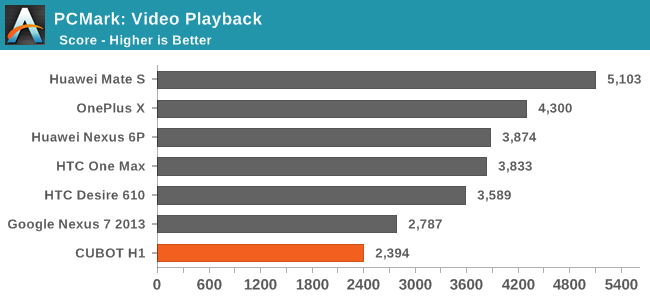
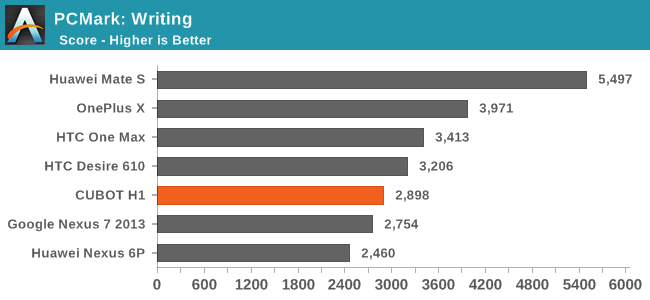
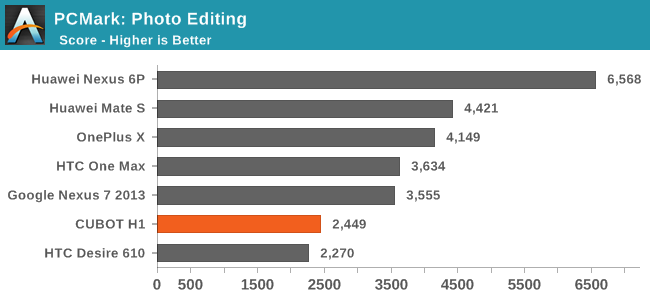
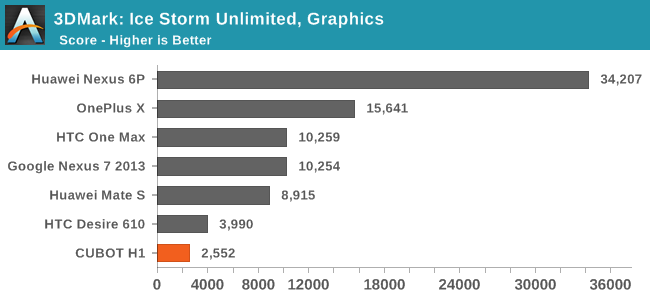
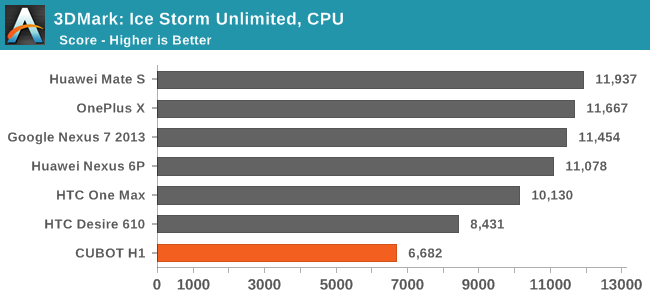
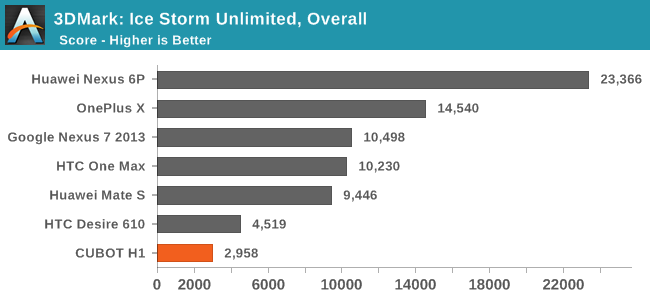
When we talk about Qualcomm’s Snapdragon 400 family or Intel's partnership with Rockchip partnership for Sofia and Atom, it makes me somewhat sad we don't have many new data points to compare to the MediaTek MT6735P inside the Cubot H1. However the one benchmark were all interested in is the battery life:

So let's put it this way - the H1 on a full charge breaks the Geekbench3 test to the point that it thinks you are cheating. Oops.
With the PCMark test it gets over 15hrs compared to the 6hrs of the Galaxy S6. When you have a large battery and not many pixels to push, with the right efficiency the device will last a night out with only 25% left in the tank in the way that high end smartphones do not. Anecdotally, as I'm writing this, I just spent a few hours in meetings across the other side of London - I spent 30 minutes each way on the tube with Evernote open and being used (albeit with no wireless or updates), and the battery went down from 38% to 33%. That's an hour of solid writing with black text on white for at most 5% of battery.


Initial use, first battery run down and more aggressive use
When I first started using the H1, the graph on the left was my battery usage estimation. Saying ‘approximiately 4 days left’ is almost unheard of, but with a regular 10% screen on time, the result was the graph in the middle, successfully predicting four days of battery. On the right is another example of my use, although a little bit more aggressive with some charging. Yes, I can confirm that there seems to be something wrong with those percentage calculations. But a quick charge in airplane mode for a few minutes gives a few percentage points of battery – while a lot of smartphones offer quick charging for the capacity to fill quickly, it still depends on the capacity drain of the SoC. It helps to have the best of both worlds. Of course, the downside of this is that it can take 3hrs and up to fully charge the H1. The H1 does come with a cable so you can charge other devices though, as 5200 mAh matches some battery packs.
Originally published at https://www.anandtech.com/show/9868/cubot-h1-smartphone-test-5200-mah (Wayback Machine).