
GIGABYTE GA-J1800N-D2H Review: Dual Core Bay Trail-D at $69
- Posted in
- Motherboards
- Intel
- Bay Trail
Direct Comparison with HP Stream 11
The two main factors in our comparative tests will be the speed, whereby the Celeron J1800 has a higher base frequency, and my extension of this, the difference in TDP. The Bay Trail-M based Celeron N2840 has a 7.5W TDP (or as Intel puts it, 4.5W SDP) compared to the 10W of the J1800. On the graphics side of the equation, both units have the HD (Bay Trail) mode equipped (4 EUs), but the J1800 also has an advantage by a vastly superior base frequency on the integrated graphics (688 MHz against 313 MHz).
Cinebench 11.5
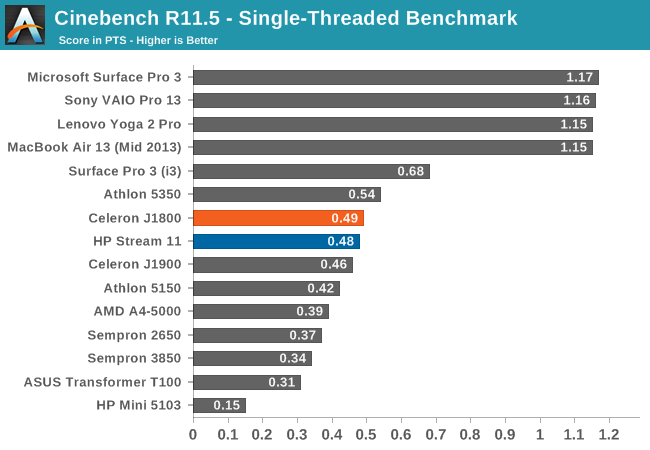
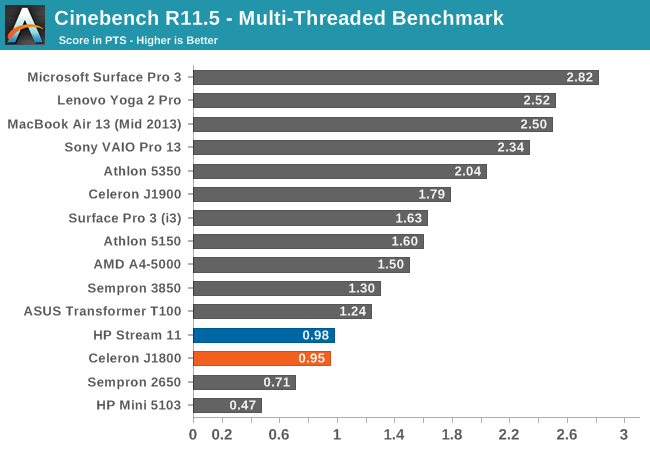
Each system trades places in Cinebench R11.5.
3DMark
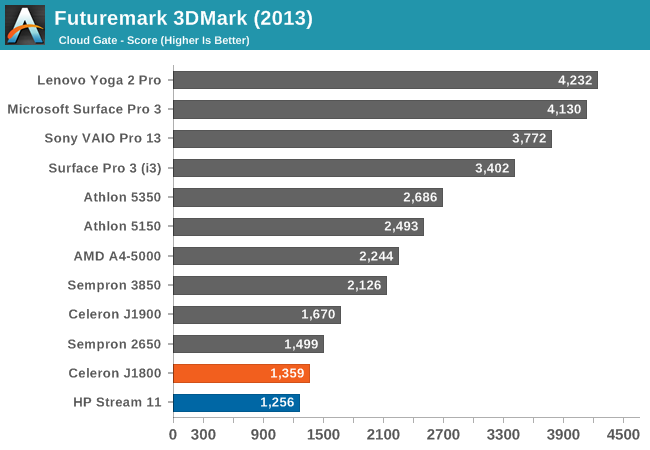
The extra MHz of the J1800 puts it slightly above the Stream 11 in a synthetic video test.
Web Benchmarks
On the lower end processors, general usability is a big factor of experience, especially as we move into the HTML5 era of web browsing. For our web benchmarks on the CPUs, we take well known tests with Chrome 35 whereas the laptop results are performed in IE.
Sunspider 1.0.2
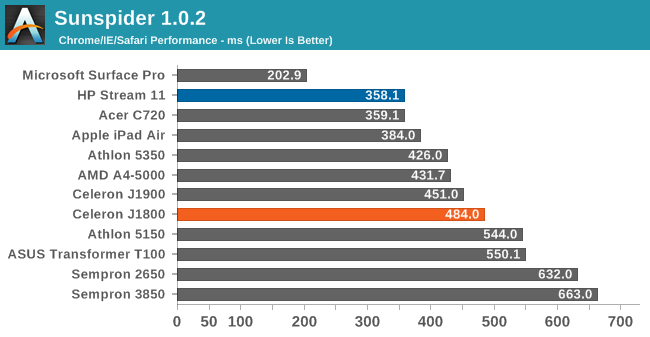
Sunspider represents a very quick CPU only test, boltered more by the software version or operating system at hand. It would seem the default settings with the HP Stream 11 make it beneficial here.
Mozilla Kraken 1.1
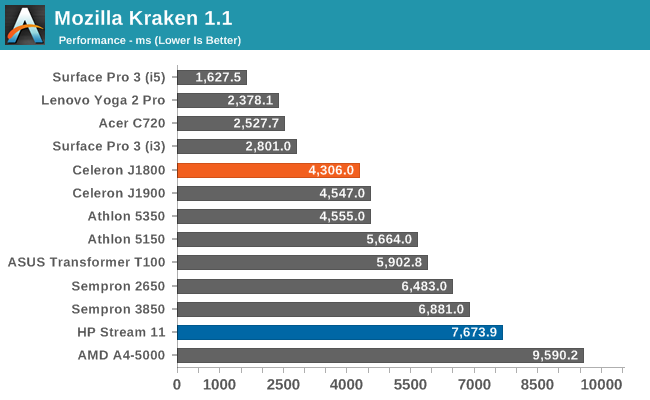
Kraken on the other hand is a bit more intense, with more memory access required. The extra memory in our desktop system most likely affected it here.
WebXPRT
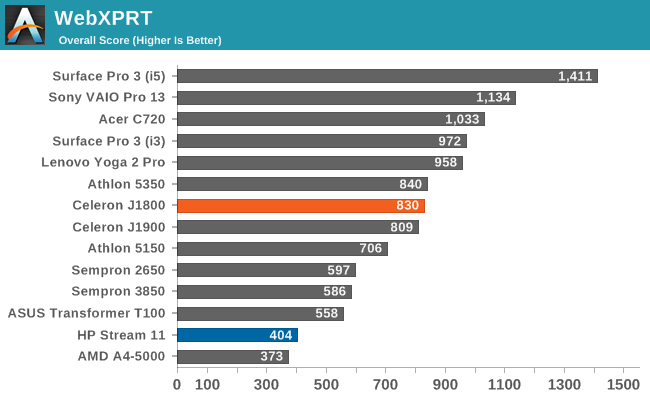
Similarly with WebXPRT, as a semi-graphical test as well, the plus side was on the Bay Trail-D desktop system.
Originally published at https://www.anandtech.com/show/8803/gigabyte-ga-j1800n-d2h-review-dual-core-bay-trail-d-at-69 (Wayback Machine).