
ARM Challenging Intel in the Server Market: An Overview
Intel's Future: Xeon-D
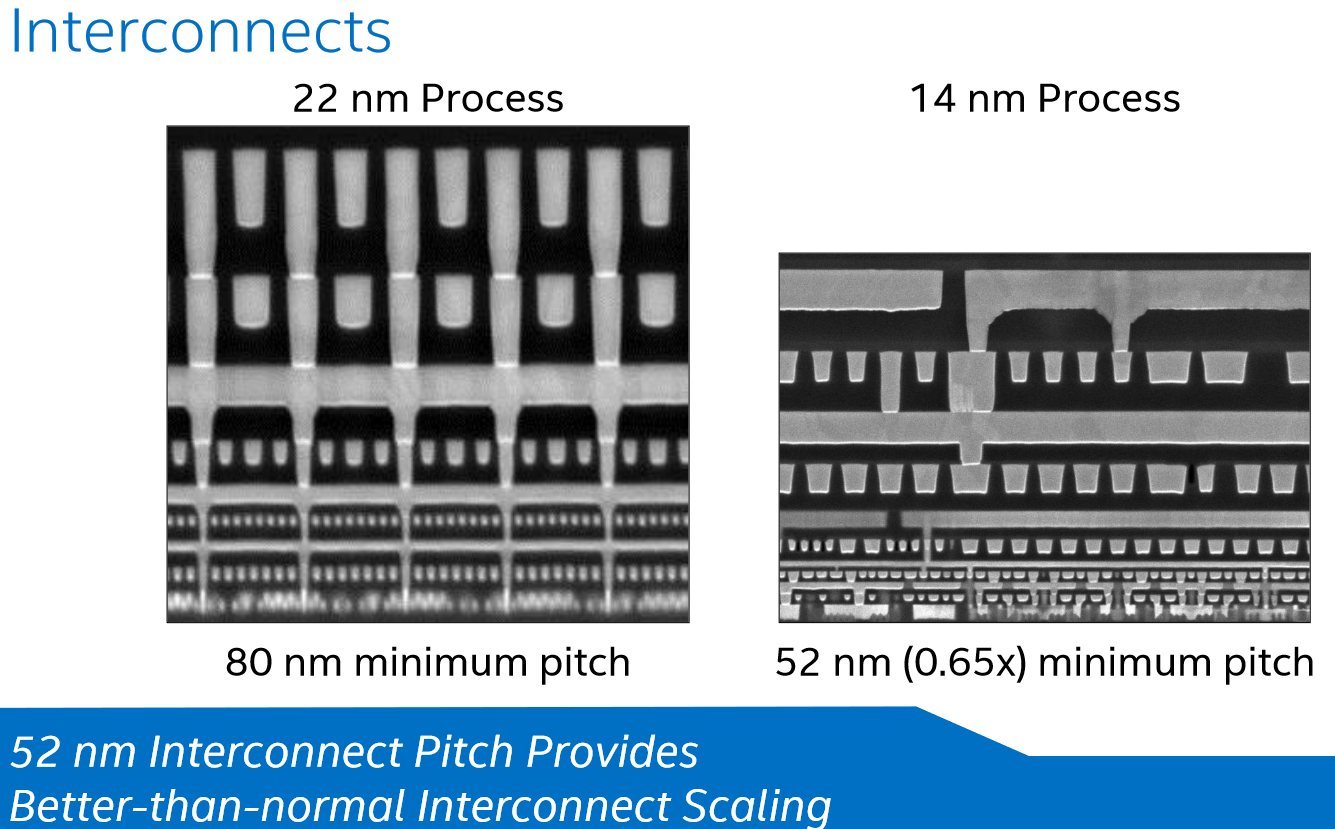
Intel's response to all of these competitors is relatively simple. The Atom C2000 might not be strong enough to turn the ARM tide and the Xeon E3 might lose a performance per watt battle here and there due to the extra PCH chip it needs. So take the two and unify the advantages of the Xeon E3 and Atom C2000 in one chip, the Xeon-D. Then use Intel's main industry advantage, the most advanced process technology, in this case the 14nm 2nd generation of trigate transistors.
The Xeon-D should have it all (almost): a Broadwell core that can go as low as 2W per core at 1.2GHz. It can also deliver great single-threaded performance if necessary, as one core can go as high as 2.9GHz! Some people have said that Intel will have a very hard time offering the same richness of integrated hardware blocks as the ARM licensees, but frankly the Xeon-D has almost everything a server application can need: several PCIe 3.0 root complex (24 lanes), 10GbE Ethernet, and PCH logic (6x SATA, USB 3.0/2.0, 8 lanes of PCIe 2.0 and 1GB Ethernet) are all integrated.
Eight of those Broadwell cores will find a place in a 45W SoC. Considering Intel needs 6W to run two cores (and a small integrated GPU) at 1.4GHz, we would not be surprised if the new Xeon-D could reach 1.8GHz or more and that Turbo Boost clocks will be above 3GHz.
The only disadvantage that the SoC has compared to some of the ARM SoCs is the dual-channel memory controller. The Xeon-D will be available in Q3 2015. While roadmaps should always be read with caution, it must be said that Intel rarely delays its products more than a few months. Intel has been executing very well, almost like clock work.
Originally published at https://www.anandtech.com/show/8776/arm-challinging-intel-in-the-server-market-an-overview (Wayback Machine).