
VisionX 420D Review: ASRock's mini-PC Lineup Continues to Impress
Miscellaneous Aspects & Final Words
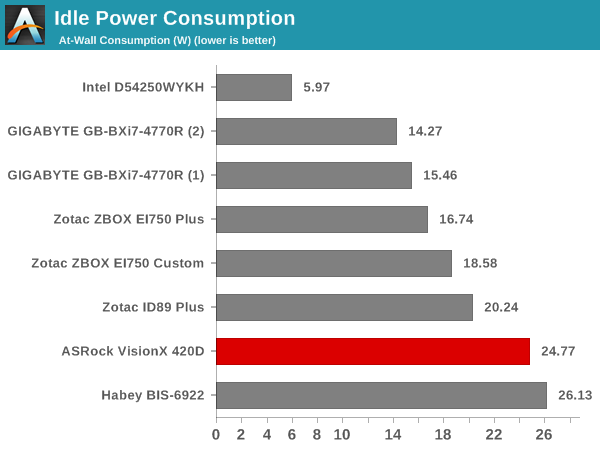
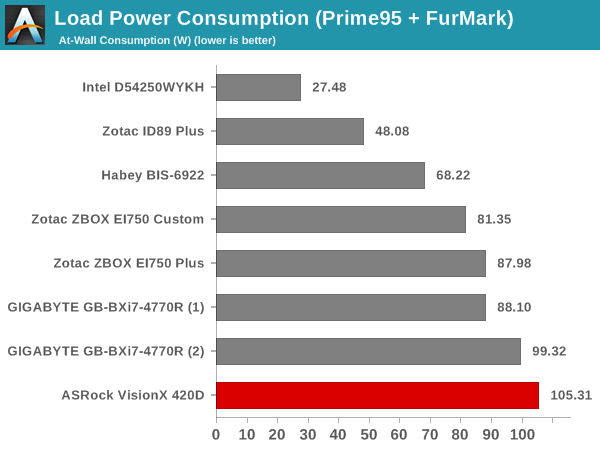
The power consumption at the wall was measured with the display being driven through the HDMI port. In the graphs below, we compare the idle and load power of the VisionX 420D with other low power PCs evaluated before. For load power consumption, we ran Furmark 1.12.0 and Prime95 v27.9 together. The VisionX 420D is not the most power efficient PC around, but the target market (gamers) don't need to care too much. The numbers are not beyond the realm of reason for the combination of hardware components in the VisionX 420D.
Thermal Performance
Given the active nature of the thermal solution and the size of the chassis, it would be fair to expect the unit to be able to handle full loading of the CPU and GPU without issues. The VisionX 420D manages to acquit itself very well in our tests. The following two graphs show the various clocks in the system as well as the temperatures with the unit subjected to more than 1 hour of continuous CPU and GPU loading.

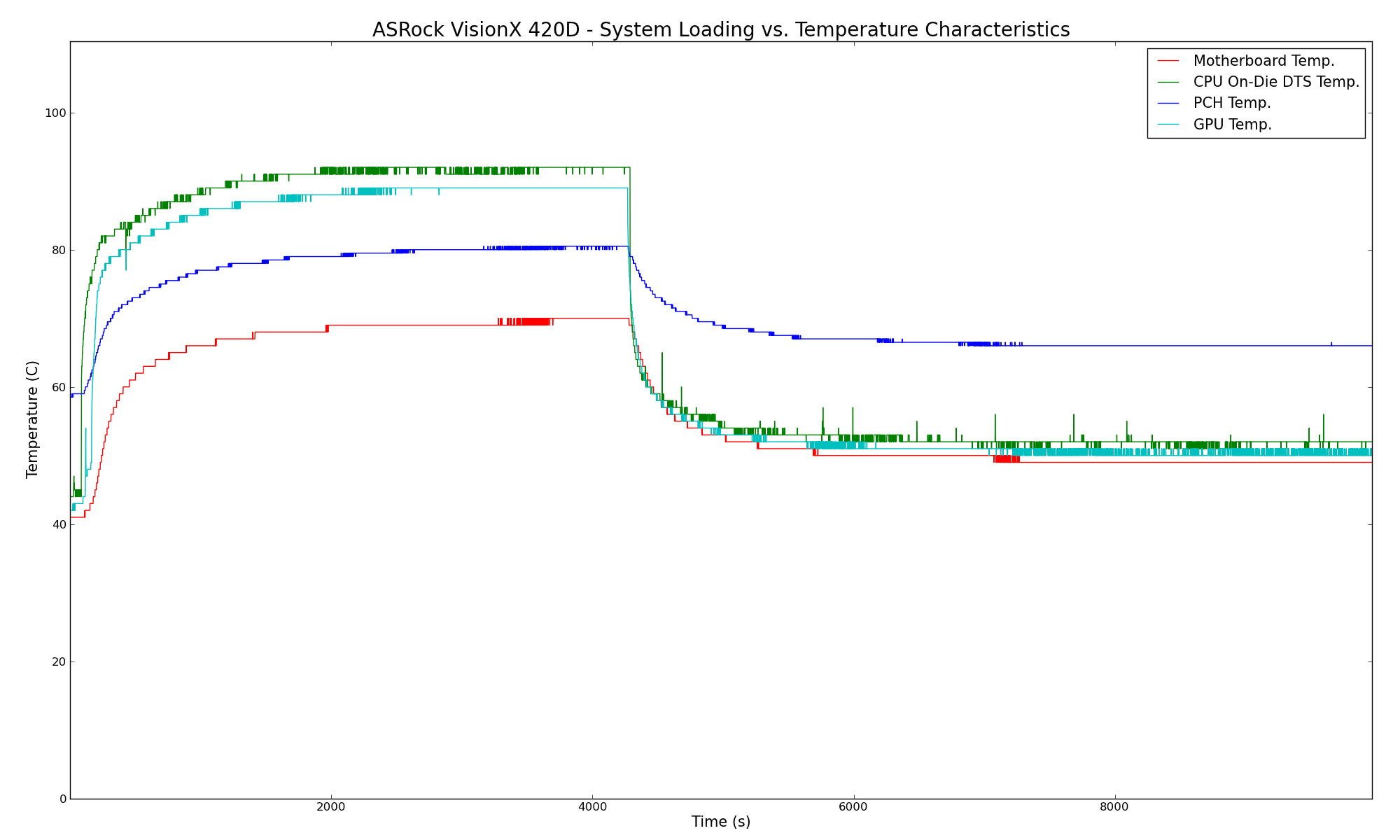
The excellent thermal solution manages to keep the CPU temperature well below the junction temperature. The clocks also indicate that there is no throttling at play.
Concluding Remarks
ASRock continues to impress us with the capabilities it crams into a small chassis. The SD card reader, multiple audio outputs and Intel NIC are nice to have features. The AMD GPU (Radeon R9 270MX) is also a top notch choice for gaming in this form factor. The MHL port (along with the supplied MHL cable) is a unique feature of the unit. It allows users to mirror the display of a supported smartphone while also charging it. The WLAN component (Broadcom-based 2x2 802.11ac) is the best amongst all the mini-PCs that we have evaluated so far.
On the other side, ASRock should start thinking about supplying a SSD or a mSATA drive coupled with a smaller hard drive for the storage subsystem. We are also a bit surprised by the absence of a Blu-ray option for this configuration (either go with no ODD, or include one befitting a premium mini-PC). The choice of the GPU, while perfect for gaming, is not that great for videos (given lack of 4K decoding capabilities). As a final note, it is definitely time for ASRock to reconsider the bundled MCE remote. In its place, a mini-keyboard / trackpad combo would be a better option. Apart from these quibbles, there is nothing much to say against this unit. If you are looking for a non-DIY gaming mini-PC which doesn't skimp on features, it is hard to go wrong with the VisionX 420D.
Originally published at https://www.anandtech.com/show/8406/visionx-420d-review-asrock-continues-to-impress (Wayback Machine).