
Seagate NAS 4-Bay with Marvell ARMADA 370 Review
Encryption Support Evaluation - Single Client CIFS Access
Consumers looking for encryption capabilities can opt to encrypt a iSCSI share with TrueCrypt or some in-built encryption mechanism in the client OS. However, if requirements dictate that the data must be shared across multiple users / computers, relying on encryption in the NAS is the best way to move forward. Most NAS vendors use the industry-standard 256-bit AES encryption algorithm. One approach is to encrypt only a particular shared folder while the other approach is to encrypt the full volume. Seagate supports only volume-level encryption for now in NAS OS.
On the hardware side, encryption support can be in the form of specialized hardware blocks in the SoC (common in ARM / PowerPC based NAS units). In x86-based systems, accelerated encryption support is dependent on whether the AES-NI instruction is available on the host CPU. The ARMADA 370 SoC does have cryptography accelerator blocks. We created an encrypted volume and set up a CIFS share to repeat our Intel NASPT / robocopy benchmarks. The results are presented in the graphs below.
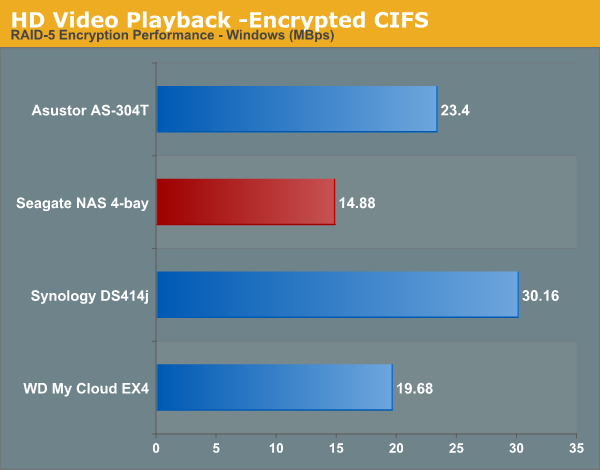
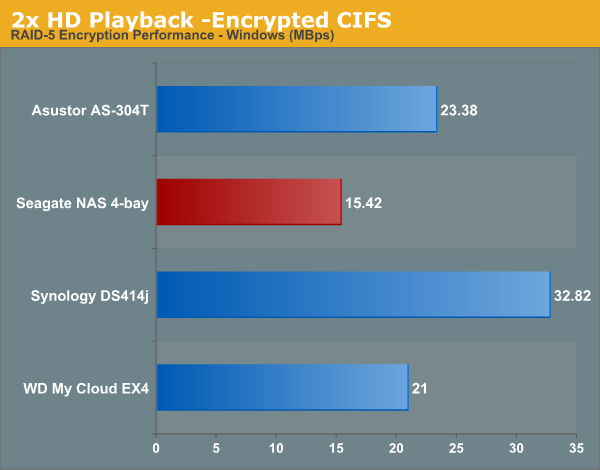
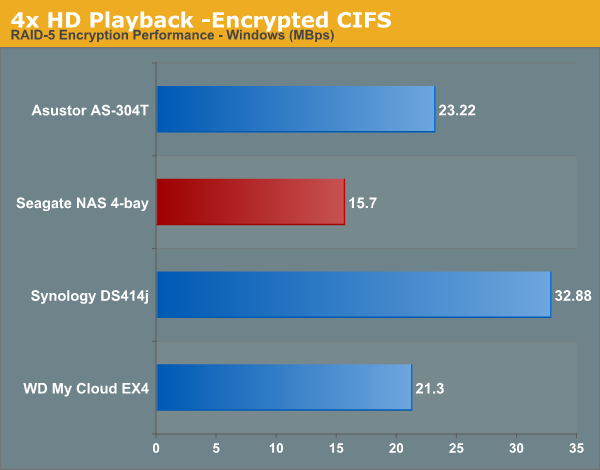
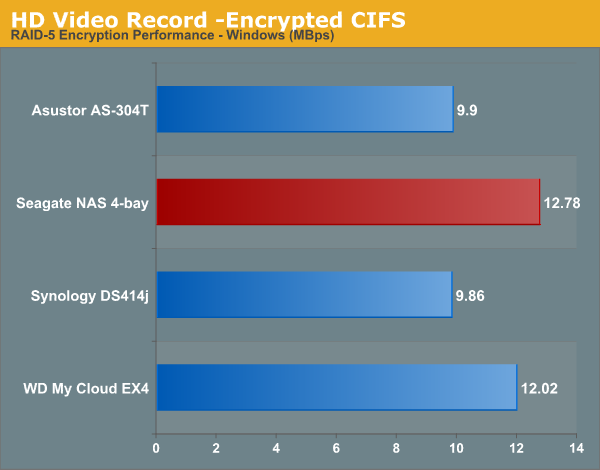
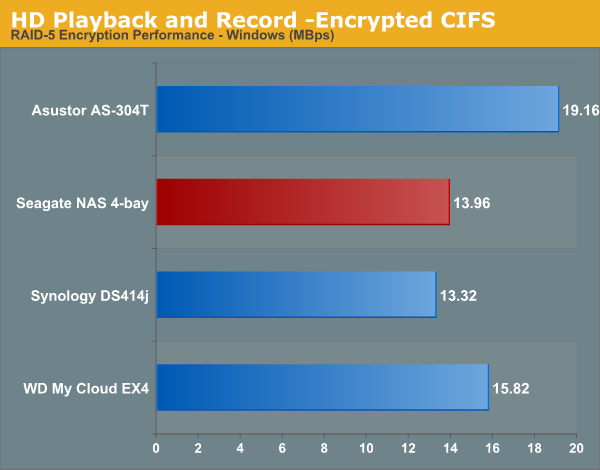
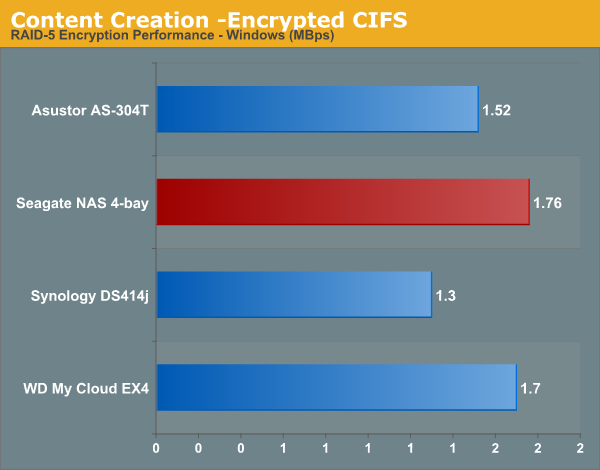
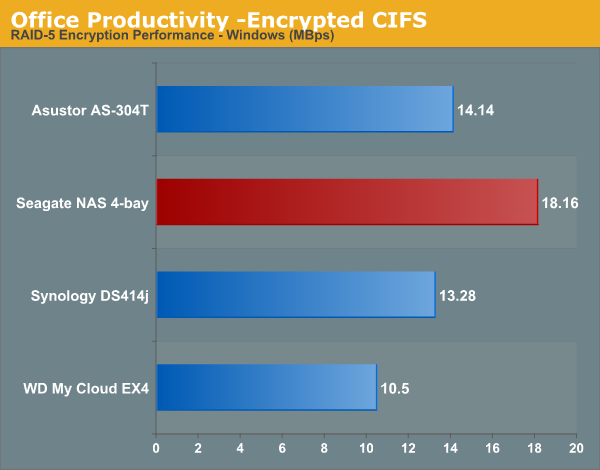
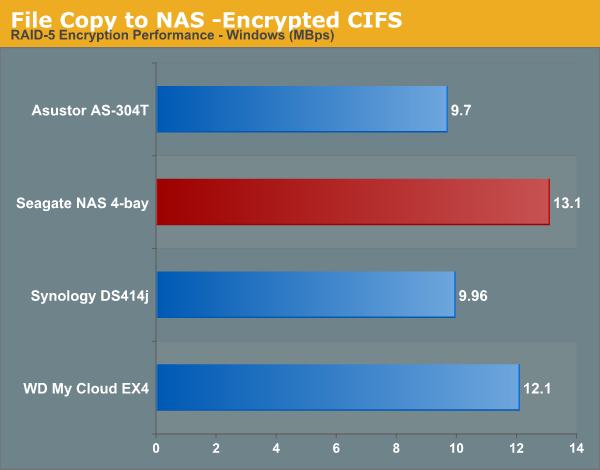
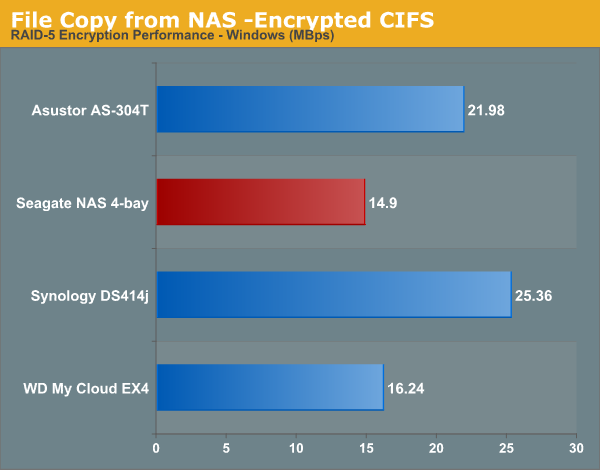
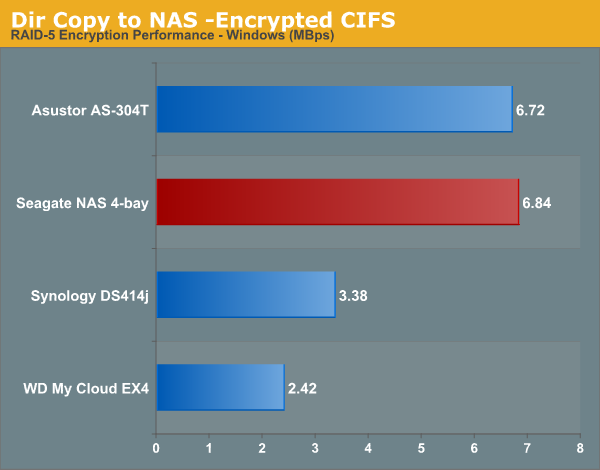
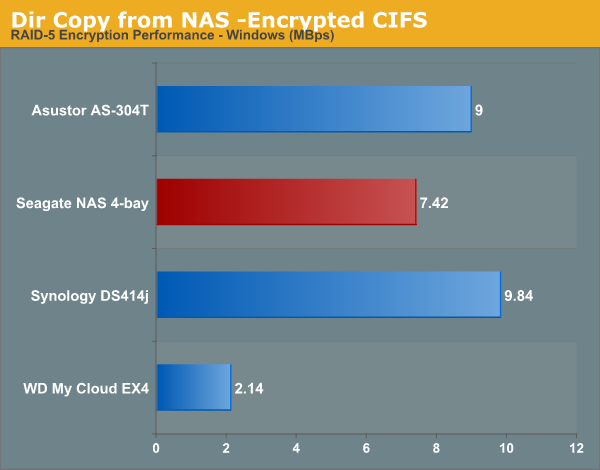
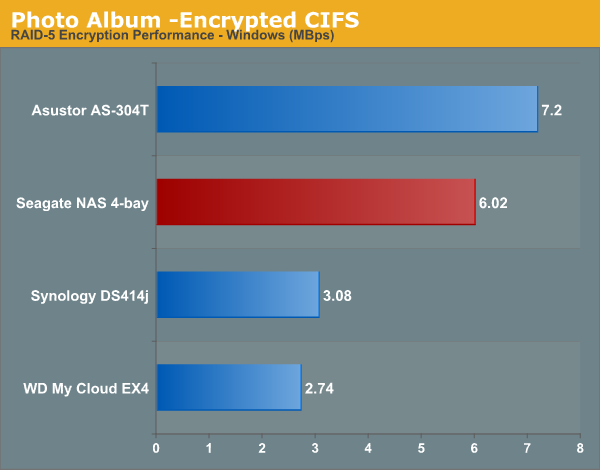
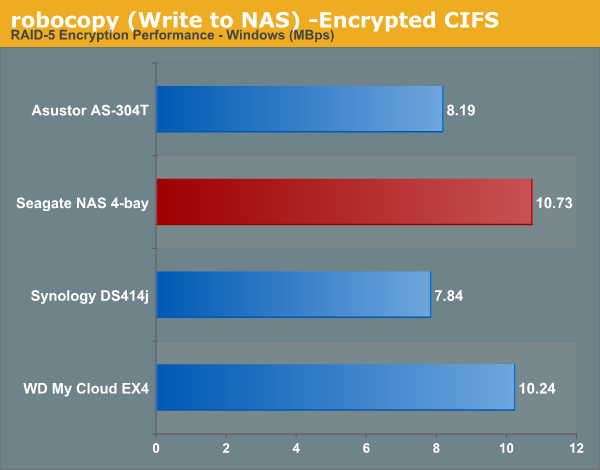
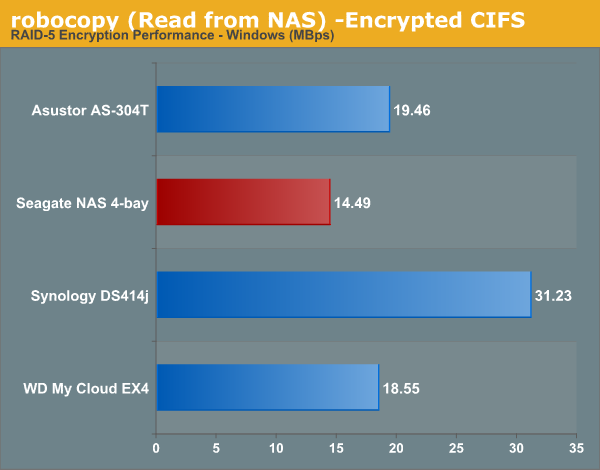
The Seagate NAS 4-bay excels in write heavy workloads, but reads are much worse off compared to the competition.
Originally published at https://www.anandtech.com/show/8264/seagate-armada-370-nas-4bay-review (Wayback Machine).