
The Impact of Disruptive Technologies on the Professional Storage Market
NetApp: Flash Anywhere
Nutanix, CloudFounders/Amplidata, and Fusion-IO (covered on page eight) are clearly challenging the current market leaders NetApp and EMC. We decided to take a closer look at how the giants respond by looking at the latest products of NetApp. NetApp's first step with using flash memory was called “flash cache”. NetApp simply added a PCIe flash card and inserted it into its FAS V6200 storage arrays.
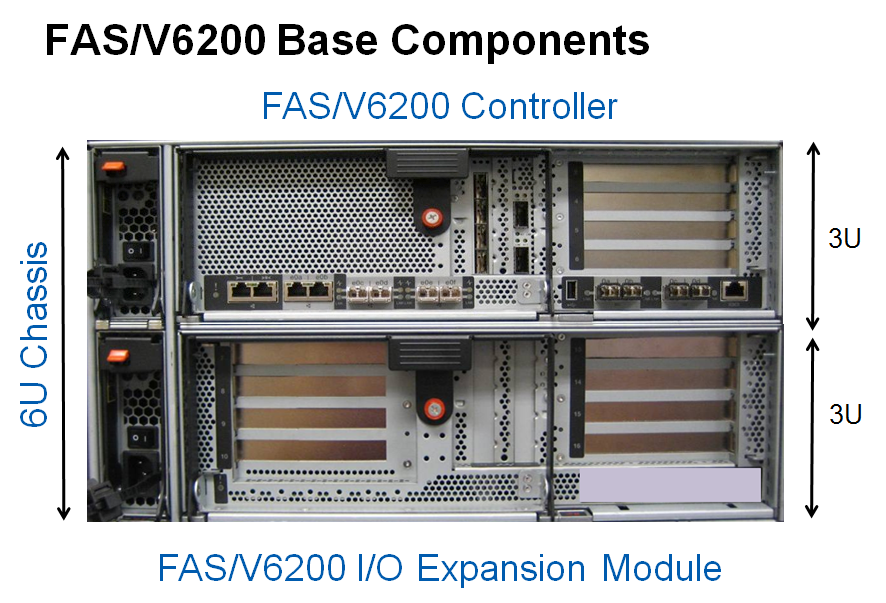
It was a quick way of adding some performance, but it was far from exploiting the true potential of NAND memory. First of all, the flash cache was only used for reads and secondly the cache used a very simple but hardly efficient FIFO eviction algorithm. Case studies (done by NetApp Customers) with applications with a typical read/write mix reported about 30% more IOPs and on average 20% lower response times when arrays with 10K RPM SAS disks where replaced by an array with a massive flash cache and slightly slower 7200 RPM disks.
Considering how large the gap is between flash memory and magnetic disks, and the small gap between 10K and 7.2K RPM disks, that is rather underwhelming. Part of the reason is of course that these arrays already have a healthy amount (4-8GB) of NVRAM (Non Volatile RAM) that caches the hottest data and makes writes more sequential. However, the list price of a flash cache module is anywhere between $16000 (256GB) and $50000 (1TB).
In a published benchmark, six FAS6240 with 192 15K RPM disks (costing $1.5 million in total!) achieved about 250k IOPs, or about 40K IOPs per array. To sum it up: it's a very high premium for an underwhelming but very welcome performance boost. Only customers who use read dominated applications (like warehouse / OLAP app) can really expect excellent performance.
Originally published at https://www.anandtech.com/show/7170/impact-disruptive-technologies-professional-storage-market (Wayback Machine).