
NZXT Phantom 630 Case Review: The Relentless Pursuit of Perfection
Noise and Thermal Testing, Overclocked
A case like the NZXT Phantom 630 isn't meant to run hardware at stock settings; it's designed for end users who want to push their systems as far as they can go. My experiences with Ivy Bridge and Kepler suggest that for current generation hardware, this is especially relevant, with Kepler in particular having its boost clocks being governed by relatively low thermal thresholds.
Our overclocked testbed tends to put a healthy amount of stress on system cooling, but you're about to see the Phantom 630 hit another grand slam and obsolete its older, more expensive sibling.
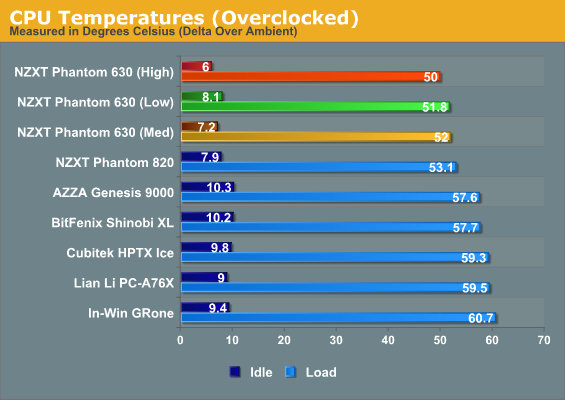
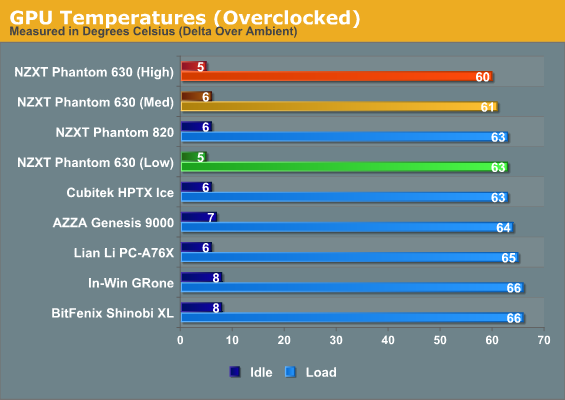
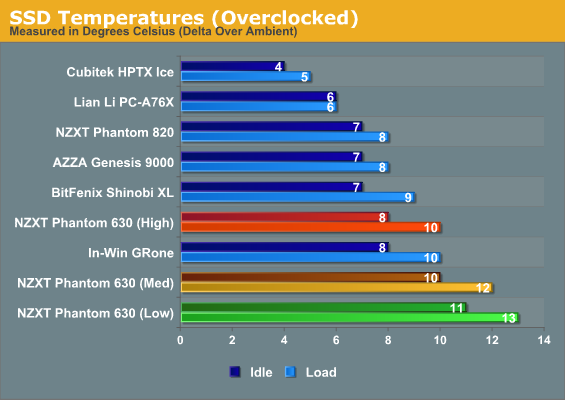
So this is pretty much what progress looks like. The SSD again runs toastier behind the motherboard tray than it does in the other enclosures, but not even close enough to affect usability; add another 10C to start approaching that threshold. If you run the Phantom 820 at its absolute highest fan setting, it can produce ever-so-slightly better CPU thermals than the 630 can, but just barely above the margin of error. The 630 just has a more efficient airflow design.
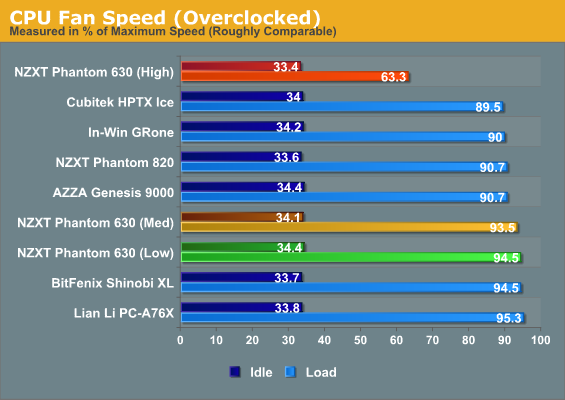
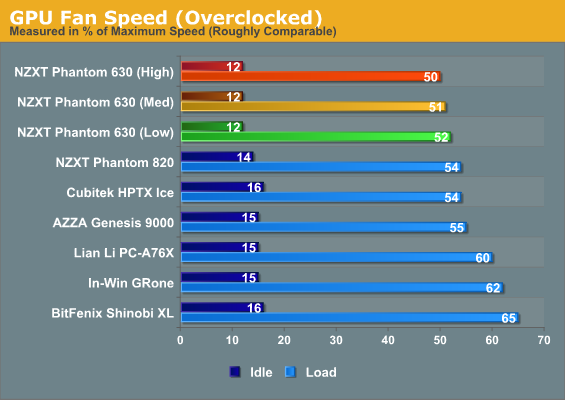
Airflow at the fan's high setting keeps the cooler on the CPU from hitting its inflection point, at which point it would have to spin up to a much higher setting. Fan headroom is still decent, but we're definitely pushing the cooling power of our CoolerMaster Hyper 212 Evo a little.
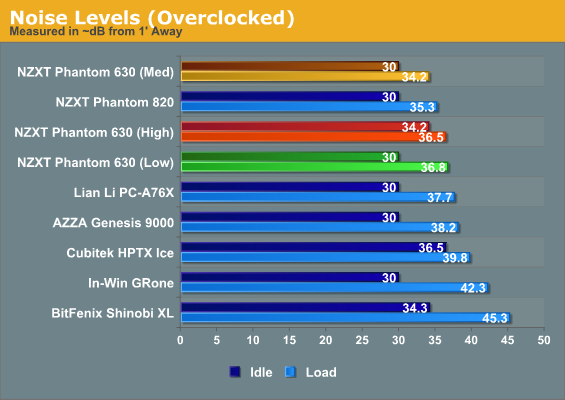
Say it with me, now: superior airflow almost always trumps acoustic padding. The Phantom 630's medium fan setting is most definitely its sweet spot, and the excellent flow through of the case keeps the heatsink fans from ever having to spin up too much. The 630 does a particularly excellent job of keeping our GTX 560 Ti cool even under its overclocked settings.
Originally published at https://www.anandtech.com/show/6681/nzxt-phantom-630-case-review-the-relentless-pursuit-of-perfection (Wayback Machine).