
Z77 mITX Round-Up: Five of the Best – MSI, Zotac, ASRock, EVGA and ASUS
Zotac Z77-ITX WiFi Conclusion
At the time of writing this conclusion, each 7-series mITX motherboard I have tested has used the same layout in their design – the CPU socket goes near the bottom and the chipset is at the top. I am beginning to wonder who thought this was a good idea – having everything this way round means that the socket presses up against the DRAM and PCIe slots, restricting cooler size and compatibility. It means that the CPU Power connector is in an awkward place onboard and power cables will have to stretch over the board to reach it – this is less of an issue on the Zotac board due to the included 8-pin extension cable in the box. The argument for this layout is usually a robust ‘well it puts the IO on the edge of the motherboard’. But the IO usually has the long thin cables designed to go anywhere – I have no issue stretching my SATA cables over my RAM to fit, or a front panel audio cable. However, big bulky power cables across the board and restrictive cooling due to socket area placement are not enticing prospects.
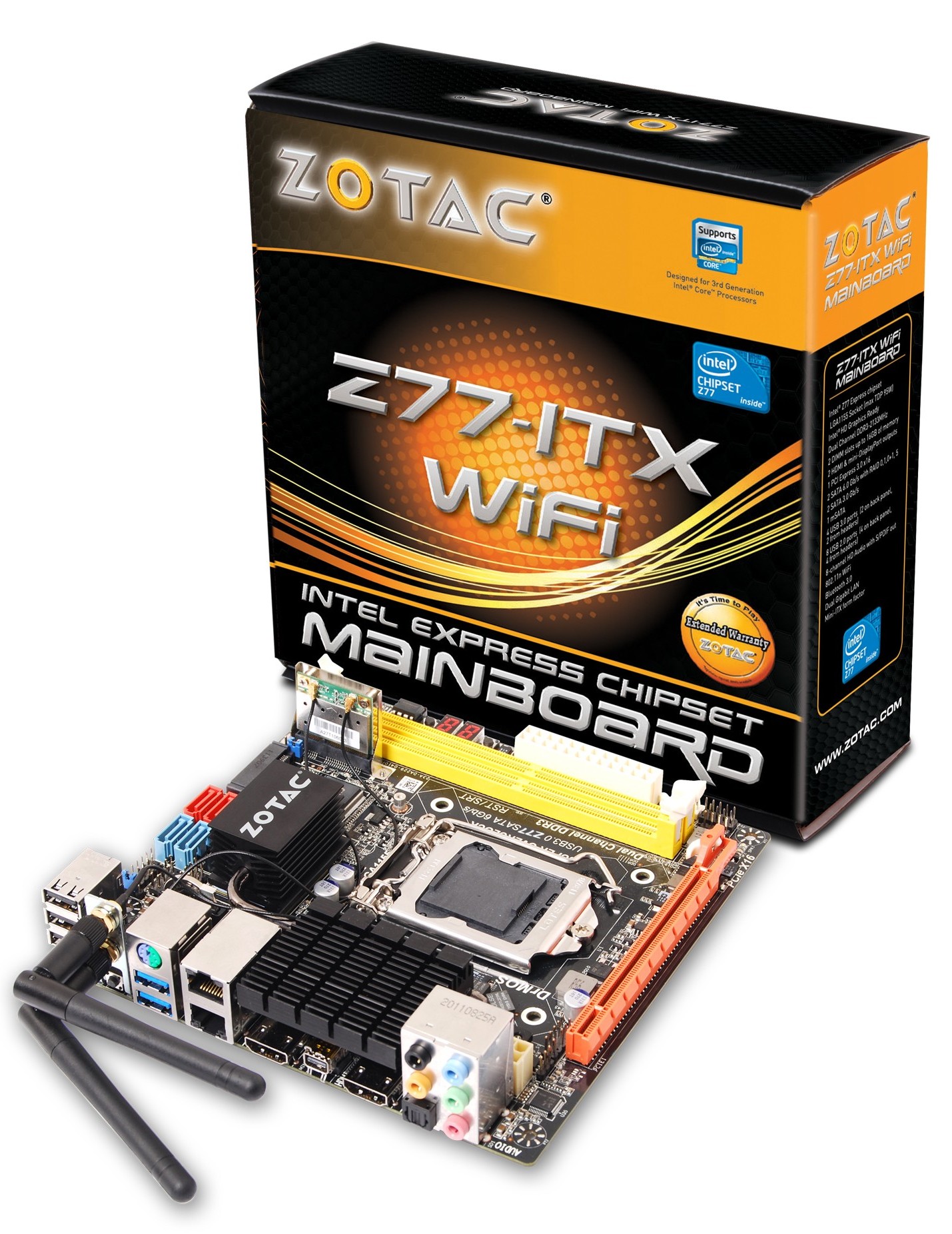
Enough of socket placement aside, the Zotac Z77-ITX WiFi has a number of good points to be mentioned. The video outputs on board are a novel interpretation of the ‘three digital output’ allowances. Normally we get a DVI-D, HDMI and a DP on almost all other mainstream channel Z77 motherboards – however Zotac have shaken up the market. We get two HDMI outputs (for dual screens, or sending video one way and audio the other), and a mini-DisplayPort. The mDP port is bolstered by the mDP to DP cable found in the motherboard box, meaning every modern digital display (except Apple’s Thunderbolt display) is covered. Kudos to Zotac on this design choice.
Also in hardware, we get dual Realtek 8111E GbE NICs alongside integrated WiFi, making sure all networking options are open. Unfortunately we do not get any network management software in the box to complement this design choice, despite the fact that Realtek has some proprietary software which should be almost free to include. We also get the perennial favorite of reviewers, system builders and troubleshooters alike – the power/reset switches (kind of rare for a mITX board) as well as a two-digit debug. Despite the extra cost these afford, I believe they are well worth the money on every motherboard in the market. Other hardware features onboard are an mSATA, two fan headers and an extended heatsink covering the power delivery.
There are also some poor hardware choices in this build, such as the Realtek ALC889 audio which failed our RMAA 192 kHz test. Almost all motherboard options I see are Realtek ALC892 or above, which should offer a better audio experience. It should also be mentioned we do not get any Realtek audio software included in the package either.
On the software side, the driver CD requires a manual installation of all the drivers rather than the painless silent install we are becoming used to. There are no software utilities to speak of for overclocking or fan controls – the only way to control the fans is via the BIOS. For the BIOS itself, we really only have a colored skin on top of the normal BIOS options, rather than anything embracing the graphical BIOS concept of interactivity. As a downside as well, SATA configuration on the BIOS tested defaulted to IDE rather than the preferred AHCI.
In the modern motherboard industry it is very hard for a smaller manufacturer like Zotac to get a design win. In certain aspects Zotac have achieved it, plugging in some functionality into this mITX board that no other manufacturer has. But it gets let down by other design decisions and the lack of interoperability between the user and the system itself. Putting a Zotac motherboard in a build all comes down to price, and given that I have seen it on Newegg for $130 one week then $163 the next means that you may have to pick and choose the best moment if you want this board.
Originally published at https://www.anandtech.com/show/6516/z77-mitx-roundup-five-of-the-best-msi-zotac-asrock-evga-and-asus (Wayback Machine).