
The GeForce GTX 660 Ti Review, Feat. EVGA, Zotac, and Gigabyte
Synthetics
We’ll also take a quick look at synthetic performance to see if the reduction in ROP performance, L2 cache, and memory bandwidth had any kind of other impact we haven’t anticipated. We’ll start with 3DMark Vantage’s Pixel Fill test.
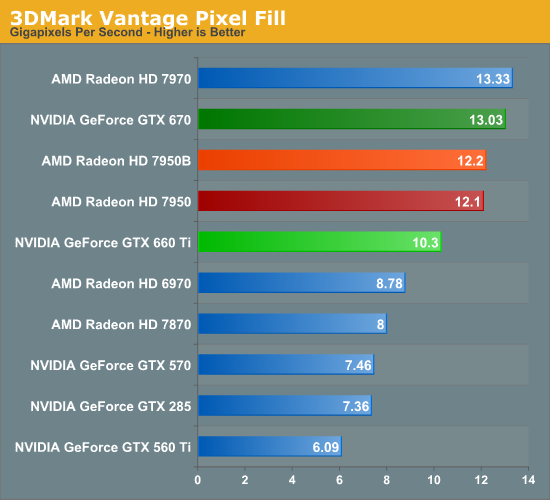
Assuming you have enough ROP throughput, the pixel fill test is about memory bandwidth. Unsurprisingly, the GTX 660 Ti is around 20% behind the GTX 670 here.
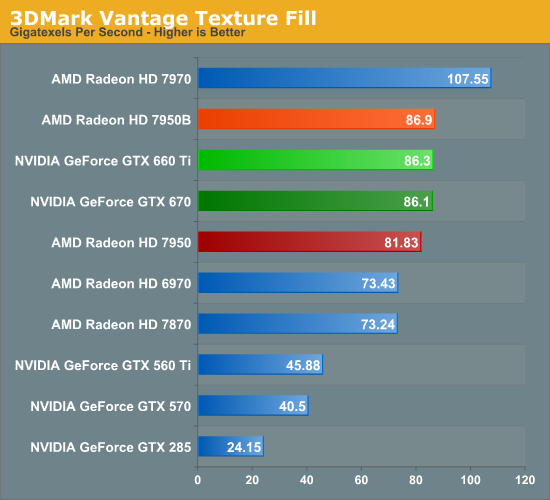
Our second test is 3DMark’s Texel Fill test, which as expected is insensitive to anything going on outside of the SMXes. The GTX 670 and GTX 660 Ti are tied here, reflecting the fact that they have equal theoretical texture throughput.
Our third theoretical test is the set of settings we use with Microsoft’s Detail Tessellation sample program out of the DX11 SDK
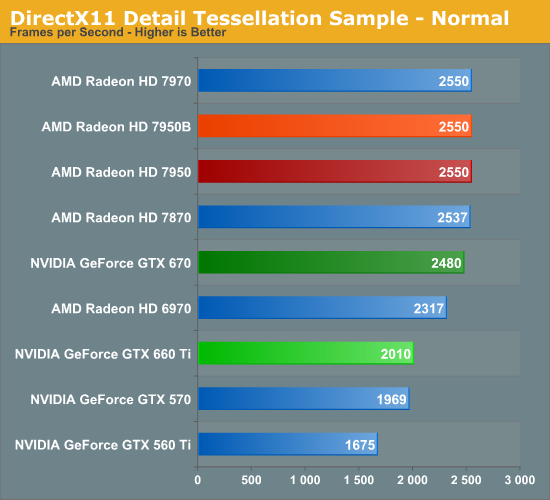
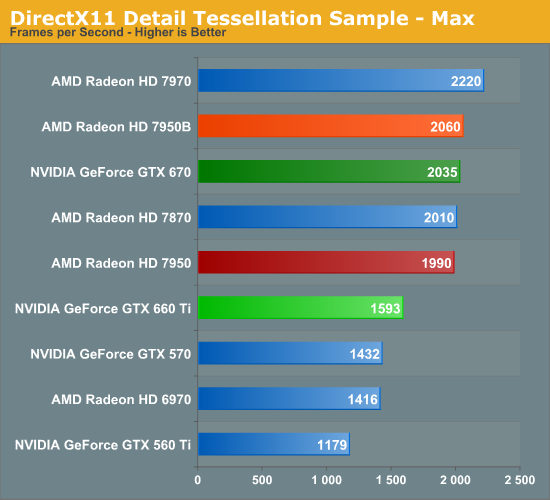
To be honest we’re not quite sure why there’s such a performance drop here relative to the GTX 670. On paper the geometry performance of the two should be identical. Either we’re ROP limited (this test does draw a lot of pixels at those framerates), or it really likes memory bandwidth. Regardless it’s an odd state of affairs to see NVIDIA losing a tessellation test to the 7870, considering how lopsided things were a year ago.
Our final theoretical test is Unigine Heaven 2.5, a benchmark that straddles the line between a synthetic benchmark and a real-world benchmark as the engine is licensed but no notable DX11 games have been produced using it yet.
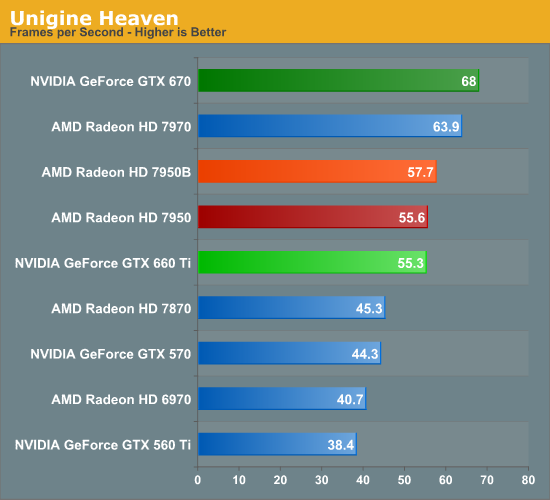
Heaven proves to be rather sensitive to the ROP and memory changes. The performance hit is just shy of 20%.
Originally published at https://www.anandtech.com/show/6159/the-geforce-gtx-660-ti-review (Wayback Machine).