
HP Phoenix h9-1120t System Review: HP's Gaming Desktop Round Two with Tahiti and Ivy Bridge
Build, Heat, and Power Consumption
We already covered the HP Phoenix chassis in our previous review; the chassis itself hasn't changed at all and features the same modest expandability and thermal envelope. I still quite like the design; it's a little bit gaudy but not overly so, though last time many of you were unimpressed. It's a matter of taste. HP also continues to standardize the Phoenix on a single 80mm closed loop liquid-cooler that's reasonably efficient but not liable to win any awards, and it's definitely a step down from the 92mm configuration in iBuyPower's LAN Warrior.


I took the opportunity this time to check out the overclocking options in the HP Phoenix h9, though. What I found was...more than I expected, but much less than I'd hoped for. There's ratio control, and you can enable the IGP in the BIOS if you're like me and want access to either the extra monitor outputs and/or Quick Sync, but tweaking is extremely limited. When overclocking, you're entirely at the mercy of however HP's system handles voltage, and given how sensitive Ivy Bridge can be you're almost better off either keeping the overclock extremely modest or just foregoing it entirely. This is a service that HP could be providing from the factory, but they don't, and it's to their detriment.
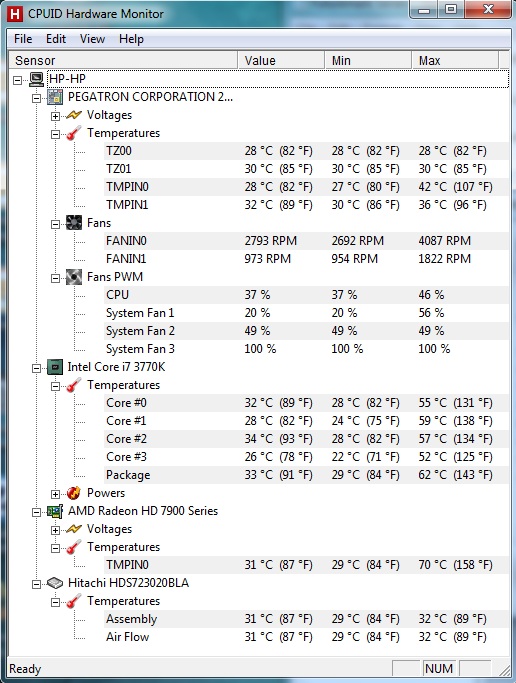
Thankfully there does seem to be a healthy amount of thermal headroom. At stock clocks and voltages, Ivy Bridge runs nice and frosty, and even the Radeon HD 7950 is able to keep temperatures comparatively low. This is one place where HP's Phoenix does excel and threaten boutique builds, though mostly it's because they're not pushing the envelope at all.
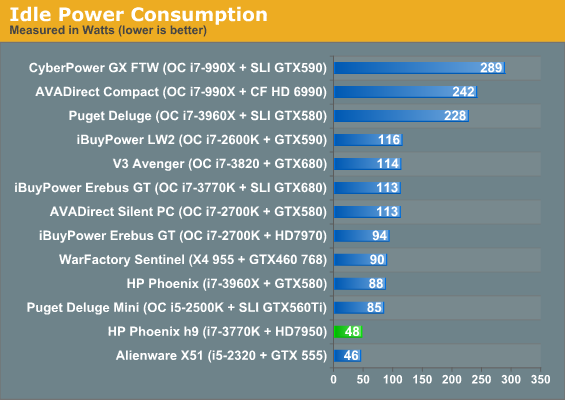
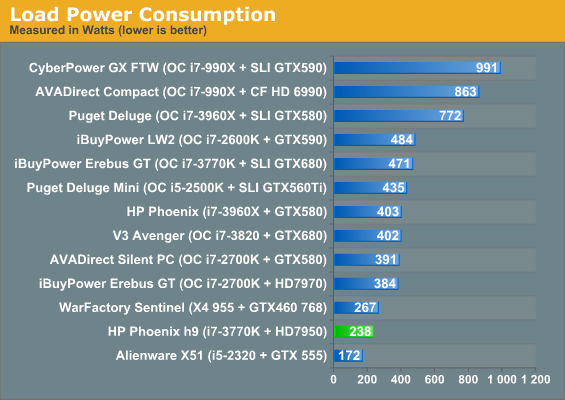
Power consumption is the other. The newer Phoenix has outstandingly low idle and load power draw for its performance profile, and I think the boutiques would have a hard time competing with this. In situations where the extra CPU cores aren't needed, the Phoenix h9 nips at the heels of the vastly more expensive Sandy Bridge-E version while drawing a hair over half of the power from the wall.
Originally published at https://www.anandtech.com/show/6020/hp-phoenix-h91120t-system-review-hp-gaming-desktop-round-two-with-tahiti-and-ivy-bridge (Wayback Machine).