
Kingston HyperX 3K (240GB) SSD Review
TRIM Performance
In practice, SandForce based drives running a mainstream client workload do very well and typically boast low average write amplification. However if subjected to a workload composed entirely of incompressible writes (e.g. tons of compressed images, videos and music) you can back the controller into a corner.
To simulate this I filled the drive with incompressible data, ran a 4KB (100% LBA space, QD32) random write test with incompressible data for an hour and a half, and then ran AS-SSD (another incompressible data test) to see how low performance could get:
| Kingston HyperX 3K - Resiliency - AS SSD Sequential Write Speed - 6Gbps | |||||
| Clean | After 1.5hr Torture | After TRIM | |||
| Kingston HyperX 3K 240GB | 312.4 MB/s | 103.9 MB/s | 245.8 MB/s | ||
I usually run this test for only 20 minutes but after seeing an unusually resilient performance by the 240GB drives I decided to extend the test period to a full 90 minutes. Performance does drop pretty far at that point, down to 103MB/s. TRIMing the drive does restore some performance but not all. If you have a workload that uses a lot of incompressible data (e.g. JPGs, H.264 videos, software encrypted data, highly random datasets etc...) then SandForce just isn't for you.
Power Consumption
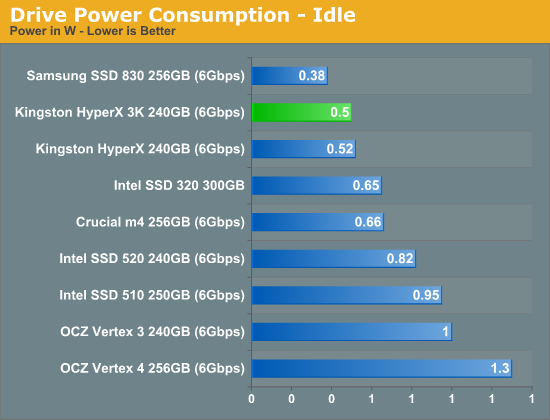
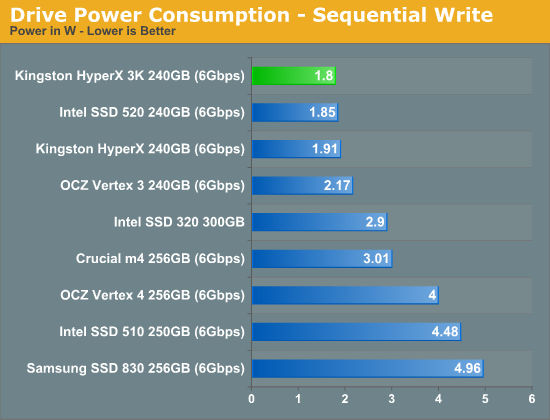
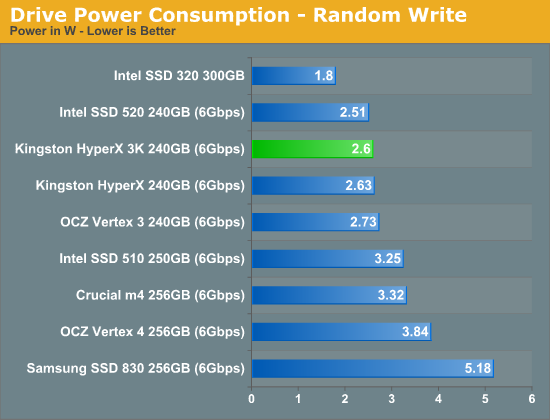
SandForce boasts fairly low power consumption, particularly at idle. Even with incompressible data the HyperX 3K's power draw is competitive:
Originally published at https://www.anandtech.com/show/5734/kingston-hyperx-3k-240gb-ssd-review (Wayback Machine).