
Samsung Fascinate Review: Verizon's Galaxy S Smartphone
Cellular and WiFI Performance
The Fascinate doesn't have any antenna problems or weird baseband quirks. I experienced stable data connections and calls. We still run the phone through our now-regular tests to determine attenuation from holding devices in different positions.
| Signal Attenuation Comparison in dB—Lower is Better | |||||||
| Cupping Tightly | Holding Naturally | On an Open Palm | |||||
| Samsung Fascinate | 10.0 | 5.0 | 0.0 | ||||
| Droid 2 | 11.5 | 5.1 | 4.5 | ||||
| BlackBerry Torch | 15.9 | 7.1 | 3.7 | ||||
| Dell Streak | 14.0 | 8.7 | 4.0 | ||||
| Droid X | 15.0 | 5.1 | 4.5 | ||||
| iPhone 4 | 24.6 | 19.8 | 9.2 | ||||
| iPhone 3GS | 14.3 | 1.9 | 0.2 | ||||
| HTC Nexus One | 17.7 | 10.7 | 6.7 | ||||
The Fascinate (like the Epic 4G) seems to only expose signal changes in 5 dBm steps. Like Anand in the Epic review, I measure exactly the same thing. It's a bit frustrating to measure, but I managed to do so on the Fascinate after taking a lot of data - it didn't change. Unsurprisingly, attenuation is completely in line with what we've seen for other typical smartphones, sans iPhone 4. It's a bit frustrating that the radio stack doesn't show more granularity like other Android devices I've played with (all of them to date have showed me signal in 1 dBm steps), so I was determined to find more.
Just about every phone has special dialer codes. They're usually prefixed with "##" or asterisks, and just about every Android device has the somewhat famous "*#*#4636#*#*" special menu for doing basic things. The Captivate and Vibrant have gotten quite a bit of attention for having extremely thorough secret dialer codes, something I seriously favor in any device.
Regardless, I set out to discover whether any internal dialer codes could reveal more hardware information than I was seeing in Android through the UI and normal APIs.
To do so, I searched through the .apk files inside /system/app. Android package files are essentially zip files with a number of other files for the Android platform inside, including AndroidManifest.xml. Unfortunately, that XML file is encoded in binary, and requires some special unpacking. Regardless, I searched through and found lots of tasty goodness inside the ever so auspiciously-named hiddenmenu.apk file.
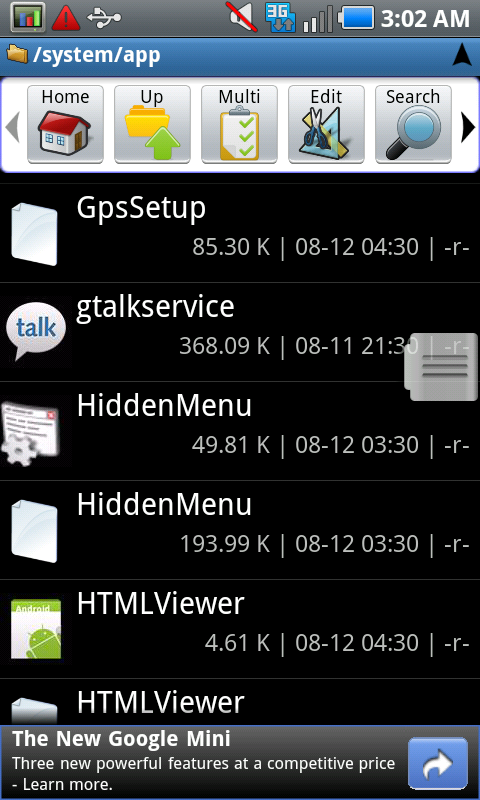
I found what I think are the Fascinate's internal codes, but none of the dialer prefixes I can think of work. Searching through everything in the Samsung GPL code repository for SCH-i500 (the Fascinate's model name) thoroughly revealed nothing either. The Samsung GPL code repository is here, just search SCH-i500 and you'll get the whole thing. It's possible that I missed the dialer code prefixes in there, but at the end of the day I couldn't find them. I also manually tried everything I could think of.
If you're so inclined, that AndroidManifest.xml file is up on pastebin here. There's a few interesting things inside. At the end of the day, however, I couldn't make anything work.
Update:
With the help of a friend with access to more information than I ;), I was able to finally figure out how to enable secret codes on the Fascinate. It's one of the most complicated procedures I've seen on a phone to date, but not impossible:
In the dialer, enter *#83786633 and tap the home button. Now, go back into the dialer, clear anything still in the dialer completely (the first code should still be there), and enter *#22745927. You'll be prompted for an SPC code, which should be 000000. Now you should get dumped to a screen like this:
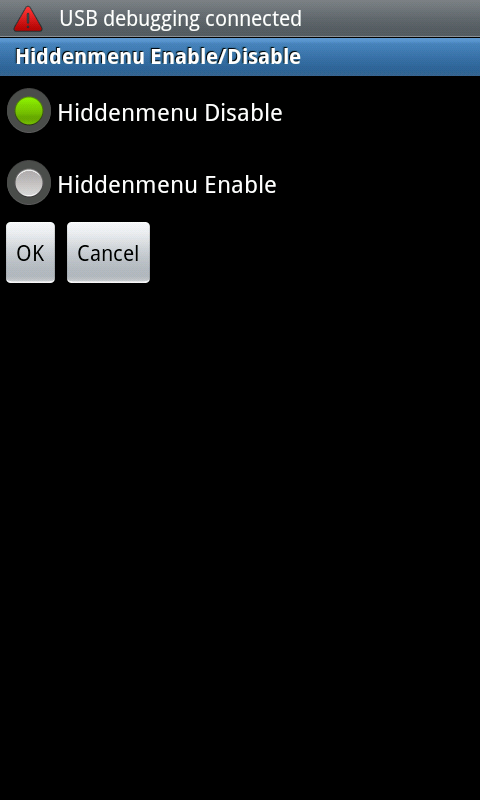
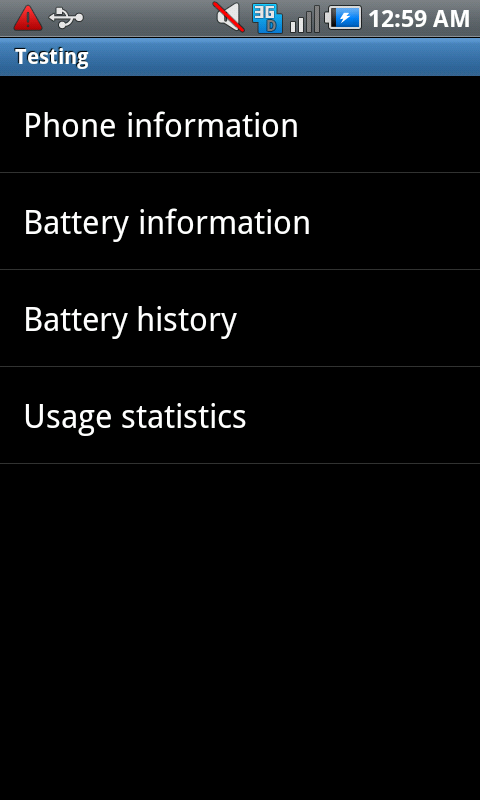
Toggle enable, hit ok, and then things should work. This is the hiddenmenuenable apk I spent forever trying to get to. The dialing prefix is then *# with a suffix of # which is just like the other Galaxy S phones I've seen. Even then, the dialer codes are somewhat obfuscated - the only one I've found so far is #*4636*1111# which brings up the testing menu standard to other Android devices. I'm sure there are more out there.
Finally, I ran well over 100 speedtests on the Fascinate using the SpeedTest.net application, and averaged a downstream speed of 0.888 megabits/s, and upstream speed of 0.673 megabits/s. That's roughly in line with performance around town, with spikes up to 1.8 megabits/s of downstream near a tower.
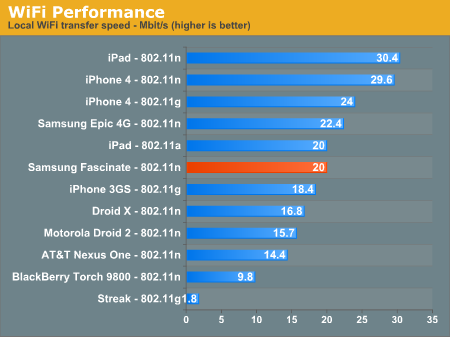
WiFi Performance
The Fascinate negotiates a 72 megabit/s link with my 802.11N network - faster than the 65 megabits/s I've seen which is the bare minimum required to meet 802.11N requirements.
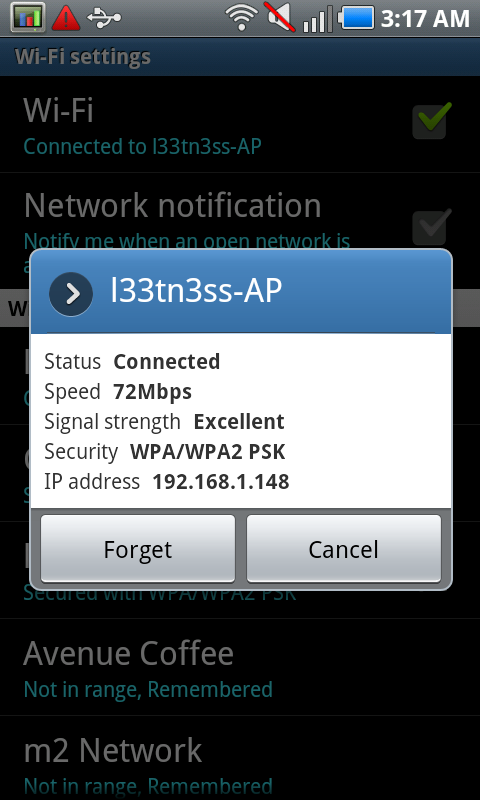
Wireless range on the Fascinate isn't quite as far as the EVO 4G or iPhone 4. I can make it a few more meters to the curb before falling off my AP on other devices. That said, the WiFi performance itself is not bad - 20 megabits/s on my 802.11n network downloading a 100 MB PDF.
There's also tethering support on the Fascinate, however the device I had time with wasn't provisioned for access and I couldn't test it. I could however get to the provisioning portal Verizon has, and that worked fine, but I couldn't tell if there were any hotspot issues like the Droid 2 had.
Originally published at https://www.anandtech.com/show/3957/samsung-fascinate-review-verizons-galaxy-s-smartphone (Wayback Machine).