
Samsung Fascinate Review: Verizon's Galaxy S Smartphone
Camera
The Fascinate packs a 5 megapixel camera with one LED flash. There's no front facing camera like the Epic 4G, however. Camera launch is relatively speedy, at 2.8 seconds from tapping the application icon to getting a live preview. Successive captures are moderately fast, at around 2 seconds between capture and another preview.
|
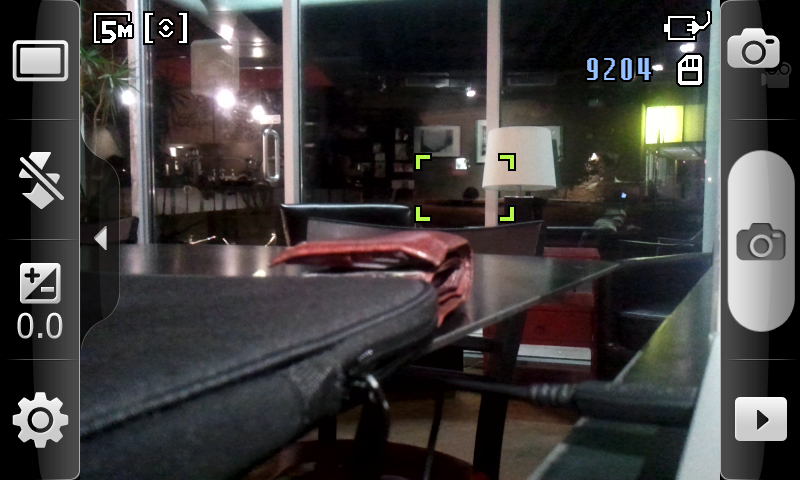
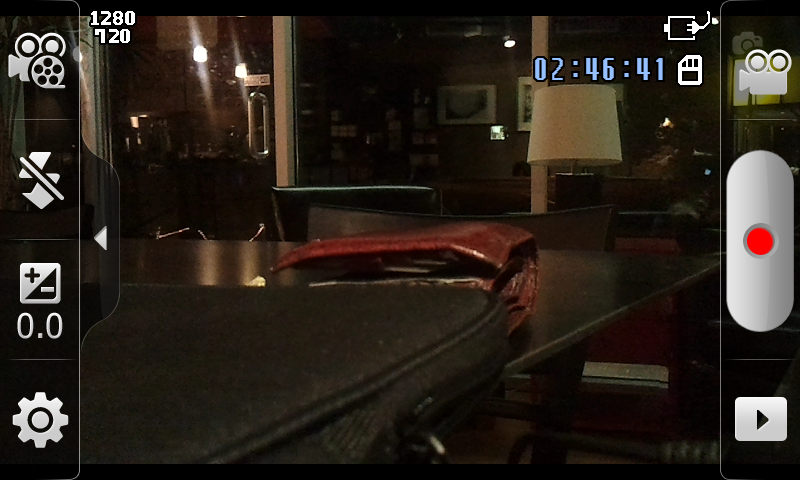
Camera mode (left), Camcorder mode (right)
|
||||
 |
 |
|||
Just like the Epic (and probably the other Galaxy S phones) the camera UI has a simple mode where everything goes away but very basic information and the control buttons. Like Anand said, the camera application repurposes buttons. Power becomes a lock button that stops input, volume controls digital zoom.
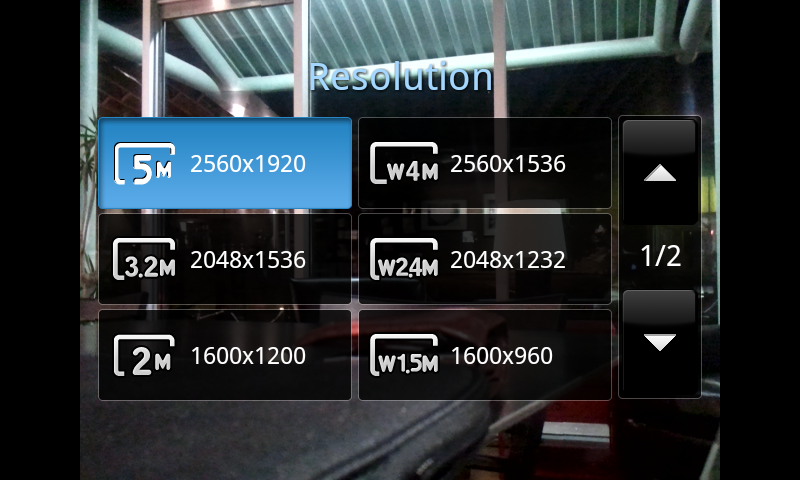
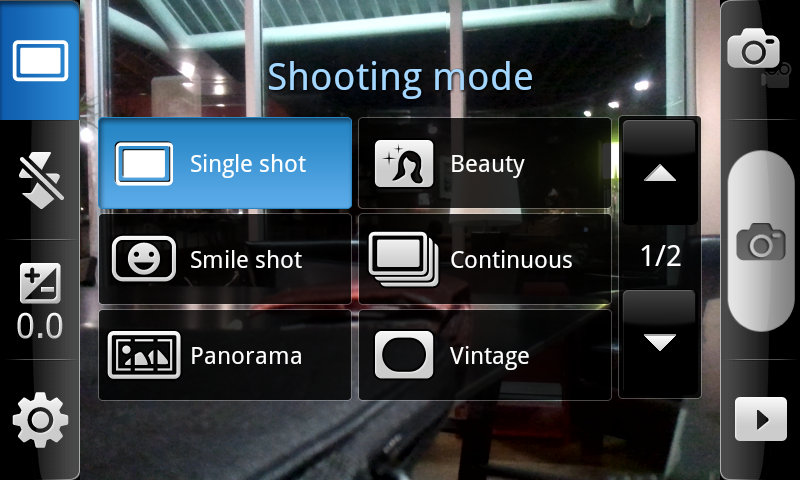
Tapping on the left brings up a small drawer with more settings - shooting modes, flash, exposure, and more settings. There's an outdoor visibility button in settings which increases brightness and contrast for composure outside, among all the usual resolution and quality options. Samsung has done a nice job providing lots of control if you want, or abstracting it away if you're inclined.
|
Camera resolutions (left), Shooting mode (right)
|
||||
 |
 |
|||
For a full tour of those settings, check out the gallery below:


Tap to focus is implemented on the Fascinate, including LED illuminated focus when it's dark. There's a confirmation sound when focus is reached as well.
The only nitpick I have about the Fascinate's camera UI is that the icons don't rotate when you switch into portrait mode from landscape. As a result, I was misled many times that images would be recorded rotated 90 degrees. There's rotation support in the captured image's EXIF header for sure, it just doesn't give any feedback in the camera application that acknowledges rotation.
The images captured on the Fascinate are impressive. There's very little distortion or edge falloff, and saturation is about right. There also isn't very much chromatic noise.
The photos taken in the lightbox with the lights on are a bit pink, however detail and dynamic range are quite good. The single LED flash on the Fascinate is actually surprisingly powerful - the photo taken with the lights off is overexposed, which is unfortunate. Apparently the Fascinate doesn't have extremely good short distance metering. This is one case where I wish my lightbox setup was a bit different, since the tradeoff is that photos taken at normal distances are very nicely illuminated. Even better, the camera application focuses with the LED on when you're in the dark, so you have good odds of actually getting focus - something the default Android camera app still doesn't do.


As usual, I've taken photos with the Fascinate in my usual bench locations, and in the lightbox. I've updated things a bit as well with new shots from the Nexus One. A number of readers pointed out that my Nexus One seems to have below average camera performance. I'm inclined to agree that performance seemed below average, and tried numerous times to improve it. I finally got HTC to replace my Nexus One, and reshot everything again, including the video tests. I'd say that the camera performance is largely unchanged between my replacement Nexus One and the old one - the Nexus One camera just isn't as impressive as other 5 MP cameras.
Video on the Fascinate is 720P in H.264 with AAC audio. I measured an average bitrate of 11.89 megabits/s in our bench video at the usual location. Quality is decent but it seems like there's a bit of edge blur and loss of high spatial frequency possibly due to noise reduction. Luckily, you can shoot video with the Fascinate's bright LED flash enabled in the dark. As per usual, compare for yourself with the videos below:
Samsung Fascinate
Motorola Droid 2
BlackBerry Torch 9800
Motorola Droid X
HTC EVO 4G
Nexus One (redux)
iPhone 4
HTC Droid Incredible
Motorola Droid
Nokia N900
Originally published at https://www.anandtech.com/show/3957/samsung-fascinate-review-verizons-galaxy-s-smartphone (Wayback Machine).