
ASUS' N82Jv: Jack-Of-All-Trades
ASUS N82Jv-X2 General Performance
We've been through this before, and our test suite remains the same as in recent laptop reviews, so let's jump right in and see how the N82Jv fares. Two key matchups are highlighted in the charts: the M11x R2 that has the same GPU but a slower ULV CPU, and the Toshiba A660D that represents something of the high water mark for current AMD notebooks.
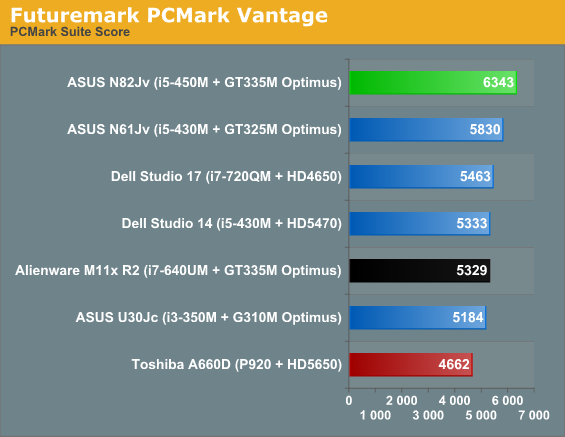
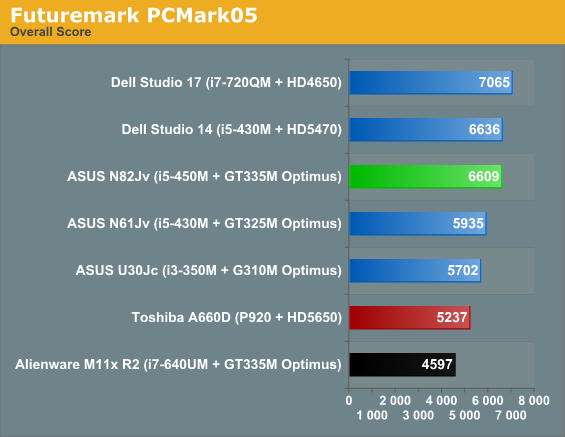
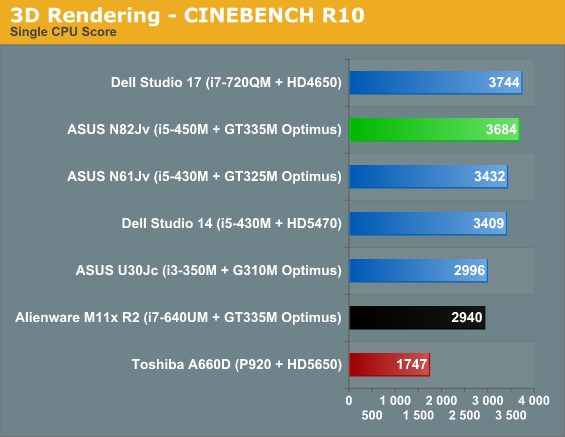
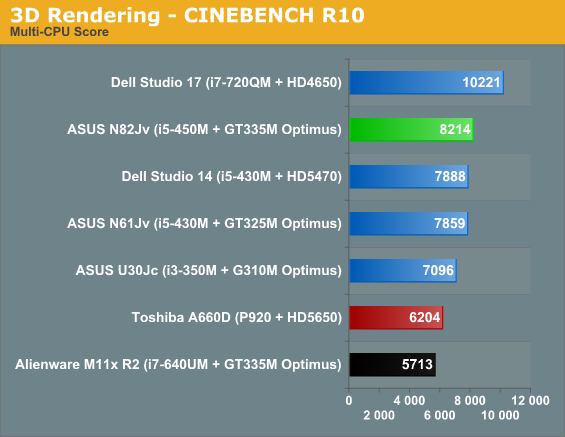
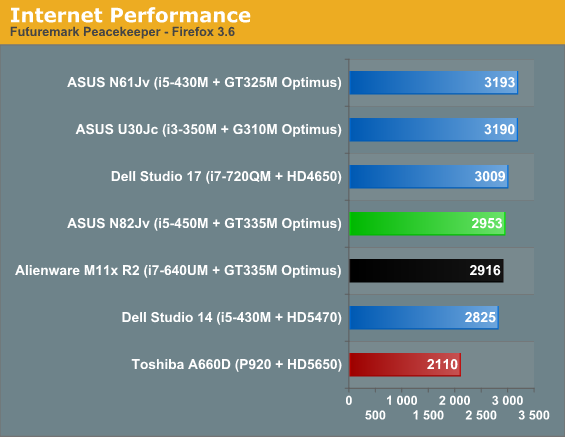
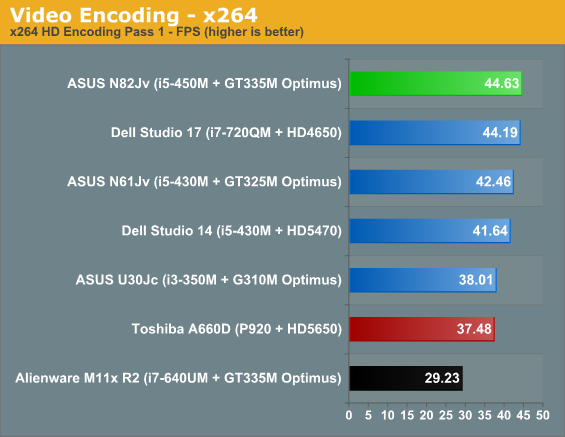
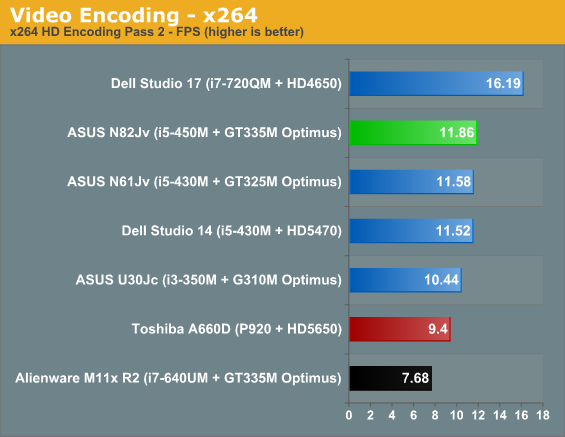
Right from the start, our two key comparisons show the N82Jv in a favorable light. Starting with the M11x R2, PCMark05 has the N82Jv leading the by 44%, while the Vantage result is "just" 19% higher. The close result of the M11x in Peacekeeper is an oddity…as is the loss to the slower clocked CPU/GPU of the N61Jv. It could be minor differences in the driver department, or perhaps the latest 3.6.8 Firefox updated reduced Peacekeeper performance. Regardless, we ran the test numerous times but the result was always lower than expected (and yet similar to the Studio 14). Peacekeeper is the exception to the rule, however. Cinebench gives the N82Jv a 25%/44% lead in the 1CPU/SMP tests, and the lead in x264 is just over 50% in both passes.
The comparison to the A660D leaves no question as to which processor is superior, with the lowest margin of victory coming at 20% in the first pass x264 encode—a test that's traditionally more HDD/bandwidth bound. PCMark has the N82Jv ahead by 36% in Vantage and 26% in 05, Peacekeeper gives the N82Jv a 40% lead, the single CPU Cinebench result is more than twice as fast as the P920, and the lead in multi-threaded tasks ranges from 20% to just over 30%. This is something we pointed out in the A660D review: when AMD's quad-core P920 can't come up with some clear wins over the i3-330M, it's a tough sell. Obviously, the i5-450M is faster than the 330M and simply increases Intel's lead; AMD's 2.0GHz N930 should come a lot closer to the Intel results in multi-threaded applications, but anything slower than that really needs to go after the value proposition.
Looking at the nearly identically equipped (outside of the GPU) Dell Studio 14, the N82Jv places about where we'd expect. The Vantage result favors ASUS by 19%, PCMark05 is a tie, but the remaining tests all give ASUS a lead of around 5% (give or take). It looks like ASUS has managed to better optimize the system performance, either with tighter memory timings, more BIOS tuning, or other tweaks. 5% is hardly anything to get worked up about, but it does show ASUS pays attention to some areas of performance more than many larger OEMs. $100 more for better performance, a significantly faster GPU, plus Optimus and USB 3.0 on top of that? Unless you can get the Studio 14 for a lot less than $900 for our tested system, the N82Jv is clearly a better choice.
Originally published at https://www.anandtech.com/show/3907/asus-n82jv-jackofalltrades (Wayback Machine).