
The Highest-End Notebooks, 2009
LCD Comparison
We performed our standard display tests as usual, which you can read about in previous reviews. All of these notebooks use TN panels, naturally, which means even the best will still pale in comparison to a reasonable desktop LCD. That's the price of mobility: higher quality IPS/PVA panels apparently consume more power, making them a less desirable technology for laptops (or so we've been told). That still doesn't mean we need glossy TN panels, but I digress….
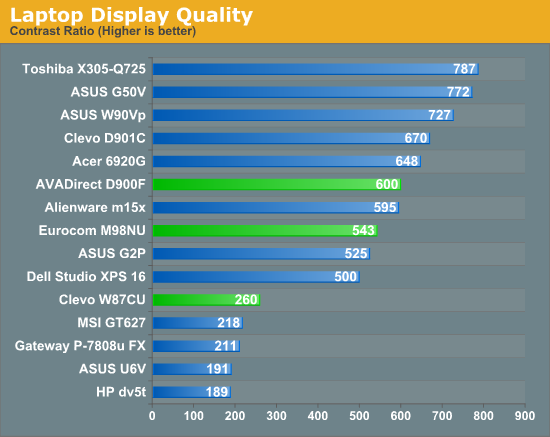
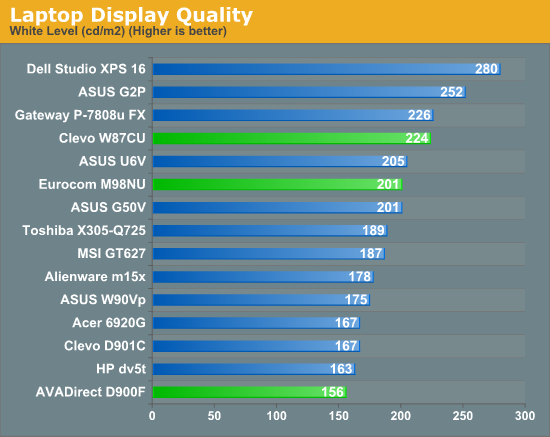
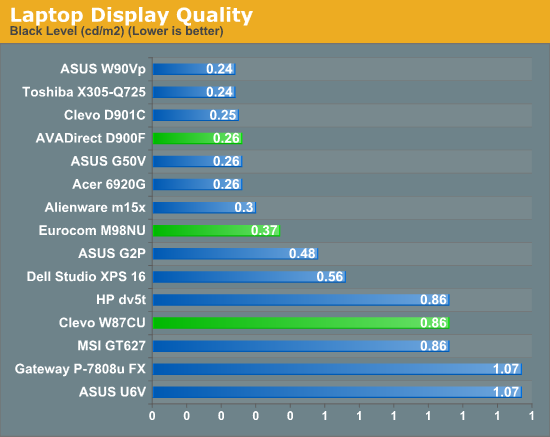
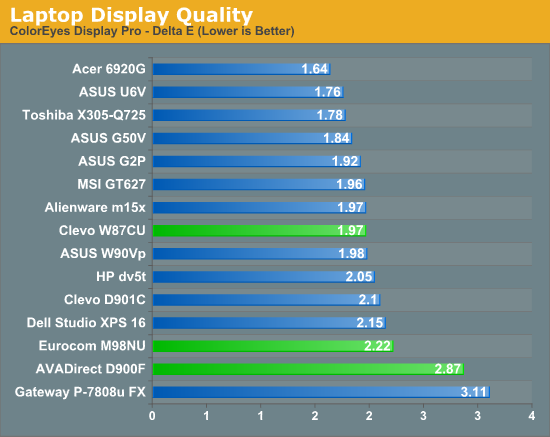
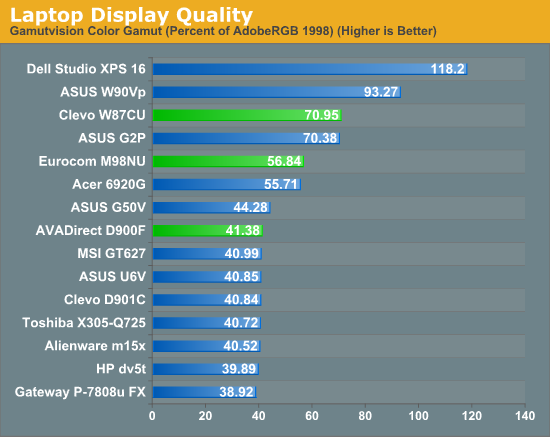
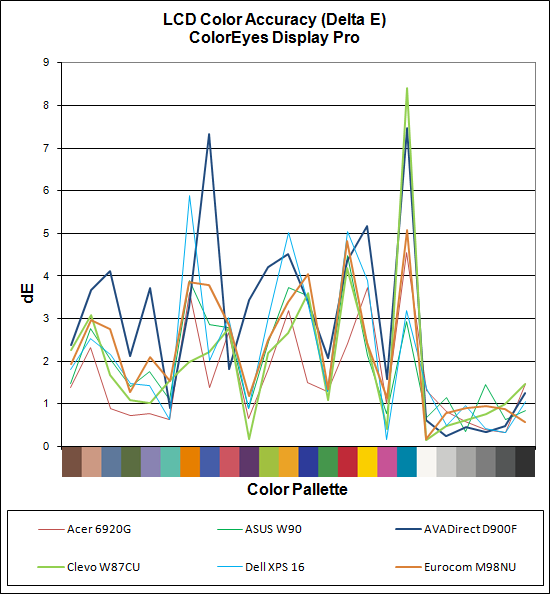
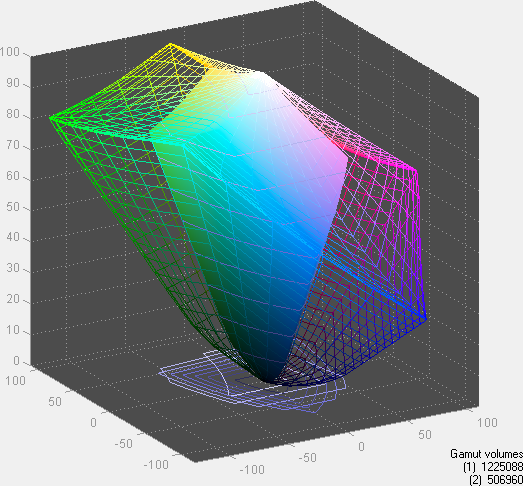
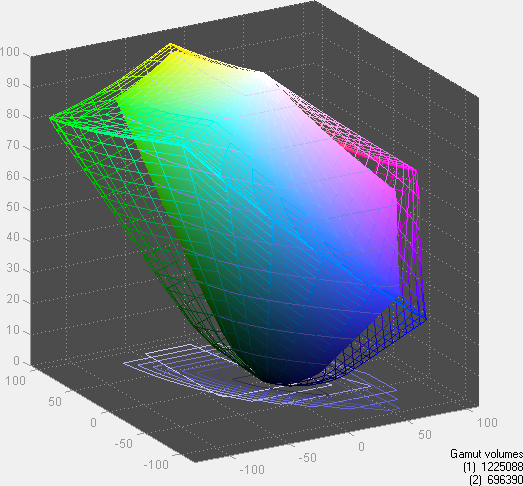
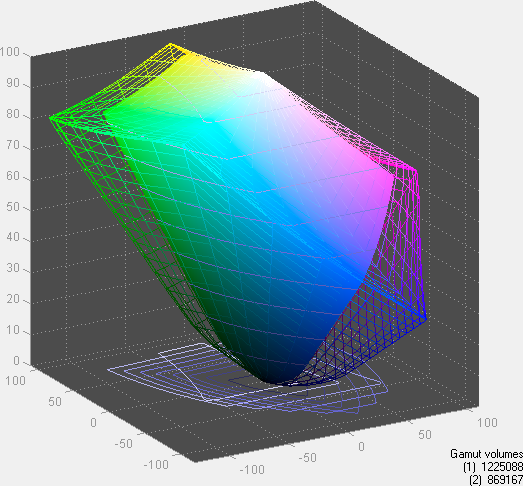
Subjectively, the best of these LCDs is the panel in the M980NU. The colors look better, even if the measurements show the W870CU as having a lower Delta E. Let's be realistic, though: none of the LCDs are truly accurate when reproducing colors, as evidenced by the large spikes shown in the above Delta E color chart. The W870CU is subjectively the least desirable, as the contrast ratio is really bad (due to a large amount of backlight bleed). The D900F panel ends up with the best contrast ratio, but it has the lowest maximum brightness and the highest Delta E. The ASUS W90Vp beats the M980NU panel, but the Studio XPS 16 1080p RGB LED remains the best laptop LCD we've tested -- and it will cost you a pretty penny!
Originally published at https://www.anandtech.com/show/2858/the-highest-end-notebooks-2009 (Wayback Machine).