
Understanding the iPhone 3GS
- Posted in
- Smartphones
- Mobile
The Screen
There’s no increase in resolution and thanks to the iPhone OS 3.0 update, the automatic backlight is even more aggressive in making the 3GS as dim as possible - so why even bother having a section in the review called The Screen?
While not as dense as the Pre’s screen, the iPhone 3GS continues to have one of the best touchscreens on the market. Sure you get no feedback from your touches, but honestly, that’s something most seem to be able to get over.
There is one small improvement to the 3GS’ screen over the 3G. The new phone comes with a new oleophobic coating on the screen.
First a compass and now an oleophobic screen? Despite what you may think, this feature is actually pretty useful. Fingerprints and smudges still get on the new iPhone but they easily come off and they definitely aren't as present as on the older models.
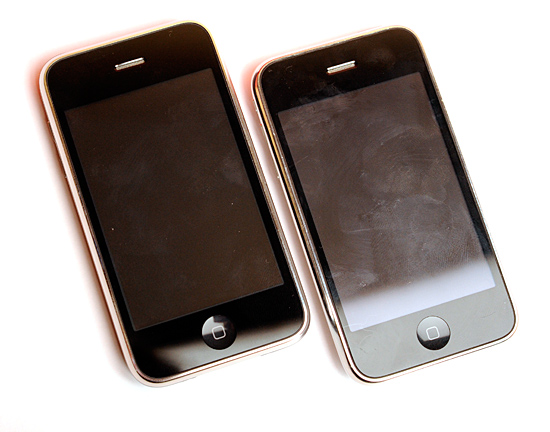
iPhone 3GS (left) vs. iPhone 3G (right)
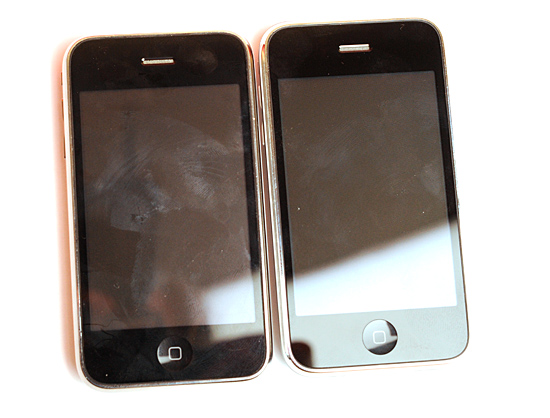
iPhone 3G (left) vs. iPhone 3GS (right)
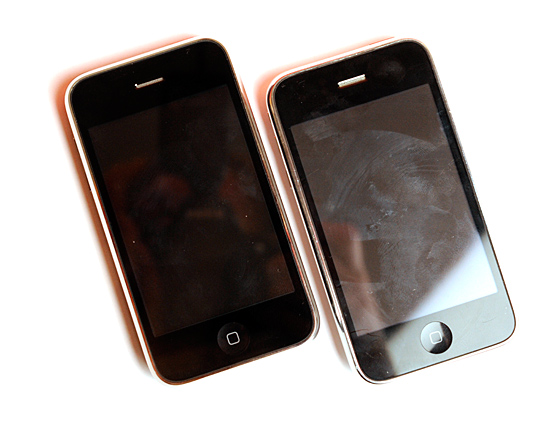
iPhone 3GS (left) vs. iPhone 3G (right)
One side effect of the oleophobic coating is an increase in resistance on the surface of the screen. Your finger doesn't glide as smoothly over the new screen as it did over the old one. It’s a bit ironic actually. Newly washed hands will feel more resistance than hands with a bit of oil on them, yet the fingerprints aren’t as prevalent on the 3GS as they were on the 3G.
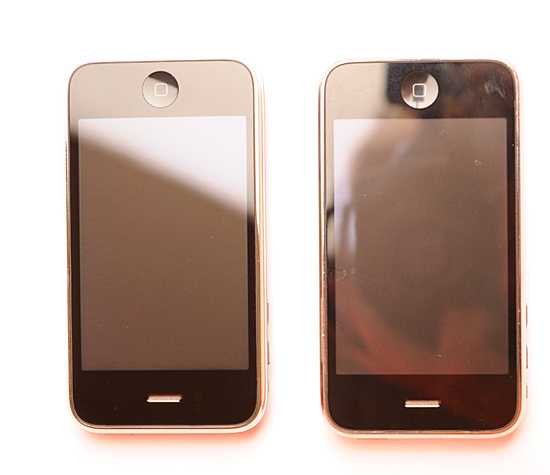
iPhone 3GS (left) vs. iPhone 3G (right) after being wiped down
The new screen is nice - but I still want an oleophobic coating on the back of the iPhone 3GS. The black plastic especially shows finger prints and general nastiness infinitely worse than the original metal iPhone.
Originally published at https://www.anandtech.com/show/2798 (Wayback Machine).