
CyberPower: 4.0 GHz QX9770 and SLI GTX 280s
- Posted in
- Systems
Power
We measure power consumption using a Kill-A-Watt device at the wall outlet. Idle indicates a measurement taken in Windows with no applications running. Max indicates the maximum power draw with the system fully loaded (running four instances of Prime95 and 3DMark06 simultaneously). We've also indicated power draw with just the CPU loaded.
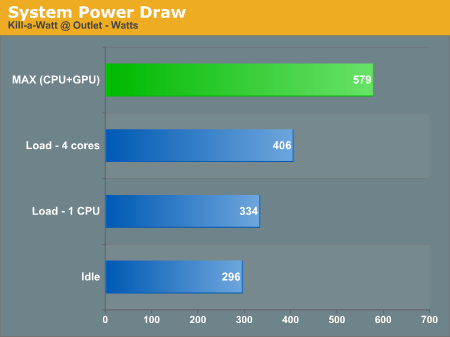
For the hardware present, these results are quite good. Our Tri-SLI system maxed out at 671W, and that only had a single 1200W power supply (versus the 1000Wx2 in this system).
Noise
We measured noise with a sound pressure level (SPL) meter, at distances of 24" and 48". The case fans and video cards dominate the noise produced. For reference, ambient noise was approximately 37.5 dB(A).
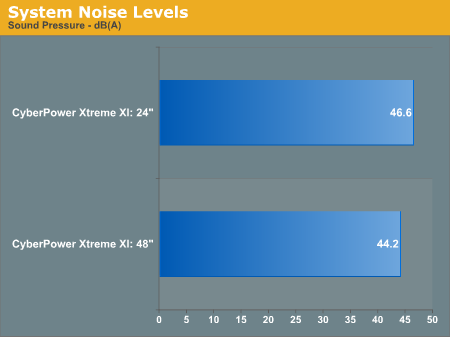
This is a large system, with seven 120mm fans, and even so it manages to remain reasonably quiet. It's definitely audible, but most would find the low hum from the larger fans easy to deal with, and of course the fan controls allow for noise reduction.
Temperature
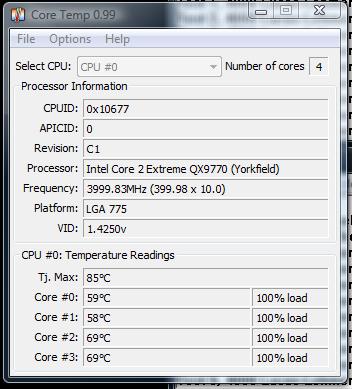
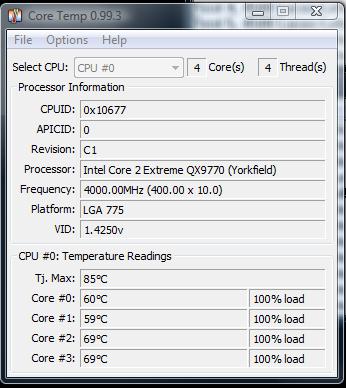
In most cases, we utilize CoreTemp 0.99 or nTune to measure CPU temperatures. In this case, we also used SpeedFan and the system monitor as additional checks. The NorthQ/Asetek self-enclosed water-cooler (which our friends at FrozenCPU have also provided us for review) is silent and extremely compact for a water cooler, but was registering temps hovering between 50-55C at idle.
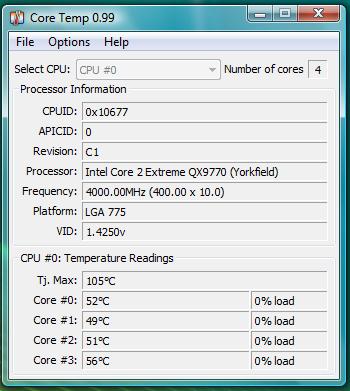
In the System Monitor screenshot, you can see the idle temperature registers at 60C in the BIOS. This seems quite high to us, and load temperatures didn't alleviate our concerns. We wanted to really stress the CPU, so these were taken with four instances of Prime95 running (one assigned to each core).
 |
Even with a large amount of case circulation, these temperatures are uncomfortably hot. That's not shocking with a 4.0GHz quad-core CPU fully loaded, but there's certainly some concern about long-term stability at these temperatures.
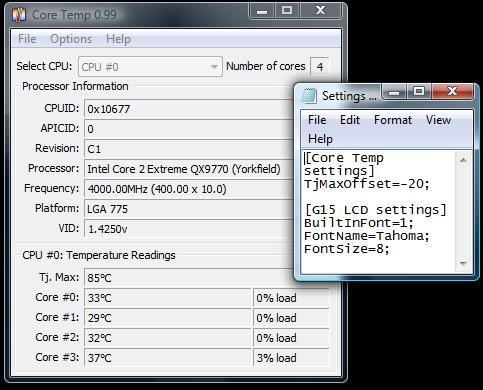
Update: On August 21st, Intel disclosed the maximum TJunction values for their 45nm processor line. As pointed out by readers, the Tj. Max number reported by CoreTemp and NVIDIA's System Monitor was 105C, whereas the official value from Intel for the QX9770 is 85C. Armed with this new information, we first altered the offset in CoreTemp 0.99.1 to bring Tj. Max down to 85 C, and reran the tests at idle and load. We also downloaded the latest version of CoreTemp (0.99.3) with the Tj. Max changes incorporated and measured again at load, reading the same values. This shows the Xtreme XI and the Asetek cooling solution in a much better light.
Originally published at https://www.anandtech.com/show/2595 (Wayback Machine).