
ASUS P5Q3 Deluxe: An Early Preview of P45 Express Performance
- Posted in
- Motherboards
Board Layout and Features
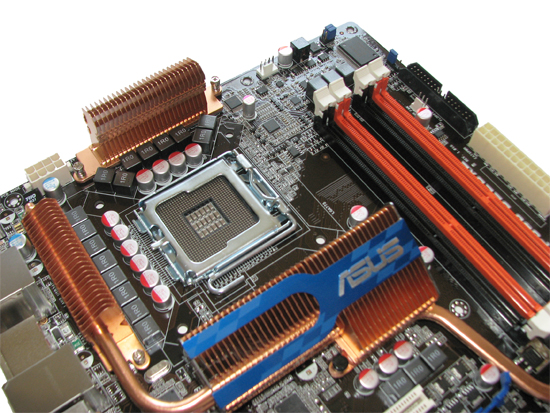
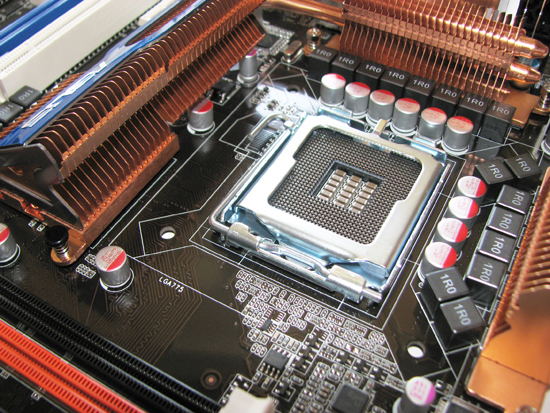
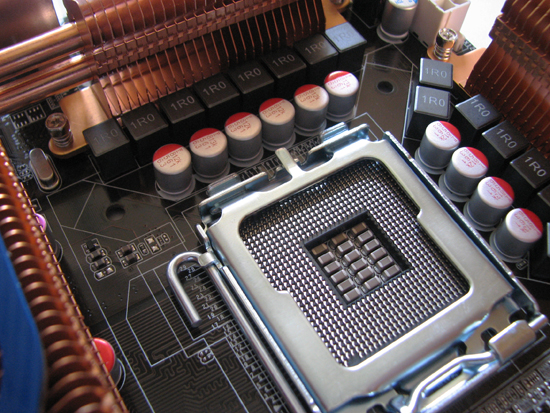
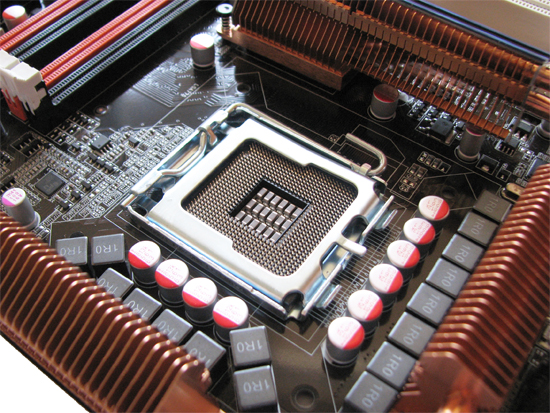
The P5Q3 may report the use of a 16-phase PWM but we know better. Although ASUS design engineers have added a lot of extra chokes and MOSFETS, the overall capacity of the power delivery circuit remains comparable to their competitors' more modest 8-phase designs. One thing's for certain, we can all agree that more phases do not necessarily make for a more stable power subsystem. Although we did not experience any problems with this particular solution we would rather see ASUS concentrate their efforts on designing an entirely new circuit based on a true 6-phase PWM.
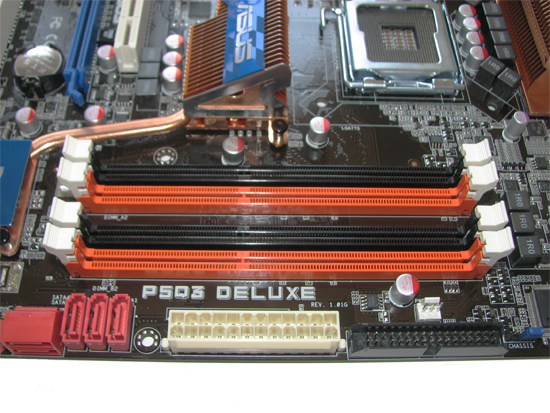
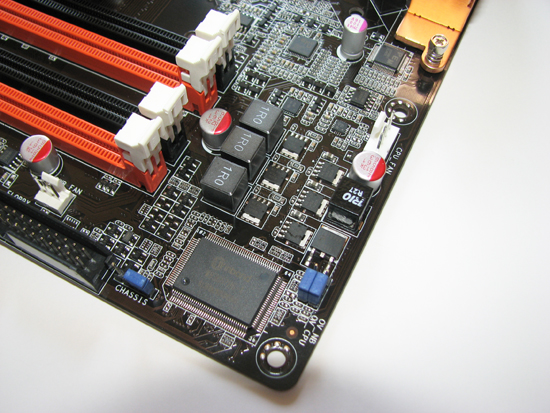
The DDR3 power circuit is a 3-phase design, just like the P5E3 Premium, and the board has no problems clocking memory to speeds of DDR3-2000 and higher. We recommend you place your modules in the orange slots first and populate the black slots only as needed. Because of the way DDR3 signals are terminated on the modules themselves, it is often possible to coax maximum speed from the system with the memory in this configuration.
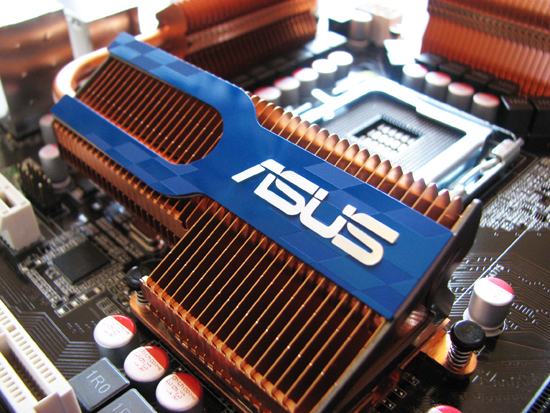
The all-copper heatsink is both functional and aesthetically pleasing. ASUS was also wise to include back plates for the portions of the cooler covering the power MOSFETs and mounting screws to tightly secure the assembly to the board.
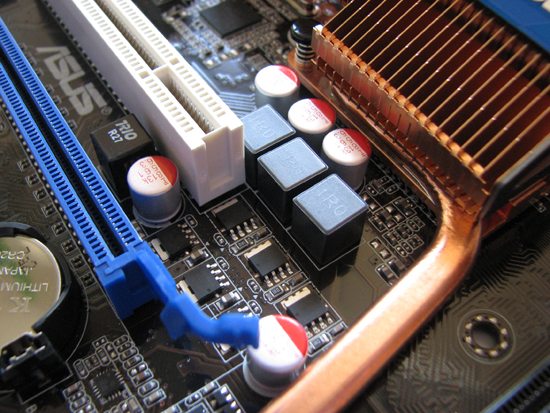
ASUS engineers have taken their MCH power delivery system one step further than before; the P5Q3 now features a 3-phase design whereas the P5E3 Premium used a 2-phase solution. Thanks to the relatively low power requirement of the MCH, active cooling is not necessary for any of these MOSFETs, although it could not hurt if you decided to customize your board by placing extra sinks on the hotter components.
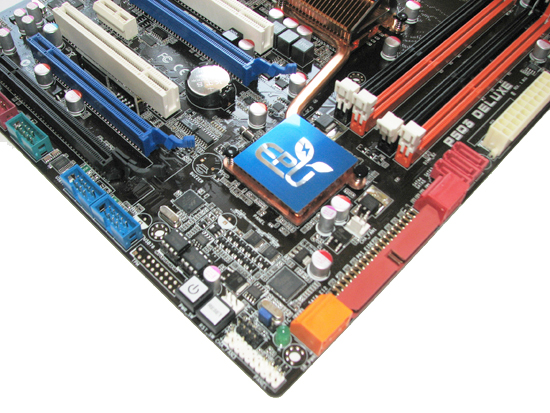
The five red SATA ports are electrically connected to the ICH10(R) Southbridge with the sixth present in eSATA form, located on the board's back panel. A JMicron JM363 host controller provides an additional two SATA ports (orange), capable of RAID 0, 1 and JBOD operation, as well as a single PATA port for legacy IDE hard disk or optical disc support. Integrated power and reset momentary tactile switches can been seen in the corner of the board. The lone green LED is the only indication that the board is powered - be sure to pay attention to the state of this light whenever removing or inserting any components.
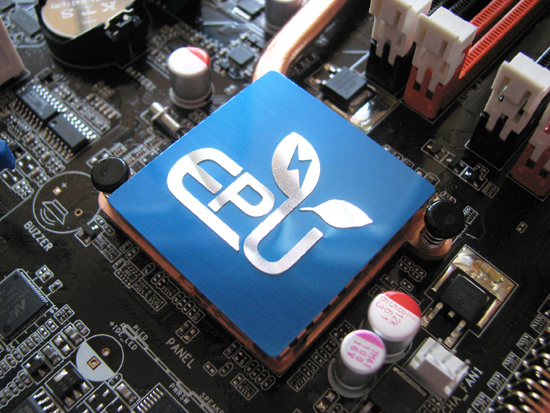
The ICH10R is covered by a custom two-piece heatsink and is thermally coupled to the MCH and half the bank of CPU power MOSFETs via a single heatpipe. It would have made sense to include the other MOSFET cooler but the placement of the ATX12V+ power connector might have made this difficult. The cobalt blue cover is adorned with an artistic "EPU" logo and represents the incorporation of ASUS' Energy Processing Unit technology that seeks to maximize overall system power savings during periods of light CPU loading by selectively enabling and disabling power delivery phases for the most efficient operation possible. Our lab results show the savings to be small yet measurable.
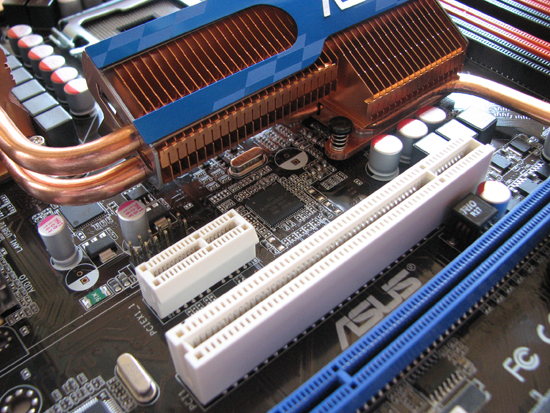
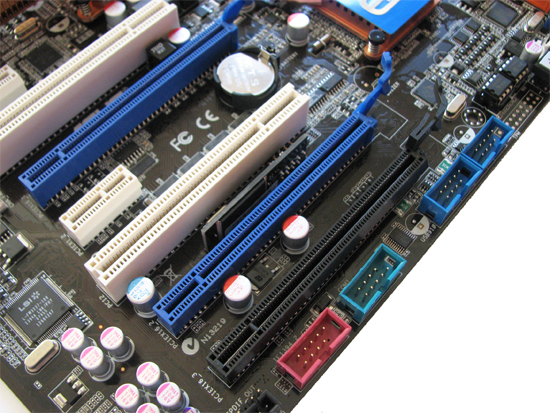
The P5Q3 Deluxe includes support for up to three PCIe x16 cards. The two blue slots are fully PCIe 2.0 compliant and hang off the P45 Northbridge. They can be configured for either 1x16 or 2x8 operation, depending on the number of cards installed. The bottom black slot is PCIe 1.x compatible only and is serviced by the ICH10R Southbridge. While the slot can mechanically seat x16 cards the maximum electrical connection is just x4 due to the lack of available lanes. For maximum performance, populate the blue slots before working with the last black one.
Two PCIe x1 slots (1.x compatible) and a pair of legacy PCI slots round out the board's expansion capabilities. Overall, we prefer the P5Q3 Deluxe expansion slot layout over that offered by the P5E3 Premium. Unlike the X48 board, this P45 board provides double spacing between the two primary PCIe 2.0 slots.
Originally published at https://www.anandtech.com/show/2525 (Wayback Machine).