
ASUS Striker II Formula under the Microscope
- Posted in
- Motherboards
Testbed Setup
| ASUS
Striker II Formula Setup Standard/Overclocking/Benchmark Testbed |
|
| Processor | Intel E8500, 1333FSB 9X Multiplier, Intel QX9650
Quad CPU, 12MB Cache 1333FSB Unlocked multiplier - 9X Default |
| CPU Voltage | 1.200V ~ 1.450V |
| Cooling | Water cooling: Swiftech Apogee GTX, PA120.3 Rad, 3 X Laing DDC Ultra Petra Top pumps in series, 3x Panaflo 120mm Fans 7-10V |
| Power Supply | OCZ 1000W |
| Motherboards | ASUS Striker II Formula |
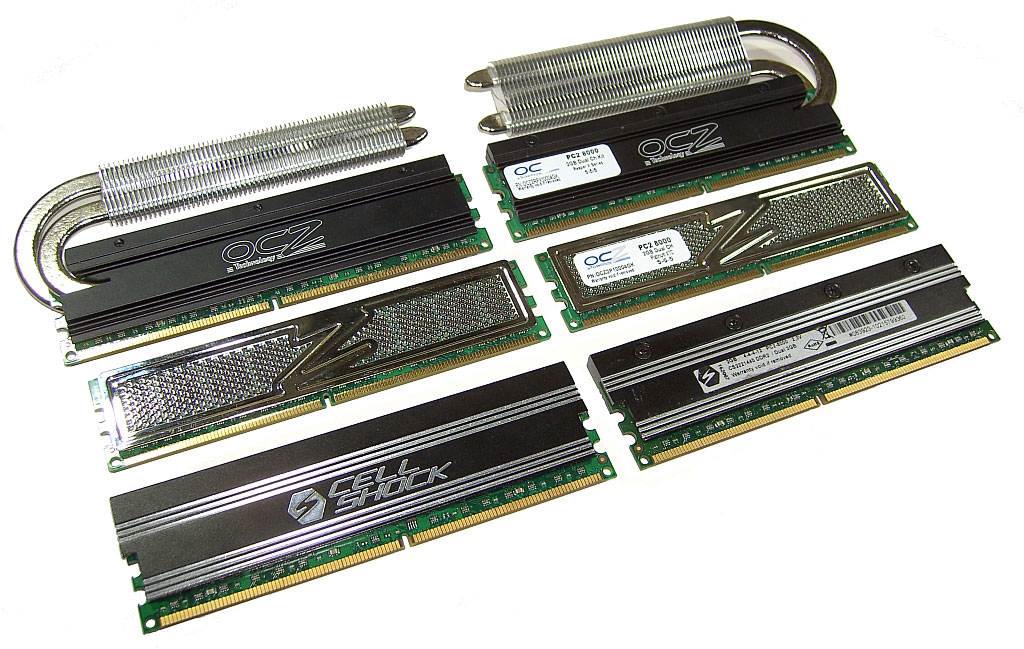
| Memory | OCZ Reaper-X 1000MHz 2X2GB kit, OCZ Platinum XTC PC2 8000 2x2GB, Cell Shock PC2 8000 4-4-4-12 2X1GB |
| Memory Settings | Various - as shown |
| Video Cards | ASUS 8800 GTS 512 G92 - Underclocked to match NVIDIA base clock levels for test comparison to 790/X48 chipset board scores |
| Video Drivers | 169.28Drivers (Vista 64-bit) |
| Hard Drive | Western Digital 7200RPM 250GB SATA 3/Gbps 16MB Buffer |
| Optical Drives | Plextor PX-B900A, Toshiba SD-H802A |
| Case | Lian Li -75 |
| BIOS | 1001, 1101 |
| Operating System | Vista 64-bit SP1 (4GB/8GB Memory), XP 32-bit SP3 (2GB Memory) |
| . | |
We performed 4GB and 8GB memory testing under the Vista 64-bit operating system using SP1. Our GPUs had to be underclocked to 650/1625/970 in order to match the GPU clock speeds used in the 790i launch article. This provides us with a broad range of scoring comparisons across a variety of boards for this review.
We tested in both single-GPU and SLI configurations with stock and overclocked processor speeds. Our primary concern in this review is to focus on absolute system stability, rather than outright benchmarking potential (though we may venture into testing this at a later date). We installed a new operating system image and software load between processor changes in order to eradicate any chances of driver or software conflicts.
We run each test five times and throw out the high and low scores and average the remaining three scores for our comparisons. We focused primarily on PCMark Vantage to represent a real-world type of system load that most of us subject our PCs to on a daily basis. Gaming tests use on Crysis, Unreal Tournament 3, and Company of Heroes. All three of these titles utilize different gaming engines, each representing a varying load to the entire system. We also crosschecked stability with OCCT's brutal CPU and memory tests.
PCMark vantage proved to be the most stressful test for our systems to pass; we had instances where the full two hour test of OCCT 2.01 passed, but PCMark Vantage would fail the gaming test repeatedly within a few seconds of launch. This is mainly because stress tests like Prime95 and OCCT do not stress the PCI-E bus, so we can only claim a form of 2D stability with this test at best. A broad suite of tests must be run to ensure any form of system stability for an everyday personal computer system. Component choices and variance in MCPs (chipsets) and other items will determine how close user boards will come to our overclocked results today; some boards may achieve more and others less.
We selected a few memory kits from our labs that represent the more popular current purchasing choices, coupled with one of the best 2x1GB performance kits from Cell Shock for a short test of Windows XP SP3 and stability/performance when running these modules. OCZ supplied the 2x2GB kits for our 8GB stress testing. Although this is not regarded as an everyday configuration, such a heavy load ensures that the stability of the board is tested to the fullest extent. 2x2GB modules are certainly all the rage at present with very aggressive pricing, to the point that we think 4GB should be a standard configuration for most systems, especially those running Vista.
We have grown quite fond of these kits in the labs; they operate up to DDR2-1000 speeds with very low levels of voltage, making for a cool running system with ample data manipulation potential. OCZ has also licensed a software tool called SPD-Z for flashing the SPD of these modules with performance related timing changes should the need arise on newer motherboards. Also, newer performance oriented 2GB modules from the likes of OCZ, G.Skill, and others are starting to hit the market that will approach DDR2-1200+ speeds that we will be testing shortly.
 |
Originally published at https://www.anandtech.com/show/2484 (Wayback Machine).