
Pentax K20D First Impressions
- Posted in
- Digital Camera
First Thoughts
Once in a while, a new product grabs our attention during review. Unfortunately, that is much less often than you might expect. Technology breakthroughs are truly rare, and most of what we see in the technology arena is evolutionary. Technology is also fast moving, so innovation by one player normally finds its way - quickly - to other new products.
It is far too early to draw conclusions about the new Pentax K20D, but we do confess that most of our questions about this new digital SLR have had positive answers. The new 14.6 MP Samsung/Pentax sensor is for real. Noise is admirably low and the CMOS architecture assures extremely low power draw and long battery life.
In early testing there was no substantive difference in image quality from ISO 100 to ISO 1600, which is a noteworthy performance for a sensor with a 14.6 MP resolution. Images were also very usable at ISO3200, even when enlarged. ISO 6400 was not as useful, though small prints and web publishing should be fine with the 6400 setting. Our fear was that Pentax/Samsung had given up the store to have the bragging rights for the highest resolution DSLR in their class, but that is certainly not the case. The image quality was at least as good as a Sony A700, but we have not yet compared results to the Nikon D300.
Pentax K20D features seem to go on and on. In fact it is easy to get lost in all of the extensive image control that is possible with this new camera. Fortunately, Pentax keeps everything under control with their Info button and the most common controls - White Balance, Drive, Flash parameters and ISO - are easily accessed with the Fn (Function) button.
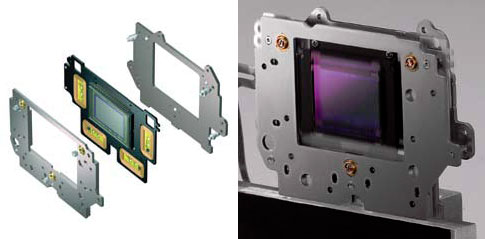
The in-camera image stabilization and sensor cleaning have been improved over the K10D, according to Pentax. We haven't yet tested this claim, but hand-held low light performance was impressive, and dust on the sensor has not been an issue so far. The dust mapping strikes us as a bit gimmicky, but those who work in dusty environments will probably disagree. We weren't anxious, in early testing, to expose the sensor to a lot of dust to test its usefulness.
The new motor lenses are something of a revelation. Our 16-50mm f2.8 was completely silent and very fast. Compared to the record-setting speed of the Canon 40D and Olympus E-3, the motor lens performance gave up nothing to the Ultrasonic or SWM motors. Non-motor lenses were reasonably fast, but no real competition for the best from others. They were also a great deal noisier as we have seen on screw-drive AF lenses from Sony and others. Pentax needs to introduce more SDM lenses as soon as possible. Once you use one it is hard to go back to screw-drive AF even on a good lens like the 50mm f1.4.
Overall, we found the K20D exciting in early testing. The combination of a 14.6 MP low-noise CMOS sensor; a dust/splash-sealed body, grip, and lenses; and the new SDM motor lenses is very satisfying. This is not the camera for sports shooters, as the 3FPS shooting speed will be laughable to action shooters. However, the incredible feature set, useful and unique program modes, and solid construction and performance will likely be well-received by the rest of the photo world. Our full review should provide even more answers to our questions about the K20D. If you have any specific question, chime in on the comments and we'll do our best to address those as well.
Originally published at https://www.anandtech.com/show/2476 (Wayback Machine).