
Pentax K20D First Impressions
- Posted in
- Digital Camera
SDM Motor Lens
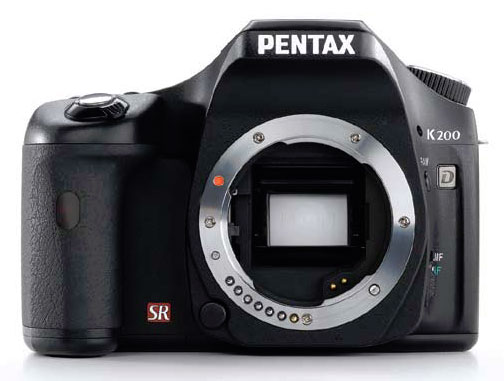
Pentax announced they would introduce new motor lens technology, which they call DA* (pronounced DA star) SDM (Supersonic Drive Motor) when the K10D was launched about a year and a half ago. As you can see in the mount photo, there are two additional gold pins inside the mount that couple with the SDM lens motor. Without these pins the SDM lenses function like standard AF screw-drive lenses.
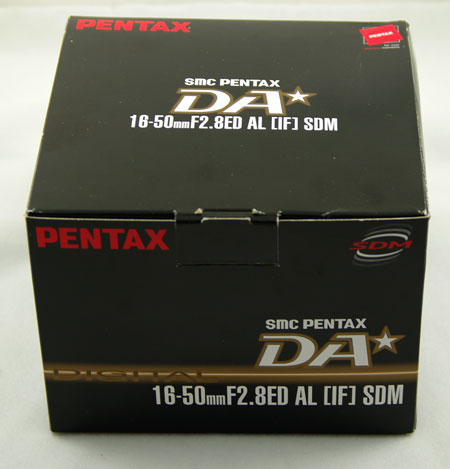
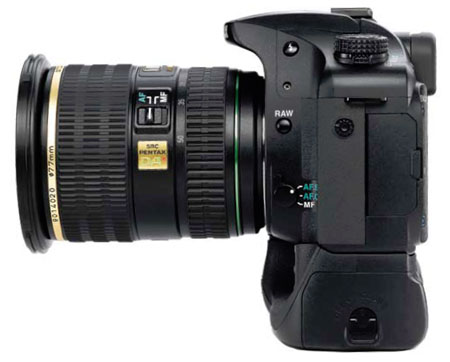
It was not until about five months ago that Pentax finally began shipping the new SDM motor lenses, and they require at least a K10D with an upgrade to firmware 1.30 for the motors to even work. As a result, almost no one took a closer look at the new Pentax motor lenses. Now with the K20D we have the first real opportunity to work with a Pentax motor lens, specifically the 16-50mm f2.8.
On a side note, we really wish the marketing guy who is so hell bent on using * would get over it (first "*ist D" and now "DA*"), because the realities in a computer world were not considered. * usually signifies a wildcard in computer lingo, which means these Pentax products with the clever little * name can't be searched in Google or other search engines. This makes it impossible (or at best very difficult) to find these specific Pentax products with a * in their name in a search engine or at a web retailer site. Clearly that wasn't the intent of Pentax, but someone in the company needs to realize it's a bad idea and not very helpful for their sales.
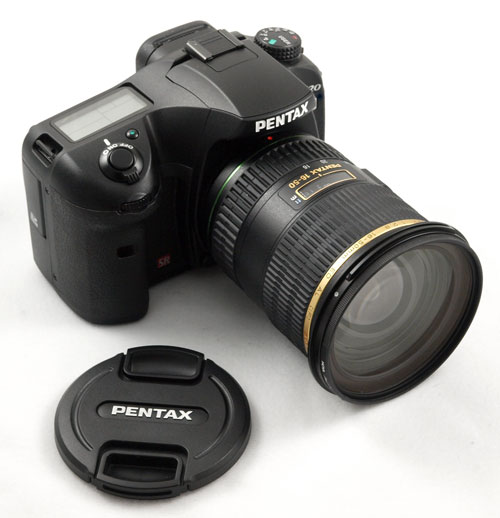
Back to the camera, we mounted the 16-50 DA* SDM and we were frankly blown away. We thought the lens was broken because we couldn't hear the autofocus motor at all during focusing. The focus was so fast we assumed it wasn't focusing but we quickly saw the lens was definitely focusing.
Our everyday cameras right now are a Canon 5D full-frame and 40D with Ultrasonic lenses and a couple of L lenses, and an Olympus E-3 with a Leica 25mm F1.4 and the new 12-60mm SWM lens. The Pentax DA* SDM is quieter than any of these cameras, including the 24-105mm Canon L. It is also subjectively as fast as or faster than any of these cameras with their best motor lenses. We were shooting test shots in my available darkness office and the DA* SDM AF performance was nothing short of remarkable.
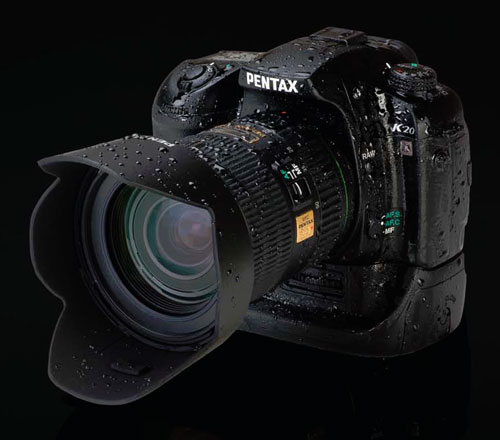
The 16-50 f2.8 fast wide angle to short telephoto (24-75mm equivalent) features a lens motor and sealing against dust and moisture, just like the K10D and K20D camera bodies. At first glance, the street price of around $700 will seem very high until you compare it to similar offerings from Canon and Nikon. The 17-55mm f2.8 IS Canon will set you back $1000 or more and the Nikon 17-55 f2.8 is a healthy $1190. The Canon 16-35 f2.8 L is another comparable lens at $1370. By comparison the Pentax DA* 16-50mm f2.8 SDM, designed and built to similar Pro specs, is an absolute bargain.
This caused us to wonder how others would review the K20D. Most use the standard 50mm f1.4 lens from the manufacturer in testing Autofocus. The Canon 50mm is an Ultrasonic motor lens, while the Pentax 50mm is an old-style AF screw drive. Popular Photography modified their test procedure to accommodate the fast Olympus SWM motor in their E-3 review, but it is clear they didn't even bother to retest for the K20D and used older K10D launch AF numbers when SDM lenses were not even available. Unfortunately, that means their AF tests of the K20D are not comparable to Canon or Olympus or Nikon.
We are trying to determine how best to test AF to account for the improved performance of SDM. The point is that the first question for any review of the AF performance of the K20D should be whether it was tested with an SDM lens. If an SDM lens was not used the review is not measuring the K20D autofocus performance in an apples-to-apples comparison.
Originally published at https://www.anandtech.com/show/2476 (Wayback Machine).