
Transcend 16GB SSD
- Posted in
- Storage
Operating System Performance
The following tests are designed to test a drive's ability to load and shutdown Windows XP along with entering and resuming from hibernation. We will have further test results under Windows Vista with the consumer level SSD products in our next review.
Windows XP Startup and Shutdown
These tests are fairly straightforward with our application timer measuring the time it takes to startup Windows XP from the splash screen until the desktop is visible (BIOS POST times are not included) and the time it takes to shutdown the operating system once the shutdown icon is initiated. We leave Excel and Photoshop Elements open with test files for the shutdown procedure.
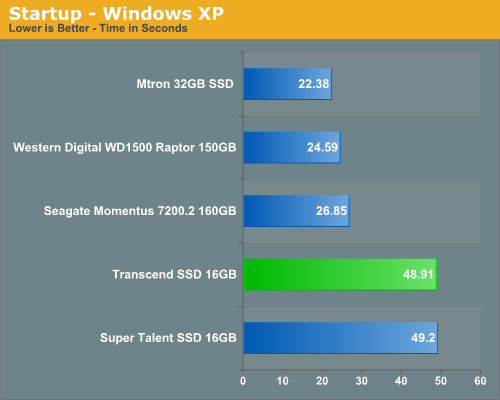
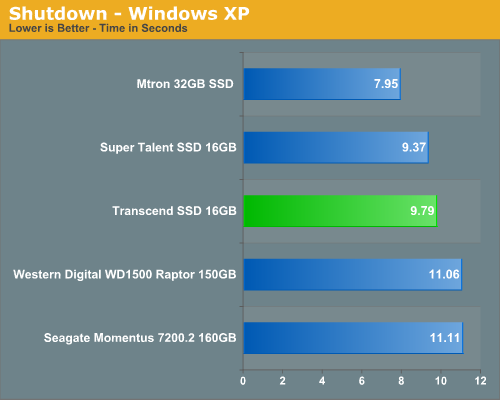
This test is dependent on read speeds for the startup section and we see the effects of the read speeds being capped on either the Transcend or Super Talent drive with it taking twice as long to startup when compared to the hard disks. In our shutdown tests, the SSD unit is about 16% faster thanks to its low latency times and data storage method.
Windows XP Hibernate and Resume
Our Hibernate test measures the time it takes for Windows XP to enter hibernation with Excel and Photoshop Elements open with a large spreadsheet and several test images open. The Resume test measures the time it takes for the system to return to the desktop once resume is initiated.
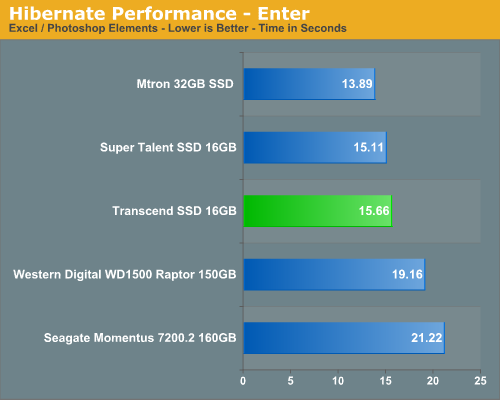
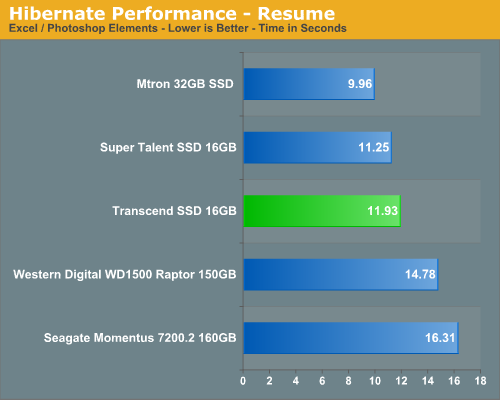
Our Transcend SSD unit is able to enter hibernation 27% faster and resume 26% faster than the mechanical drives. With the advantages of low latencies and always on capability after standby on SSD drives, we expected these results when entering hibernation mode. However, based on our previous XP startup results we did not expect the resume results to be quite this good with our Transcend drive. Our expectations were not based on SSD technology but the specifications of our particular drive. The resume results indicate the advantages of the SSD design in not having a mechanical spin-up and seek process along with improved access times in locating files.
The following tests are designed to test a drive's ability to load and shutdown Windows XP along with entering and resuming from hibernation. We will have further test results under Windows Vista with the consumer level SSD products in our next review.
Windows XP Startup and Shutdown
These tests are fairly straightforward with our application timer measuring the time it takes to startup Windows XP from the splash screen until the desktop is visible (BIOS POST times are not included) and the time it takes to shutdown the operating system once the shutdown icon is initiated. We leave Excel and Photoshop Elements open with test files for the shutdown procedure.
This test is dependent on read speeds for the startup section and we see the effects of the read speeds being capped on either the Transcend or Super Talent drive with it taking twice as long to startup when compared to the hard disks. In our shutdown tests, the SSD unit is about 16% faster thanks to its low latency times and data storage method.
Windows XP Hibernate and Resume
Our Hibernate test measures the time it takes for Windows XP to enter hibernation with Excel and Photoshop Elements open with a large spreadsheet and several test images open. The Resume test measures the time it takes for the system to return to the desktop once resume is initiated.
Our Transcend SSD unit is able to enter hibernation 27% faster and resume 26% faster than the mechanical drives. With the advantages of low latencies and always on capability after standby on SSD drives, we expected these results when entering hibernation mode. However, based on our previous XP startup results we did not expect the resume results to be quite this good with our Transcend drive. Our expectations were not based on SSD technology but the specifications of our particular drive. The resume results indicate the advantages of the SSD design in not having a mechanical spin-up and seek process along with improved access times in locating files.
Originally published at https://www.anandtech.com/show/2358 (Wayback Machine).