
Intel Developer Forum 2007 - Day 2: Menlow and Intel's iPhone Mockup
- Posted in
- Trade Shows
Menlow and Silverthorne
Menlow is the "platform" (read: chipset + CPU), Silverthorne is the CPU, and the development on all of this started about three years ago. The goal was simple: reduce power, compared to Centrino, by 10x in order to make it into ultra small, ultra portable devices. Once the design had been finalized, it was clear that this chip could not only be used in UMPCs but also in things like consumer electronics devices and embedded systems.
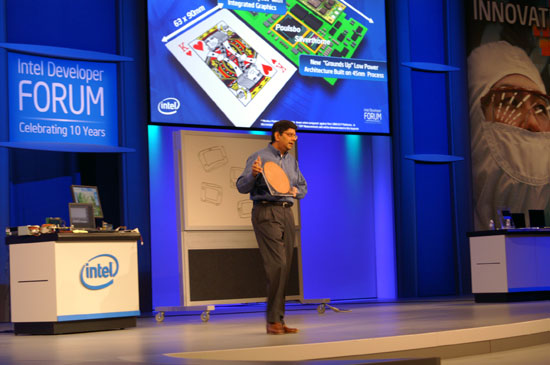
Silverthorne Wafer
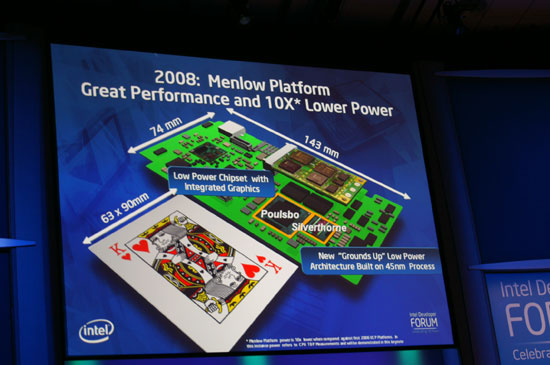
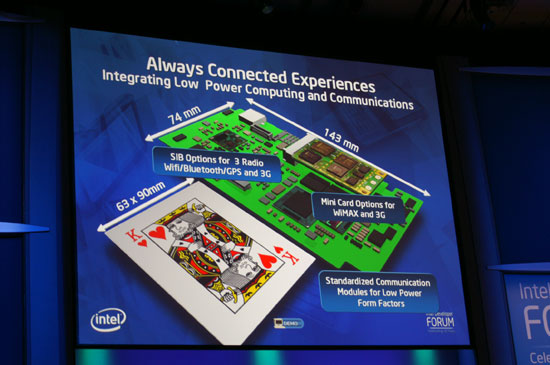
Menlow is still very much a conventional PC platform, the motherboard itself is quite small but it doesn't feature the level of integration AMD has with its Xileon family of processors for example (Intel's answer to that is on the next page).
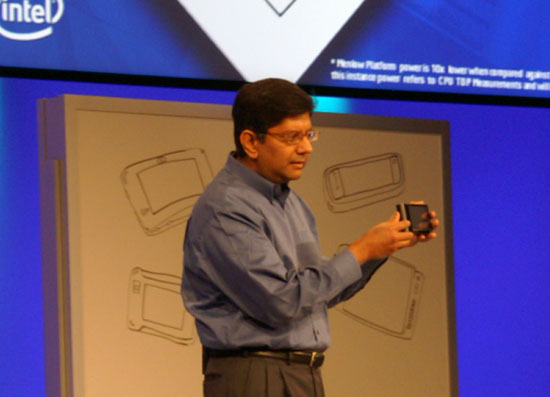
Menlow in Action
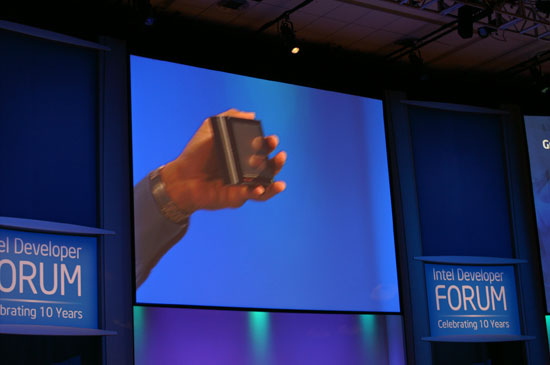
Menlow in Action, Take 2
The first version of Menlow, due to its size and power characteristics, is thus best suited for ultra-mobile PCs or extremely portable notebooks.
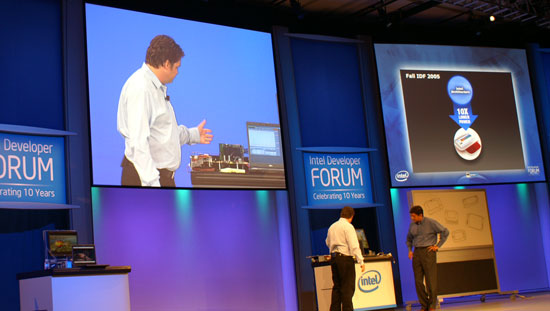
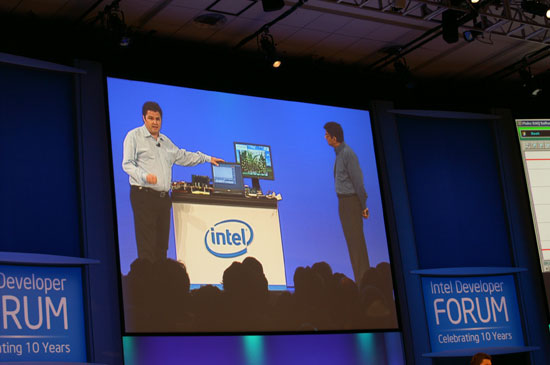
Intel demonstrated the significant power advantage of Silverthorne vs. Dothan, the current Pentium-M used in most UMPCs today with a quick power demo.
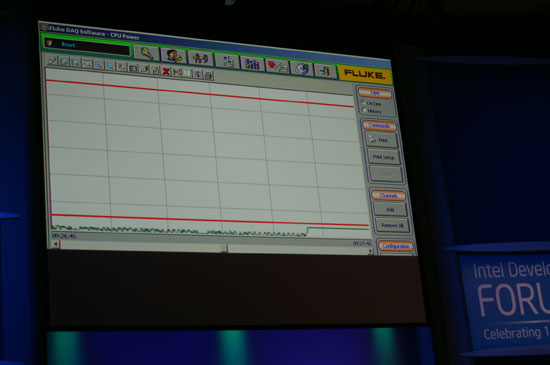
Doing nothing, the Silverthorne system consumed less than 0.55W indicated by the graph below. The two red lines represent two power targets, 5.5W (TDP for ULV Dothan), and 0.55W (target for Silverthorne). The green line at the bottom is actual power consumption of Silverthorne; the processor is mostly idle, but when it peaks Intel is running a power virus designed to run the chip at 100% CPU utilization.
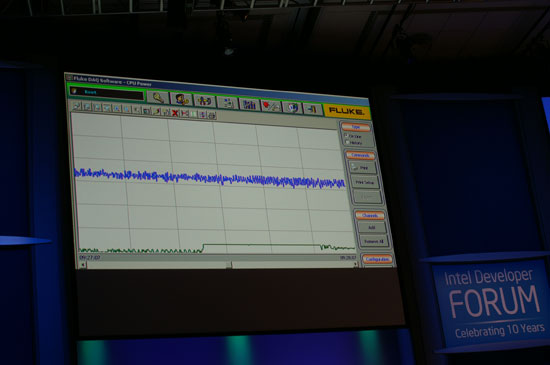
Power consumption of ULV Dothan in blue, Silverthorne in Green, the systems were simply running a flash animation.
Originally published at https://www.anandtech.com/show/2333 (Wayback Machine).