
Hitachi Deskstar 7K1000 in RAID 0: Is Two Terabytes really better than One?
- Posted in
- Storage
In our first look at Hitachi's new Deskstar 7K1000 we thought it was the best 7200rpm drive that has passed through our labs. Throughout testing we found the performance of the drive to be very balanced across a broad spectrum of benchmarks that stressed write and read speeds, or a combination of both. This unique blend of performance and capacity also comes at a fairly reasonable price of 40 cents per-Gigabyte or approximately $399 for the drive although two 500GB drives can be had for around $250 now.
Hitachi Global Storage Technologies announced the drive right before CES 2007 and stated a shipping date in late Q1. The drive did start shipping last month but was only available in systems from Dell or Alienware. We expected retail shipments of this drive at the beginning of April but it appears the drives will not be widely available for another week or so now.
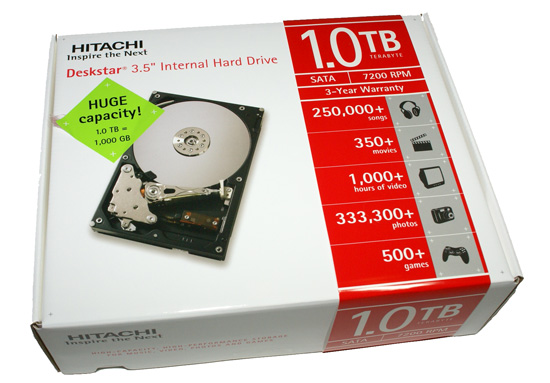
We were able to procure a retail unit directly from Hitachi and have been testing it thoroughly for the past few days. Our initial impressions about this drive have not changed as we did not notice any perceivable performance differences between the O.E.M. supplied unit from Dell or the retail drive. The only change we could identify between the two drives is the firmware being updated from GKA0A51C to GKA0A51D.
Our preliminary acoustic testing revealed minor differences between the drives with the retail unit having an increase in noise levels at idle from 26dBA to 27dBA and load results going from 35dBA to 36dBA with AAM enabled at the silent setting of 128. At an AAM setting of 254 we noticed an increase from 27dBA to 28dBA along with load results increasing from 36dBA to 38dBA. Our AAM disabled settings did not change. We also noticed a little more vibration in the retail drive but will temper our findings until we have additional retail drives to test. Our differences are more than likely caused by slight manufacturing variations between the two drives and not the firmware or retail configuration.
Our thermal results did not change although we are revising both our acoustic and thermal tests to reflect environmental conditions in an ATX and uATX case design along with vibration testing in a typical drive cage with rubber bushings or attached directly to the chassis. Our two configurations will simulate a typical gaming/enthusiast machine and one designed for quiet desktop or HTPC usage. We recommend a visit to SPCR if you are interested in pure acoustic test results of the drives without other system components being in the test mix.
In the meantime, we created a thirty minute script to simulate general home/office/gaming usage with the drive's temperature increasing from 31C at idle to 39C over the course of the test. We feel like this particular test gives a better indication of a drive's average operating temperature during typical usage. We will have complete test results with our other drives in the upcoming 500GB+ drive roundup.
With all that said, the purpose of today's second look is to provide some initial RAID results with this drive and convey our experiences with the 7K1000 after having additional test time with it. We had a deluge of reader requests asking for test results in RAID 0 based upon the overall performance of the drive being near, equal, or better than the Western Digital Raptors. We are not fans of RAID on the consumer desktop; especially motherboard based solutions, but nevertheless thought it might be an interesting exercise to see how two of the top performing drives in the consumer SATA market compare against each other.
Sure, RAID 0 will certainly provide some very impressive synthetic benchmark scores, PCMark05 being a prime example, but in actual applications we see it having more of a placebo effect than providing any real performance gains. Our technical briefing and commentary on RAID 0 can be located here. Let's see how the Hitachi Deskstar 7K1000 and Western Digital WD1500 drives perform in RAID 0 across a variety of benchmarks.
Hitachi Global Storage Technologies announced the drive right before CES 2007 and stated a shipping date in late Q1. The drive did start shipping last month but was only available in systems from Dell or Alienware. We expected retail shipments of this drive at the beginning of April but it appears the drives will not be widely available for another week or so now.
We were able to procure a retail unit directly from Hitachi and have been testing it thoroughly for the past few days. Our initial impressions about this drive have not changed as we did not notice any perceivable performance differences between the O.E.M. supplied unit from Dell or the retail drive. The only change we could identify between the two drives is the firmware being updated from GKA0A51C to GKA0A51D.
Our preliminary acoustic testing revealed minor differences between the drives with the retail unit having an increase in noise levels at idle from 26dBA to 27dBA and load results going from 35dBA to 36dBA with AAM enabled at the silent setting of 128. At an AAM setting of 254 we noticed an increase from 27dBA to 28dBA along with load results increasing from 36dBA to 38dBA. Our AAM disabled settings did not change. We also noticed a little more vibration in the retail drive but will temper our findings until we have additional retail drives to test. Our differences are more than likely caused by slight manufacturing variations between the two drives and not the firmware or retail configuration.
Our thermal results did not change although we are revising both our acoustic and thermal tests to reflect environmental conditions in an ATX and uATX case design along with vibration testing in a typical drive cage with rubber bushings or attached directly to the chassis. Our two configurations will simulate a typical gaming/enthusiast machine and one designed for quiet desktop or HTPC usage. We recommend a visit to SPCR if you are interested in pure acoustic test results of the drives without other system components being in the test mix.
In the meantime, we created a thirty minute script to simulate general home/office/gaming usage with the drive's temperature increasing from 31C at idle to 39C over the course of the test. We feel like this particular test gives a better indication of a drive's average operating temperature during typical usage. We will have complete test results with our other drives in the upcoming 500GB+ drive roundup.
With all that said, the purpose of today's second look is to provide some initial RAID results with this drive and convey our experiences with the 7K1000 after having additional test time with it. We had a deluge of reader requests asking for test results in RAID 0 based upon the overall performance of the drive being near, equal, or better than the Western Digital Raptors. We are not fans of RAID on the consumer desktop; especially motherboard based solutions, but nevertheless thought it might be an interesting exercise to see how two of the top performing drives in the consumer SATA market compare against each other.
Sure, RAID 0 will certainly provide some very impressive synthetic benchmark scores, PCMark05 being a prime example, but in actual applications we see it having more of a placebo effect than providing any real performance gains. Our technical briefing and commentary on RAID 0 can be located here. Let's see how the Hitachi Deskstar 7K1000 and Western Digital WD1500 drives perform in RAID 0 across a variety of benchmarks.
Originally published at https://www.anandtech.com/show/2212 (Wayback Machine).