
MSI P6N SLI Platinum: NVIDIA's 650i Part Two
- Posted in
- Motherboards
First Impressions
In our first look at the 650i chipset we asked the $64,000 question: did NVIDIA succeed in designing a competitive chipset when compared to the Intel P965? Our answer to that question was a very reserved yes, the reason being that we did not know if the chipset or ASUS' implementation of it indicated the actual strength of the 650i. We had some hunches and believed the chipset was indeed competitive, but it certainly was not going to deliver a knockout blow to the P965. After working with the P6N SLI Platinum board for a couple of weeks and seeing MSI's dedication to improving performance and resolving issues with the 650i chipset we feel that $64,000 question can be answered now. Before we do, let's go over this board once again.
The performance of the board is excellent, and in some ways beyond excellent. The stock performance is impressive across a wide array of applications and games but considering the time it took to get to market we did expect slightly better overclocking performance and a fully polished BIOS. MSI is close and we fully expect them to improve upon the overclocking while addressing a few other niggling issues but we have to wonder at what price? Typically, you have to sacrifice overclocking for superb stock or near stock performance or you have to sacrifice a few performance points at the base level in order to ensure the board will properly reach its limits at the top. MSI recently has offered excellent stock performance and stability while trading off the overclocking capability at the mid to upper end of the chipset's capability. How they will ultimately balance the capabilities of this board will be interesting but for now they are leaning to excellent stock performance while offering a decent level of overclocking. This is not necessarily a bad balance in our estimation but ultimately the market will decide which option is best.
Finding a balance in this performance oriented market is always difficult. One group wants superb overclocking and multitudes of BIOS options at the expense of stock performance as they will tune in the performance based upon their needs. Another group will want excellent stock results with the ability to overclock to a level that allows them to extend the life of their components or to at least experience a level of performance near those spending hundreds of dollars more for a system. Of course, you also have the group that wants both and at times we hover in all three camps, but usually we want to have our cake and eat it too.
In the end, we feel like the positioning of this board as a Platinum design with an emphasis on performance and features means the target audience for this board will probably want to give up a little stock performance in exchange for slightly better overclocking. This board has at least reached the 450FSB level but we would like to see a little more headroom and have it balance out around the 485~500FSB range. We already know the board can do 515+ FSB with an E6300 and a special performance BIOS so the design is capable of it; finding that right balance is now in MSI's hands.
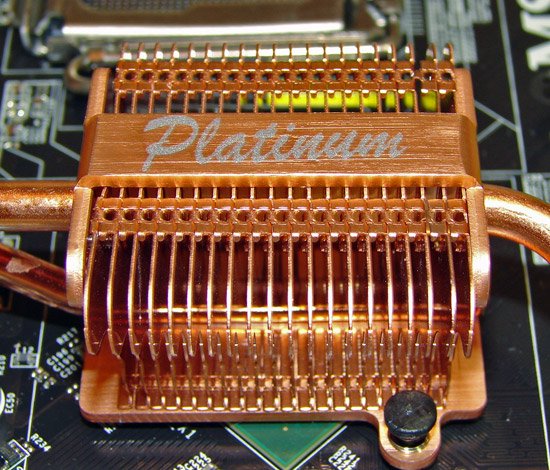
Back to that $64,000 question, we feel like in the majority of areas that the NVIDIA 650i chipset can compete directly with the Intel P965. This chipset will struggle against the P965 in pure overclocking capability, power consumption, memory performance, CPU crunching activities, and of course general availability. We found the 650i SLI offered similar if not better performance in most cases and excelled in gaming where its main purpose in life exists. The advantages the 650i SLI offers is official SLI support, native IDE chipset capability along with support for four IDE devices, very flexible memory and FSB settings, and a similar price to performance ratio when compared to the P965.
With all that said, based upon the performance results and feature set of the P6N SLI Platinum board it leaves us wondering why we would spend over $70 more for the 680i boards. Sure, the 680i boards have additional features such as dual Gigabit Ethernet connections with DualNet technology, dual x16 graphics slots along with a slot designed for physics capability, an additional two SATA 3Gb/s and USB 2.0 ports, and enhancements like LinkBoost, SLI Ready Memory, and extended overclocking and memory capabilities. However, does every user need these additional features or will they even use them?
For the vast majority of users we think not, and believe the 650i SLI chipset offers basically the same performance as the 680i about 98% of the time for significantly less money. It may turn out that this chipset doesn't deliver a knockout blow to the P965 but instead to the 680i in most cases. In the end, none of this much matters unless the motherboard based upon a 650i chipset lives up to its expectations.
We believe that the MSI P6N SLI Platinum lives up to and at times exceeds our expectations of an Intel based motherboard in this price category. We also think this motherboard restores faith in the MSI Platinum brand name that seeks to offer the best balance of price and performance for the user. MSI still has some balancing to do with this board and if they do it right, then it will deserve a lot more than just our recommendation. For anyone short of the extreme overclockers and tweakers, the board already offers everything you could want.
In our first look at the 650i chipset we asked the $64,000 question: did NVIDIA succeed in designing a competitive chipset when compared to the Intel P965? Our answer to that question was a very reserved yes, the reason being that we did not know if the chipset or ASUS' implementation of it indicated the actual strength of the 650i. We had some hunches and believed the chipset was indeed competitive, but it certainly was not going to deliver a knockout blow to the P965. After working with the P6N SLI Platinum board for a couple of weeks and seeing MSI's dedication to improving performance and resolving issues with the 650i chipset we feel that $64,000 question can be answered now. Before we do, let's go over this board once again.
The performance of the board is excellent, and in some ways beyond excellent. The stock performance is impressive across a wide array of applications and games but considering the time it took to get to market we did expect slightly better overclocking performance and a fully polished BIOS. MSI is close and we fully expect them to improve upon the overclocking while addressing a few other niggling issues but we have to wonder at what price? Typically, you have to sacrifice overclocking for superb stock or near stock performance or you have to sacrifice a few performance points at the base level in order to ensure the board will properly reach its limits at the top. MSI recently has offered excellent stock performance and stability while trading off the overclocking capability at the mid to upper end of the chipset's capability. How they will ultimately balance the capabilities of this board will be interesting but for now they are leaning to excellent stock performance while offering a decent level of overclocking. This is not necessarily a bad balance in our estimation but ultimately the market will decide which option is best.
Finding a balance in this performance oriented market is always difficult. One group wants superb overclocking and multitudes of BIOS options at the expense of stock performance as they will tune in the performance based upon their needs. Another group will want excellent stock results with the ability to overclock to a level that allows them to extend the life of their components or to at least experience a level of performance near those spending hundreds of dollars more for a system. Of course, you also have the group that wants both and at times we hover in all three camps, but usually we want to have our cake and eat it too.
In the end, we feel like the positioning of this board as a Platinum design with an emphasis on performance and features means the target audience for this board will probably want to give up a little stock performance in exchange for slightly better overclocking. This board has at least reached the 450FSB level but we would like to see a little more headroom and have it balance out around the 485~500FSB range. We already know the board can do 515+ FSB with an E6300 and a special performance BIOS so the design is capable of it; finding that right balance is now in MSI's hands.
Back to that $64,000 question, we feel like in the majority of areas that the NVIDIA 650i chipset can compete directly with the Intel P965. This chipset will struggle against the P965 in pure overclocking capability, power consumption, memory performance, CPU crunching activities, and of course general availability. We found the 650i SLI offered similar if not better performance in most cases and excelled in gaming where its main purpose in life exists. The advantages the 650i SLI offers is official SLI support, native IDE chipset capability along with support for four IDE devices, very flexible memory and FSB settings, and a similar price to performance ratio when compared to the P965.
With all that said, based upon the performance results and feature set of the P6N SLI Platinum board it leaves us wondering why we would spend over $70 more for the 680i boards. Sure, the 680i boards have additional features such as dual Gigabit Ethernet connections with DualNet technology, dual x16 graphics slots along with a slot designed for physics capability, an additional two SATA 3Gb/s and USB 2.0 ports, and enhancements like LinkBoost, SLI Ready Memory, and extended overclocking and memory capabilities. However, does every user need these additional features or will they even use them?
For the vast majority of users we think not, and believe the 650i SLI chipset offers basically the same performance as the 680i about 98% of the time for significantly less money. It may turn out that this chipset doesn't deliver a knockout blow to the P965 but instead to the 680i in most cases. In the end, none of this much matters unless the motherboard based upon a 650i chipset lives up to its expectations.
We believe that the MSI P6N SLI Platinum lives up to and at times exceeds our expectations of an Intel based motherboard in this price category. We also think this motherboard restores faith in the MSI Platinum brand name that seeks to offer the best balance of price and performance for the user. MSI still has some balancing to do with this board and if they do it right, then it will deserve a lot more than just our recommendation. For anyone short of the extreme overclockers and tweakers, the board already offers everything you could want.
Originally published at https://www.anandtech.com/show/2190 (Wayback Machine).