
The AMD Ryzen AI 9 HX 370 Review: Unleashing Zen 5 and RDNA 3.5 Into Notebooks
Rendering & Simulation Performance
Rendering tests, compared to others, are often a little more simple to digest and automate. All the tests put out some sort of score or time, usually in an obtainable way that makes it fairly easy to extract. These tests are some of the most strenuous in our list, due to the highly threaded nature of rendering and ray-tracing, and can draw a lot of power.
If a system is not properly configured to deal with the processor's thermal requirements, the rendering benchmarks are where it would show most easily as the frequency drops over a sustained period of time. Most benchmarks, in this case, are re-run several times, and the key to this is having an appropriate idle/wait time between benchmarks to allow temperatures to normalize from the last test.
Also in this section is our simulation based tests, including our typical gaming simulation benchmarks which consists of our Dwarf Fortress and Factorio benchmarks.
Rendering
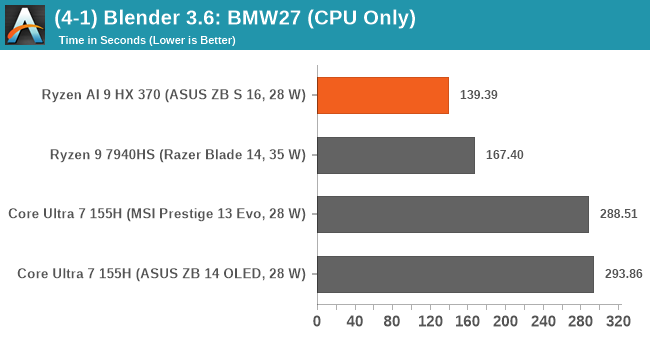
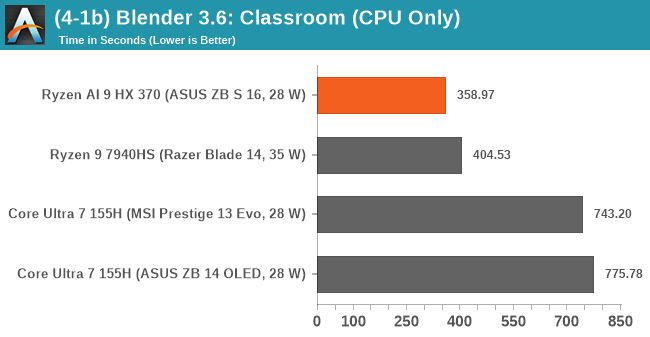
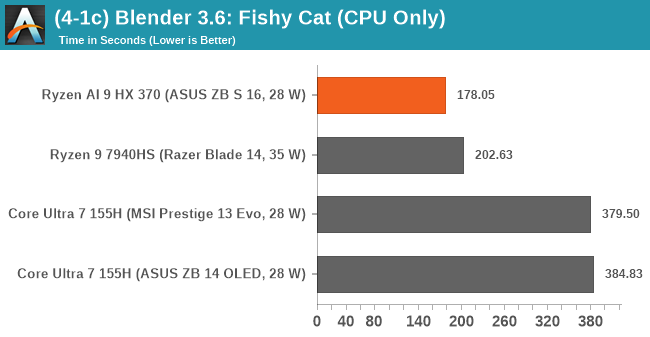
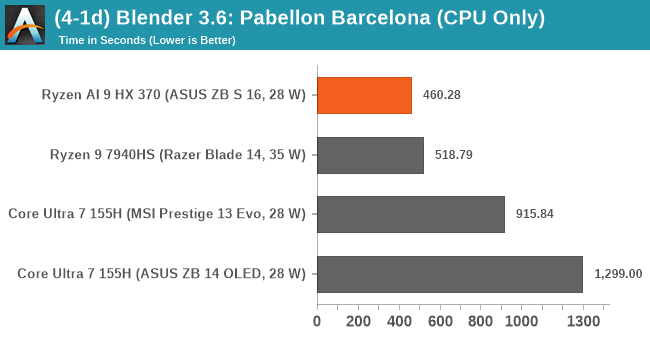
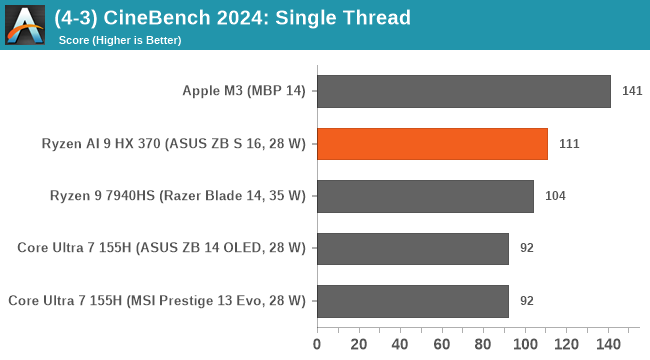
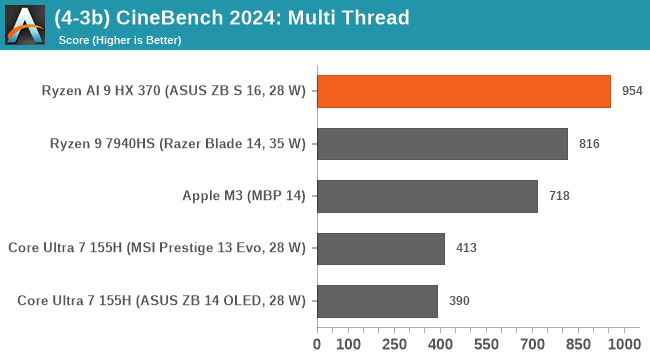
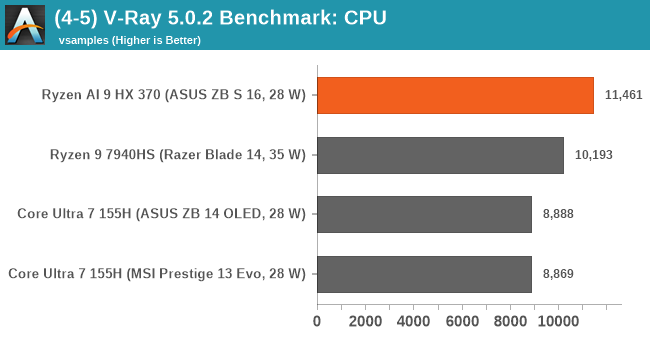
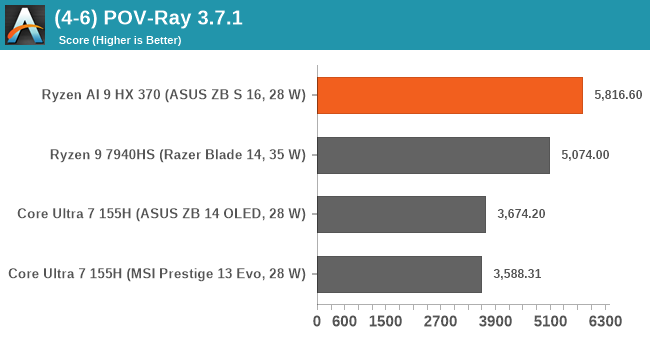
Starting off with the rendering section, the AMD Ryzen AI 9 HX 370 has finally come to the forefront with the Zen 5 and Zen 5c cores, with consistent wins in all of the multi-threaded rendering benchmarks we ran. In the Cinebench 2024 benchmark using the single-threaded test, we can see the Ryzen AI 9 HX 370 is ahead of its predecessor, the Ryzen 9 7940HS, by just under 7%; this is primarily down to the uplift to IPC performance, among other improvements from going to Zen 5 from Zen 4.
In the multi-threaded test in Cinebench 2024, the latest Strix Point with Zen 5 also shows dominance, beating the Ryzen 9 7940HS by just under 17%. It would be interesting to see a direct comparison in core count, as the Ryzen AI 9 HX 370 has four more cores, albeit four of them are full-fat Zen 5 cores, with eight compact Zen 5c cores, too. It's also worth noting that despite the Ryzen AI 9 HX 370 and the Intel Core Ultra 7 155H both having a 28 W TDP, there's no contest regarding raw firepower in rendering workloads.
Simulation
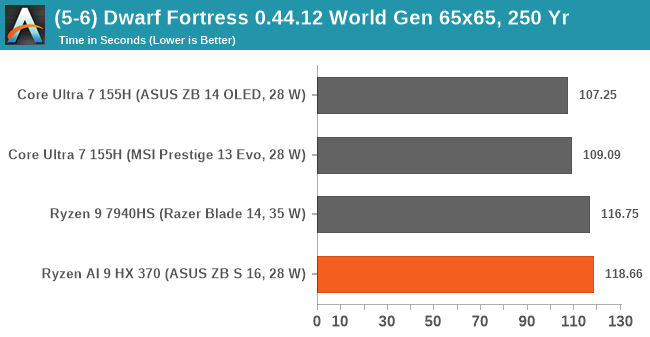
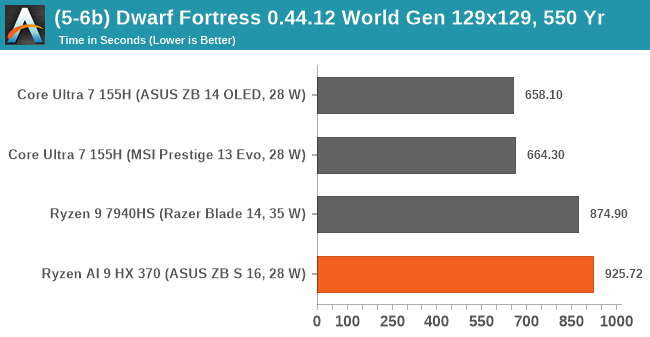
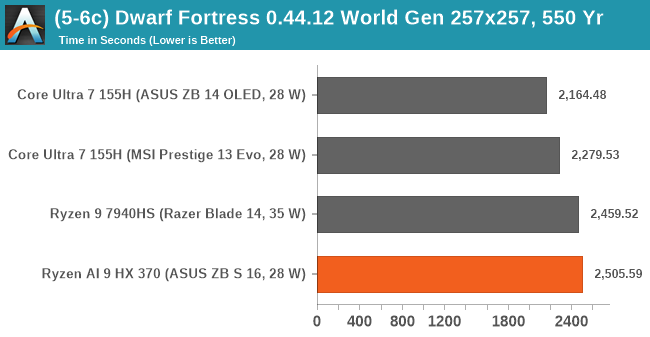
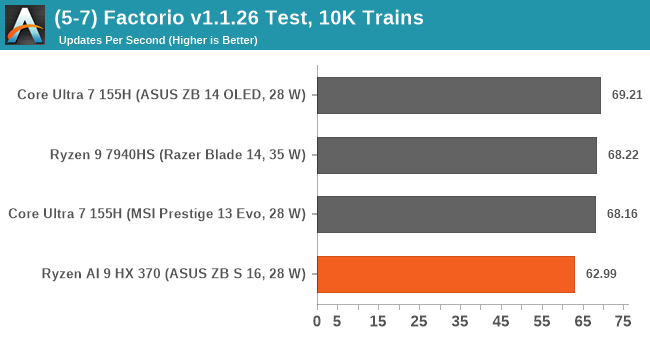
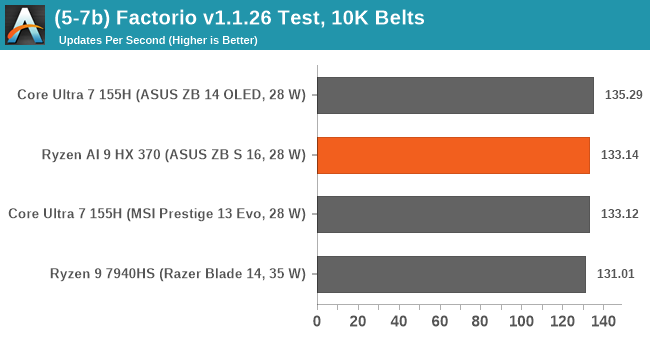
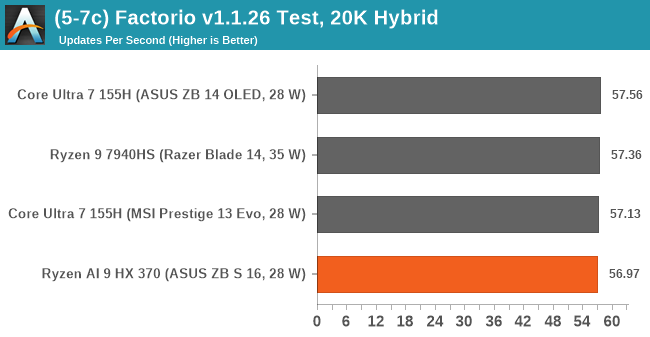
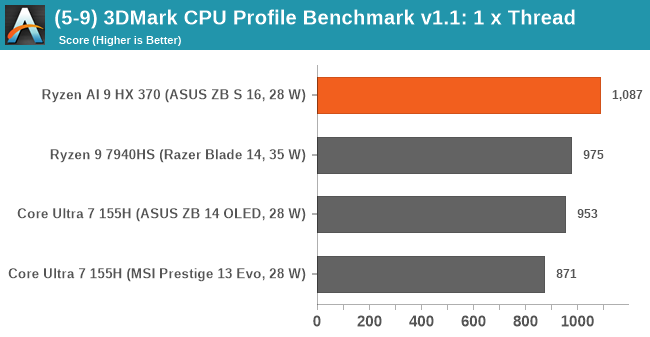
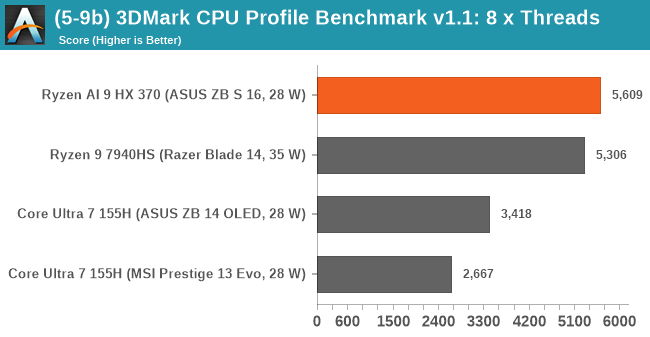
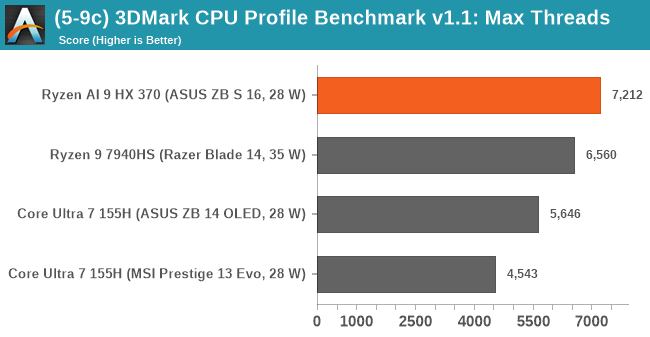
Despite winning the battle in rendering performance, we see the tables turn in both our gaming simulations, which consist of Dwarf Fortress and Factorio. In this scenario, Intel takes the lead, although, in the 3D Mark CPU Benchmark, the Ryzen AI 9 HX 370 comes out on top with 1 x thread, 8 x threads, and the maximum number of threads available from the chip.
Originally published at https://www.anandtech.com/show/21485/the-amd-ryzen-ai-hx-370-review (Wayback Machine).