
Micro-ATX Cases - Shoebox Showdown
- Posted in
- Cases/Cooling/PSUs
Antec Aria - Interior Cont'd
As with many SFF cases, the drive cage has to be prepared before being put back into the rest of the system. One hard drive fits underneath the optical cage, and two others can hang vertically from either side, only mounted with three screws on one side of the drive. Acoustic absorbing material is in between the vertical drives and the metal, and soft grommets are provided for the single horizontal 3.5" bay.
We had to remove the custom tray cover of our MSI CD burner, but the drive's bezel had to remain so the stealthy cover on the front of the case operated the eject button properly. Getting an SATA (or IDE) cable into the optical drive was a little tricky, but we managed thanks to the ability to hold the whole cage at a half-way open position.
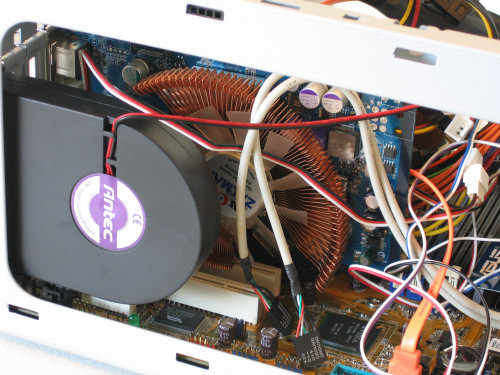
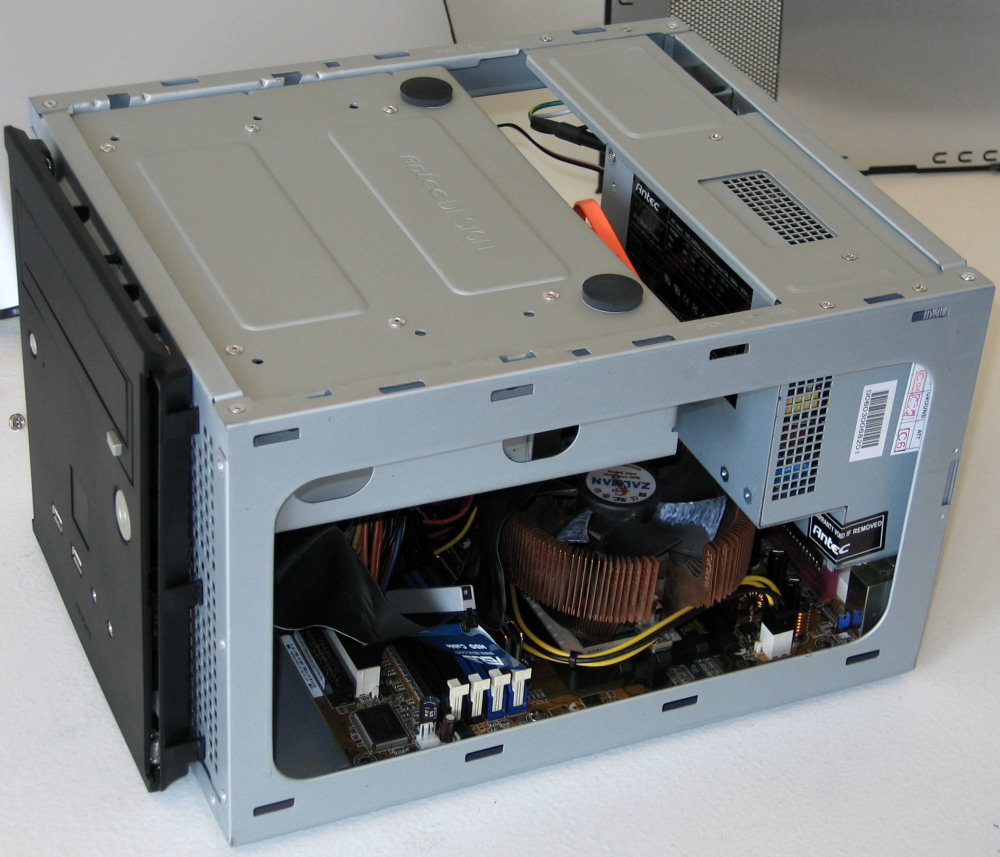
A few more shots of the completed build give a good idea of how cramped things can get in a miniscule case, even if it is well designed.
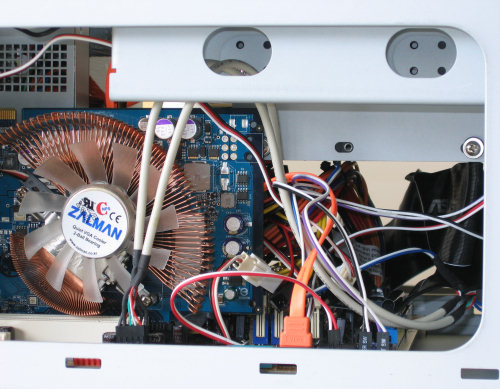
The right side looks quite a bit better, giving a glimmer of hope to people hoping to put more elaborate cooling systems inside the Aria, as long as the vertical hard drives are omitted.
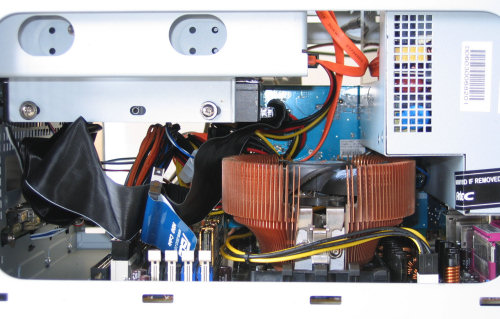
Antec includes a variable speed blower fan which we installed in the last open expansion bay to help the computer keep up with the moderately high cooling demands from our test bed.
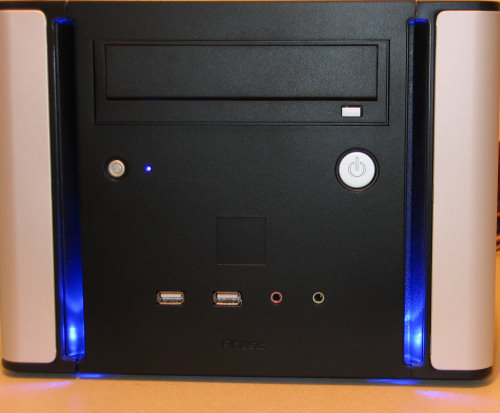
Finally, with the test bed up and running, we could capture the effects of the power and HDD activity LEDs with a slower shutter speed, and this is what we got.
In many ways, the Antec Aria reminds us a lot of the typical Shuttle SFF systems, only it's a bit wider in order to accommodate a micro-ATX motherboard. The final price plus motherboard is lower than what you would pay for an SFF case, and you will be able to upgrade the motherboard in the future. While the case does offer more in the way of expansion options than most SFFs, we would be very hesitant to max out this particular design with three hard drives and four expansion cards. In a more moderate configuration, however, the case works well overall.
As with many SFF cases, the drive cage has to be prepared before being put back into the rest of the system. One hard drive fits underneath the optical cage, and two others can hang vertically from either side, only mounted with three screws on one side of the drive. Acoustic absorbing material is in between the vertical drives and the metal, and soft grommets are provided for the single horizontal 3.5" bay.
 |
| Click to enlarge |
We had to remove the custom tray cover of our MSI CD burner, but the drive's bezel had to remain so the stealthy cover on the front of the case operated the eject button properly. Getting an SATA (or IDE) cable into the optical drive was a little tricky, but we managed thanks to the ability to hold the whole cage at a half-way open position.
 |
| Click to enlarge |
A few more shots of the completed build give a good idea of how cramped things can get in a miniscule case, even if it is well designed.
The right side looks quite a bit better, giving a glimmer of hope to people hoping to put more elaborate cooling systems inside the Aria, as long as the vertical hard drives are omitted.
Antec includes a variable speed blower fan which we installed in the last open expansion bay to help the computer keep up with the moderately high cooling demands from our test bed.
Finally, with the test bed up and running, we could capture the effects of the power and HDD activity LEDs with a slower shutter speed, and this is what we got.
In many ways, the Antec Aria reminds us a lot of the typical Shuttle SFF systems, only it's a bit wider in order to accommodate a micro-ATX motherboard. The final price plus motherboard is lower than what you would pay for an SFF case, and you will be able to upgrade the motherboard in the future. While the case does offer more in the way of expansion options than most SFFs, we would be very hesitant to max out this particular design with three hard drives and four expansion cards. In a more moderate configuration, however, the case works well overall.
Originally published at https://www.anandtech.com/show/2147 (Wayback Machine).