
Digital SLR Buyer's Guide
- Posted in
- Digital Camera
Entry-Level Digital SLRs
If $720 is still too rich for an interchangeable lens digital SLR there is still good news for buyers. Since 10 megapixel cameras have launched, the entry SLR is now 6 megapixels.
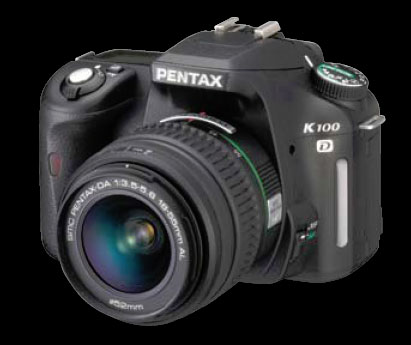
You can find the Pentax K110D with the 18-55mm lens with metal mount for around $400 for the kit after rebate. For more money you can buy the new Nikon D40 for about $600 with lens, or the Pentax K100D with body-integral anti-shake for about $510. There is even more good news in that these new low-priced entry SLR camera kits are much faster than the models they replace. In fact the Nikon and Pentax models use image processing systems similar to their 10 megapixel models. You can also find closeouts of earlier 6 megapixel models, and the savings you find will likely be substantial. Just keep in mind that the older models are often slower and have fewer features than the newer models that replaced them.
A particularly excellent buy in the entry level is the new Pentax K100D. With the Sony purchase of Minolta the entry level Maxxum 5D was discontinued and it was the only entry level SLR with body integral anti-shake. Now that Pentax has developed their own integrated ant-shake the Pentax K100D is the only entry model with built-in anti-shake that will work with any lens you can mount. Since entry SLR buyers often get just the kit lens the anti-shake really matters as it makes the most difference with slower zoom lenses like you always find included as the kit lens.
The K100D is also much faster in operation than the *ist models it replaced. Significantly, you still get 11 point autofocusing with 9 cross sensors even on the $510 K100D, ISO range to 3200 with user programmable auto ISO, and you also get a 2.5" rear LCD and top LCD like the top-line K10D. The only negative, which will be a positive for some, is that the camera uses four AA batteries instead of a rechargeable lithium-ion battery. The good news is you can find AA batteries - disposable, rechargeable, NiMH - almost anywhere, even in rural areas off the beaten track. The bad news is that the battery life with alkalines is horrible, about 100 shots in our testing. You get much better life with high-capacity rechargeable batteries, four AA or two CRV3. Users report battery life with high-capacity rechargeables that is comparable to Li-Ion with other cameras.
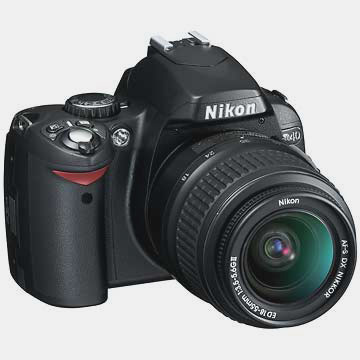
The Nikon D40 is a significant upgrade to the D50 it replaced, with a larger LCD and faster operation. However, like all the other entry SLRs you get a dimmer penta mirror instead of a brighter pentaprism viewfinder. All of the Canon Rebel cameras have used penta-mirrors instead and they have improved over time. Casual users will not likely notice the dimmer viewfinder. The D40 has just three autofocus sensors, but they are spread wide for broad AF coverage. There is no means to auto-clean the sensor and anti-shake requires dedicated and expensive lenses - a stretch for most budget buyers. If you already have Nikon autofocus lenses, however, the D40 is an easy recommendation. It is a fast and capable entry SLR.
With 10 megapixels at the top, two models at 8 megapixel resolution are also selling in the $600 range with a kit lens. The Canon Rebel XT is still an excellent performer and a real bargain at the new $600 price. It is a bit slower than the XTi, but it still provides an excellent 7-point autofocus module. The Canon 8 megapixel CMOS sensor is still the lowest noise sensor in the market, so photo quality is excellent.

Olympus E500
Pentax K100D/K110D
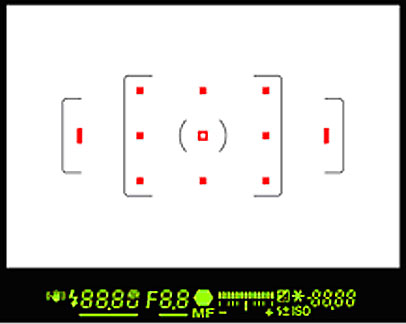
The Olympus E-500 is an 8 megapixel SLR that also sells for about $600 with the normal kit lens. The viewfinder is one of the worst we have seen - mainly because of the difficulty of building a viewfinder for the 2X multiplier of the 4/3 Olympus lens system. Olympus has also placed a pretty low priority on autofocusing sophistication. As you can see above, the 3-sensor E-500 autofocus looks rather crude beside the 11-point Pentax SAFOX AF available at the same selling price. The photo quality of the Olympus, however, is excellent as long as you don't need high ISO, and Olympus pioneered auto sensor cleaning. If you decide to go Olympus be sure to buy the 2-lens kit at just $100 more. It is an excellent value you will fully appreciate after shopping for other 4/3 mount lenses. They are generally hard to find and most are very expensive compared to offerings from the competition.
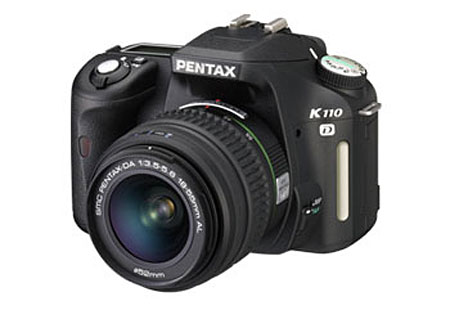
There is only one model, and a rebadged sister, available at the very bottom of the entry level market. For around $400 (after the current Pentax $50 rebate) you can buy a Pentax K110D with an 18-55mm lens (or the sister Samsung GX-1L without a rebate). It would be a mistake, however, to dismiss the K110D as basic since it is the exact same camera as the K100D without the anti-shake capabilities. That means you still get the fast 11-pont Pentax AF module and the speedier processing engine used in the K100D. The kit lens is also better build quality than you will get anywhere else for an entry SLR.
Recommendations
Pentax has some really impressive offerings at the bottom of the entry level market. The K100D is the only entry level Digital SLR with body-integral anti-shake. Since the standard kit lens is a slow zoom lens with entry level cameras, anti-shake means you can shoot sharp pictures in lower light with the Pentax K100D. The anti-shake ability also does double-duty for auto-sensor cleaning.
If you already have Canon lenses or prefer the Canon system, the Canon XT is an excellent choice at the new kit price of $600. It was a great buy at the old $900 price, and an even better buy at 2/3 the original price.
The absolute best buy in entry level digital SLRs is the Pentax K110D with the kit lens. For $400 after the current $50 rebate you get a full-featured SLR with a fast processing engine, accurate 11-point autofocusing, and even user-programmable Auto ISO to 3200. It is the exact same camera as the K100D - only the anti-shake feature is missing. The kit lens is also the only entry kit lens with a preferred metal lens mount.
If $720 is still too rich for an interchangeable lens digital SLR there is still good news for buyers. Since 10 megapixel cameras have launched, the entry SLR is now 6 megapixels.
You can find the Pentax K110D with the 18-55mm lens with metal mount for around $400 for the kit after rebate. For more money you can buy the new Nikon D40 for about $600 with lens, or the Pentax K100D with body-integral anti-shake for about $510. There is even more good news in that these new low-priced entry SLR camera kits are much faster than the models they replace. In fact the Nikon and Pentax models use image processing systems similar to their 10 megapixel models. You can also find closeouts of earlier 6 megapixel models, and the savings you find will likely be substantial. Just keep in mind that the older models are often slower and have fewer features than the newer models that replaced them.
A particularly excellent buy in the entry level is the new Pentax K100D. With the Sony purchase of Minolta the entry level Maxxum 5D was discontinued and it was the only entry level SLR with body integral anti-shake. Now that Pentax has developed their own integrated ant-shake the Pentax K100D is the only entry model with built-in anti-shake that will work with any lens you can mount. Since entry SLR buyers often get just the kit lens the anti-shake really matters as it makes the most difference with slower zoom lenses like you always find included as the kit lens.
The K100D is also much faster in operation than the *ist models it replaced. Significantly, you still get 11 point autofocusing with 9 cross sensors even on the $510 K100D, ISO range to 3200 with user programmable auto ISO, and you also get a 2.5" rear LCD and top LCD like the top-line K10D. The only negative, which will be a positive for some, is that the camera uses four AA batteries instead of a rechargeable lithium-ion battery. The good news is you can find AA batteries - disposable, rechargeable, NiMH - almost anywhere, even in rural areas off the beaten track. The bad news is that the battery life with alkalines is horrible, about 100 shots in our testing. You get much better life with high-capacity rechargeable batteries, four AA or two CRV3. Users report battery life with high-capacity rechargeables that is comparable to Li-Ion with other cameras.
The Nikon D40 is a significant upgrade to the D50 it replaced, with a larger LCD and faster operation. However, like all the other entry SLRs you get a dimmer penta mirror instead of a brighter pentaprism viewfinder. All of the Canon Rebel cameras have used penta-mirrors instead and they have improved over time. Casual users will not likely notice the dimmer viewfinder. The D40 has just three autofocus sensors, but they are spread wide for broad AF coverage. There is no means to auto-clean the sensor and anti-shake requires dedicated and expensive lenses - a stretch for most budget buyers. If you already have Nikon autofocus lenses, however, the D40 is an easy recommendation. It is a fast and capable entry SLR.
With 10 megapixels at the top, two models at 8 megapixel resolution are also selling in the $600 range with a kit lens. The Canon Rebel XT is still an excellent performer and a real bargain at the new $600 price. It is a bit slower than the XTi, but it still provides an excellent 7-point autofocus module. The Canon 8 megapixel CMOS sensor is still the lowest noise sensor in the market, so photo quality is excellent.
Olympus E500
Pentax K100D/K110D
The Olympus E-500 is an 8 megapixel SLR that also sells for about $600 with the normal kit lens. The viewfinder is one of the worst we have seen - mainly because of the difficulty of building a viewfinder for the 2X multiplier of the 4/3 Olympus lens system. Olympus has also placed a pretty low priority on autofocusing sophistication. As you can see above, the 3-sensor E-500 autofocus looks rather crude beside the 11-point Pentax SAFOX AF available at the same selling price. The photo quality of the Olympus, however, is excellent as long as you don't need high ISO, and Olympus pioneered auto sensor cleaning. If you decide to go Olympus be sure to buy the 2-lens kit at just $100 more. It is an excellent value you will fully appreciate after shopping for other 4/3 mount lenses. They are generally hard to find and most are very expensive compared to offerings from the competition.
There is only one model, and a rebadged sister, available at the very bottom of the entry level market. For around $400 (after the current Pentax $50 rebate) you can buy a Pentax K110D with an 18-55mm lens (or the sister Samsung GX-1L without a rebate). It would be a mistake, however, to dismiss the K110D as basic since it is the exact same camera as the K100D without the anti-shake capabilities. That means you still get the fast 11-pont Pentax AF module and the speedier processing engine used in the K100D. The kit lens is also better build quality than you will get anywhere else for an entry SLR.
Recommendations
Pentax has some really impressive offerings at the bottom of the entry level market. The K100D is the only entry level Digital SLR with body-integral anti-shake. Since the standard kit lens is a slow zoom lens with entry level cameras, anti-shake means you can shoot sharp pictures in lower light with the Pentax K100D. The anti-shake ability also does double-duty for auto-sensor cleaning.
If you already have Canon lenses or prefer the Canon system, the Canon XT is an excellent choice at the new kit price of $600. It was a great buy at the old $900 price, and an even better buy at 2/3 the original price.
The absolute best buy in entry level digital SLRs is the Pentax K110D with the kit lens. For $400 after the current $50 rebate you get a full-featured SLR with a fast processing engine, accurate 11-point autofocusing, and even user-programmable Auto ISO to 3200. It is the exact same camera as the K100D - only the anti-shake feature is missing. The kit lens is also the only entry kit lens with a preferred metal lens mount.
Originally published at https://www.anandtech.com/show/2142 (Wayback Machine).