
Digital SLR Buyer's Guide
- Posted in
- Digital Camera
10 Megapixel SLRs
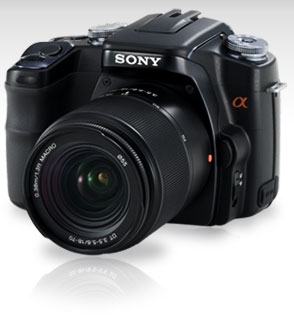
The Sony A100 pioneered the 10 megapixel market when it was introduced this past summer. Sony acquired Minolta and based the new A100 on the entry level Minolta Maxxum 5D.
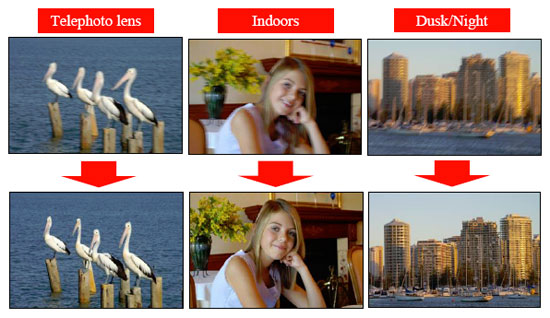
Sony continued the then-unique in-camera image stabilization pioneered by Minolta, which allowed any lens mounted on the camera to take sharper pictures at slower shutter speeds. Olympus had pioneered a popular feature that placed the sensor behind an antistatic protector, and that shook any stray dust off the sensor when the camera was turned on or shut down. Sony added a similar feature to their revision of the Maxxum digital SLR.
Sony inherited and continued the Minolta Maxxum autofocus lens mount, which meant almost any Minolta Maxxum lens ever made would work perfectly on the new Sony SLR camera. The A100 shocked the digital SLR market, since it brought the 10 megapixel resolution to market at a 6 megapixel price. This was also reflected in the selection of the Sony A100 as "Camera of the Year 2006" by the largest photo specialty magazine.
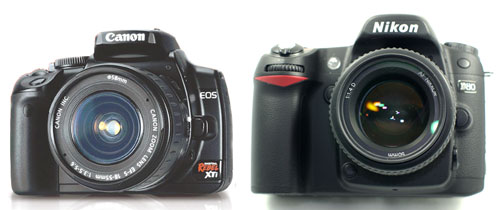
Canon and Nikon dominate the serious photography market, so it was no surprise that both followed in Sony's footsteps a couple of months later with their own 10 megapixel models. The Nikon D80 borrowed the processing engine, fast focusing module, and 10 megapixel sensor from their successful but expensive D200 model. All of the current 10 megapixel SLR cameras - except Canon - are based on the Sony 10 megapixel sensor. Nikon would point out, however, that the sensor interface and image processing "hardware" are their own design, and that the interface and processing account for much of how the sensor actually performs.
Canon basically increased the resolution of their CMOS sensor used in the 8 megapixel Rebel XT to 10 megapixels, and dubbed the revised camera the Canon Rebel XTi. They did incorporate the improved image processing guts of their semi-PRO 30D and finally added their own dust removal system - much like the one pioneered by Olympus. Canon also added dust removal capabilities to their bundled image-editing software.
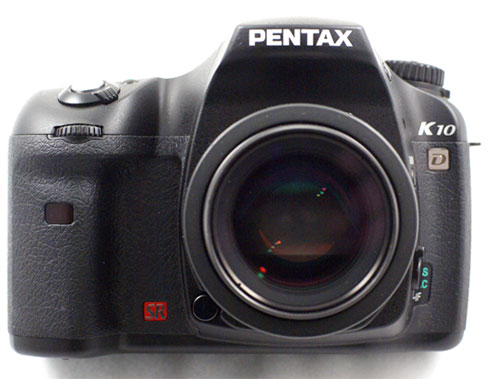
The latest 10 megapixel SLR is the long-awaited Pentax K10D. Pentax took longest to get their 10 megapixel Sony sensor model to market, but the time certainly was not wasted. In many ways the Pentax is the most professional and full-featured of the 10 megapixel choices, since it incorporates special sealing for dust and moisture protection, similar to the sealing of the top professional SLR models. Pentax also refined the "in-camera" anti-shake pioneered by Minolta/Sony by adding permanent magnets in both horizontal and vertical planes. This allows rotation in the diagonal as well as horizontal/vertical planes and is claimed to extend low-light shooting up to four full f-stops.
Pentax also brought over their innovative hyper-program feature from top Pentax cameras of the past. This allows users to keep the camera on program and adjust either aperture or shutter speed to what they want in a shot. The program compensates by adjusting the other program variables automatically. Pentax added "ISO Priority" to the typical SLR offerings of full program (green zone), program, aperture-priority, shutter-priority, and full manual. This seemed a natural extension of one of the Digital SLR's best features - built-in film (Sensor) with very wide sensitivity (ISO). To top it off Pentax made sure the new K10D, and lower-priced K100D and K110D, would be fully compatible with any K-mount lens ever produced, including excellent "focus-assist" features for non AF lenses and the ability to manually dial in info from very old lenses that can still benefit from Pentax lens stabilization.
These four cameras are loaded with features and represent the current crop of 10 megapixel offerings. Samsung has also announced they will be marketing a 10 megapixel model just after the holidays which is to be called the Samsung GX-10. The new Samsung model is basically a relabeled Pentax with the same feature set.
The Sony A100 pioneered the 10 megapixel market when it was introduced this past summer. Sony acquired Minolta and based the new A100 on the entry level Minolta Maxxum 5D.
Sony continued the then-unique in-camera image stabilization pioneered by Minolta, which allowed any lens mounted on the camera to take sharper pictures at slower shutter speeds. Olympus had pioneered a popular feature that placed the sensor behind an antistatic protector, and that shook any stray dust off the sensor when the camera was turned on or shut down. Sony added a similar feature to their revision of the Maxxum digital SLR.
Sony inherited and continued the Minolta Maxxum autofocus lens mount, which meant almost any Minolta Maxxum lens ever made would work perfectly on the new Sony SLR camera. The A100 shocked the digital SLR market, since it brought the 10 megapixel resolution to market at a 6 megapixel price. This was also reflected in the selection of the Sony A100 as "Camera of the Year 2006" by the largest photo specialty magazine.
Canon and Nikon dominate the serious photography market, so it was no surprise that both followed in Sony's footsteps a couple of months later with their own 10 megapixel models. The Nikon D80 borrowed the processing engine, fast focusing module, and 10 megapixel sensor from their successful but expensive D200 model. All of the current 10 megapixel SLR cameras - except Canon - are based on the Sony 10 megapixel sensor. Nikon would point out, however, that the sensor interface and image processing "hardware" are their own design, and that the interface and processing account for much of how the sensor actually performs.
Canon basically increased the resolution of their CMOS sensor used in the 8 megapixel Rebel XT to 10 megapixels, and dubbed the revised camera the Canon Rebel XTi. They did incorporate the improved image processing guts of their semi-PRO 30D and finally added their own dust removal system - much like the one pioneered by Olympus. Canon also added dust removal capabilities to their bundled image-editing software.
The latest 10 megapixel SLR is the long-awaited Pentax K10D. Pentax took longest to get their 10 megapixel Sony sensor model to market, but the time certainly was not wasted. In many ways the Pentax is the most professional and full-featured of the 10 megapixel choices, since it incorporates special sealing for dust and moisture protection, similar to the sealing of the top professional SLR models. Pentax also refined the "in-camera" anti-shake pioneered by Minolta/Sony by adding permanent magnets in both horizontal and vertical planes. This allows rotation in the diagonal as well as horizontal/vertical planes and is claimed to extend low-light shooting up to four full f-stops.
Pentax also brought over their innovative hyper-program feature from top Pentax cameras of the past. This allows users to keep the camera on program and adjust either aperture or shutter speed to what they want in a shot. The program compensates by adjusting the other program variables automatically. Pentax added "ISO Priority" to the typical SLR offerings of full program (green zone), program, aperture-priority, shutter-priority, and full manual. This seemed a natural extension of one of the Digital SLR's best features - built-in film (Sensor) with very wide sensitivity (ISO). To top it off Pentax made sure the new K10D, and lower-priced K100D and K110D, would be fully compatible with any K-mount lens ever produced, including excellent "focus-assist" features for non AF lenses and the ability to manually dial in info from very old lenses that can still benefit from Pentax lens stabilization.
These four cameras are loaded with features and represent the current crop of 10 megapixel offerings. Samsung has also announced they will be marketing a 10 megapixel model just after the holidays which is to be called the Samsung GX-10. The new Samsung model is basically a relabeled Pentax with the same feature set.
Originally published at https://www.anandtech.com/show/2142 (Wayback Machine).