
GEEKOM A5 mini-PC Review: Affordable Cezanne Zen 3 at 35W
Power Consumption and Thermal Characteristics
The power consumption at the wall was measured with a 4K display being driven through the HDMI port of the system. In the graph below, we compare the idle and load power of the GEEKOM A5 with other systems evaluated before. For load power consumption, we ran the AIDA64 System Stability Test with various stress components, as well as our custom stress test with Prime95 / Furmark, and noted the peak as well as idling power consumption at the wall.
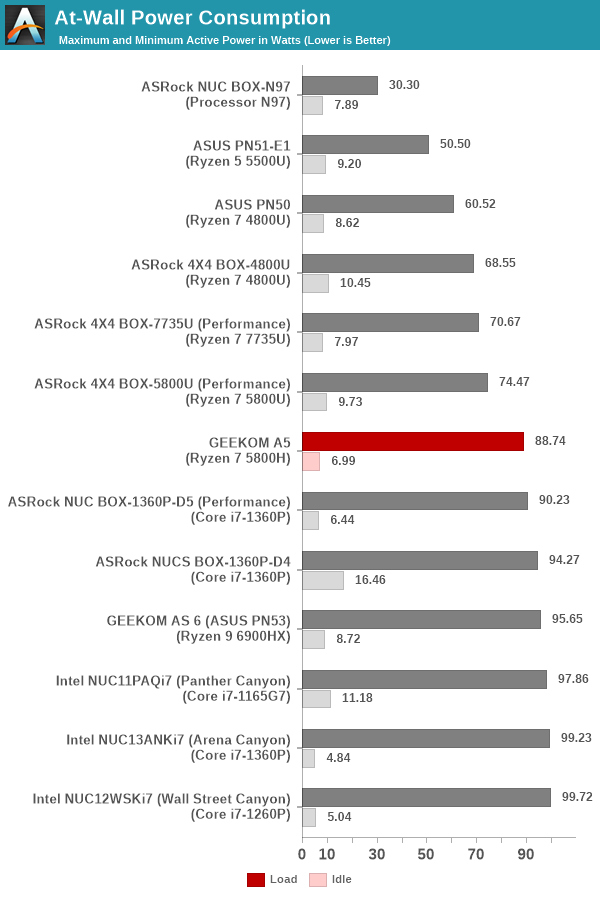
The numbers are consistent with the TDP and configured power limit values for the processors in the systems, and do not come as any surprise. However, it must be noted that the A5 is very power efficient. In fact, it has the lowest idle power of any AMD-based system we have evaluated before.
Stress Testing
Our thermal stress routine is a combination of Prime95, Furmark, and Finalwire's AIDA64 System Stability Test. The following 9-step sequence is followed, starting with the system at idle:
- Start with the Prime95 stress test configured for maximum power consumption
- After 30 minutes, add Furmark GPU stress workload
- After 30 minutes, terminate the Prime95 workload
- After 30 minutes, terminate the Furmark workload and let the system idle
- After 30 minutes of idling, start the AIDA64 System Stress Test (SST) with CPU, caches, and RAM activated
- After 30 minutes, terminate the previous AIDA64 SST and start a new one with the GPU, CPU, caches, and RAM activated
- After 30 minutes, terminate the previous AIDA64 SST and start a new one with only the GPU activated
- After 30 minutes, terminate the previous AIDA64 SST and start a new one with the CPU, GPU, caches, RAM, and SSD activated
- After 30 minutes, terminate the AIDA64 SST and let the system idle for 30 minutes
Traditionally, this test used to record the clock frequencies - however, with the increasing number of cores in modern processors and fine-grained clock control, frequency information makes the graphs cluttered and doesn't contribute much to understanding the thermal performance of the system. The focus is now on the power consumption and temperature profiles to determine if throttling is in play.
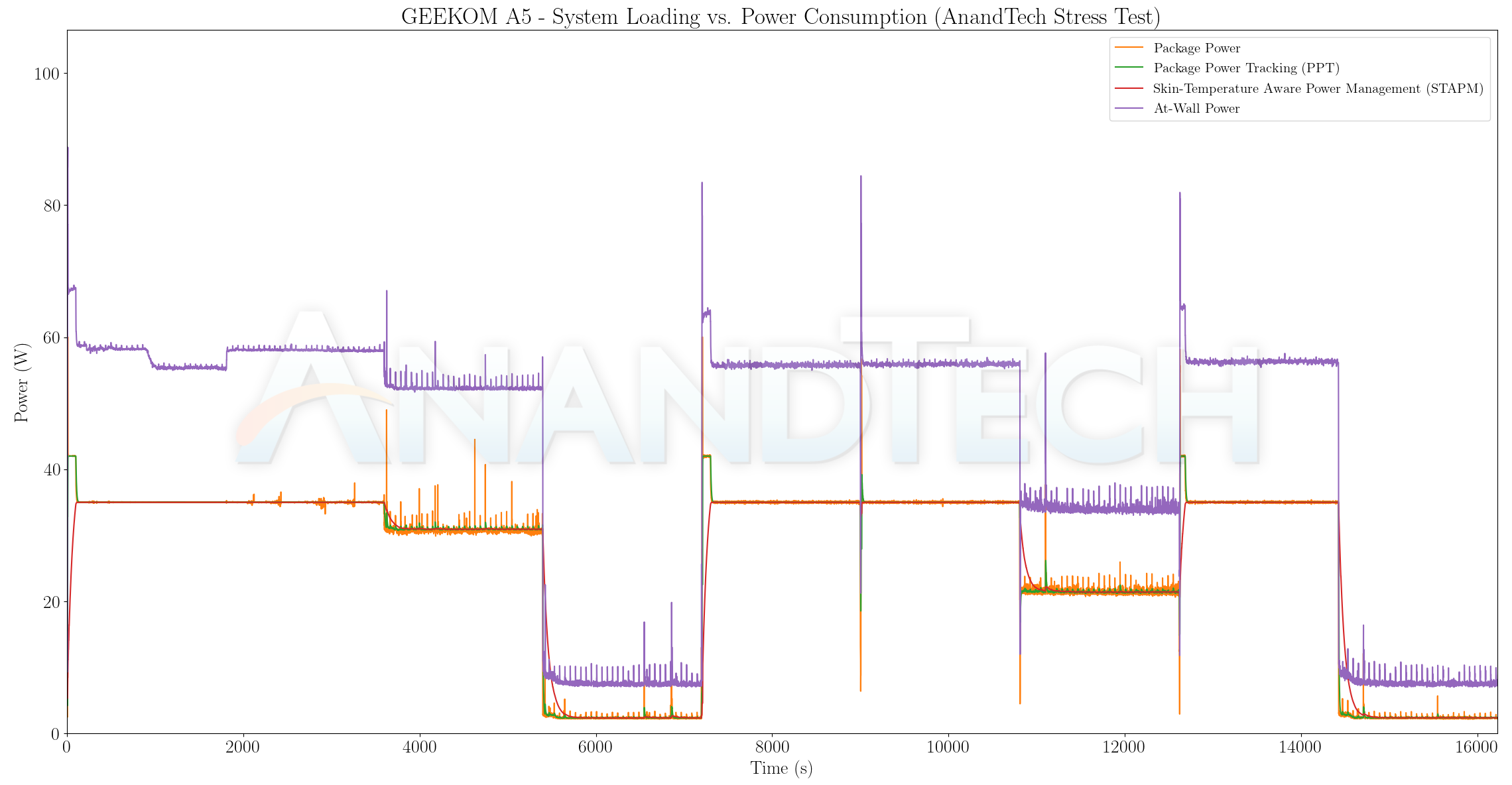
The A5's thermal solution is easily able to sustain the 35W power limit for an extended duration. There are spikes to 60W / 42W in the initial stages when coming out of idle, but those are not sustained beyond a few seconds. The at-wall power consumption peaks at around 85W, but is more around 60W under sustained stress.
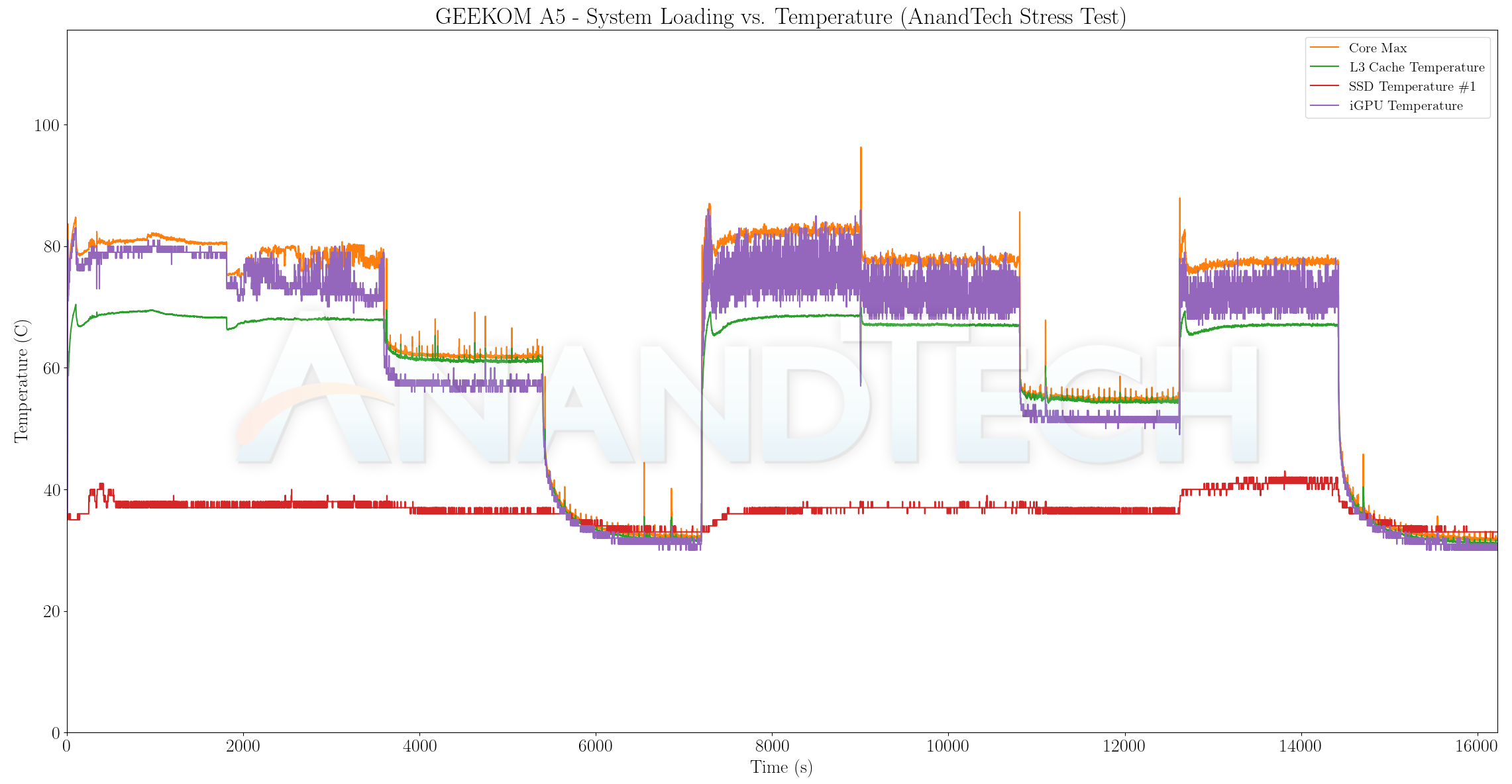
On the temperature front, the thermal solution leaves us with no cause for concern. The core temperature barely passes 85C under the worst of conditions, and the SSD temperature is also less than 50C even under disk stress conditions. The cores idle around 35C.
Based on our evaluation of the thermal solutions for different small form-factor systems, it appears that this form-factor best fits a 35W or 40W TDP processor. We have seen GEEKOM previously limiting installed SoCs to 35W. The BIOS does allow modification of this number, so a 40W configuration could be an interesting solution to explore.
Originally published at https://www.anandtech.com/show/21180/geekom-a5-minipc-review-affordable-cezanne-zen-3-at-35w (Wayback Machine).