
Shuttle SN27P2 SFF: AM2 gets the Tiny Treatment
- Posted in
- Systems
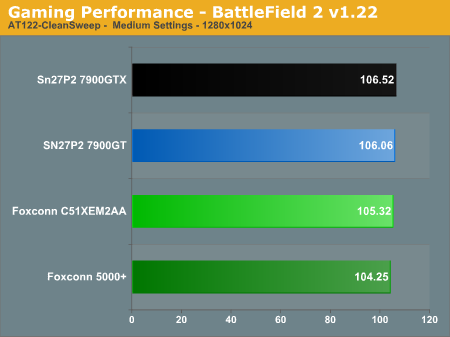
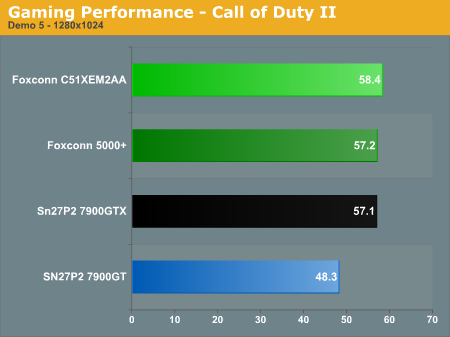
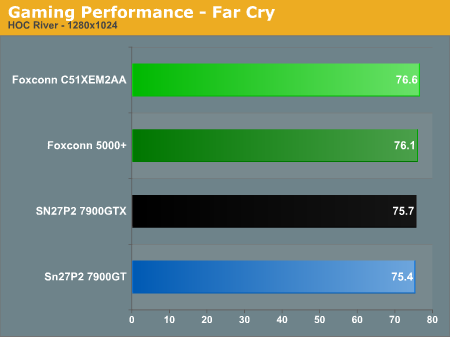
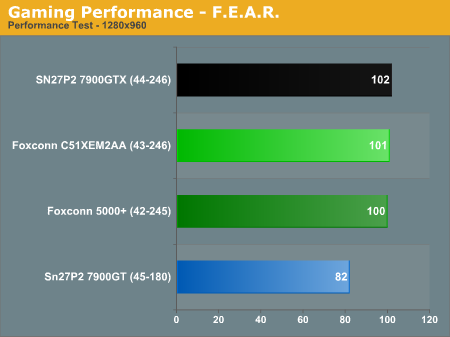
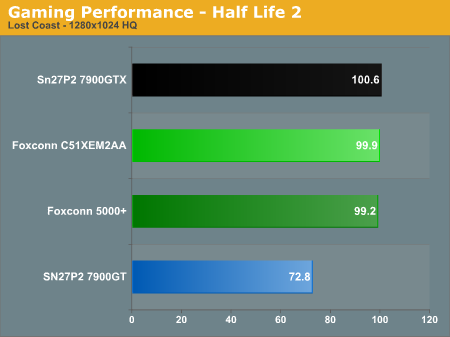
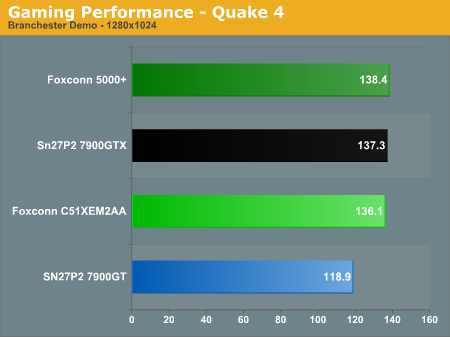
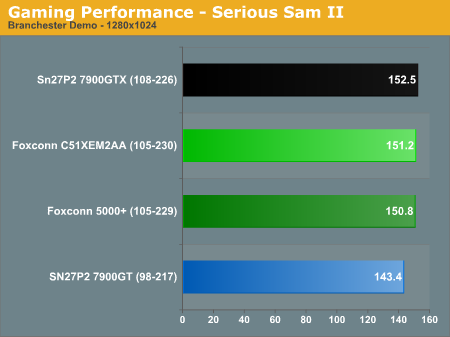
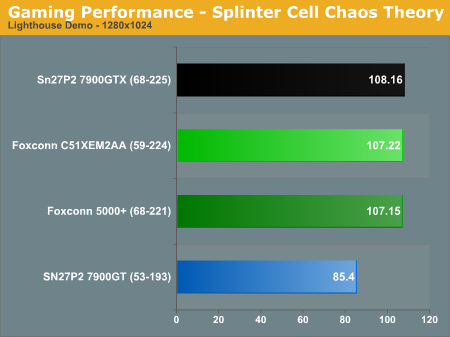
We've run all of our gaming benchmarks in both normal (1280x1024/1280x960 without antialiasing or anisotropic filtering) and high quality modes (1600x1200 with 4xAA/8xAF). We have not included results from SLI systems, because for this form factor you really can't match the performance of a top SLI/CrossFire configuration. At the very least, you would need to upgrade to a micro ATX motherboard and case so that you have the option of running to dual slot GPUs. In general, we consider most of these gaming benchmarks as more of a sanity check for SFF systems; i.e., are you really willing to give up gaming performance in order to go with a smaller case? Hard-core gamers would probably prefer a larger system in most instances, due to the added expansion options, but a lot of people would be happy with even 7600 GT performance levels.
Standard Quality
High Quality
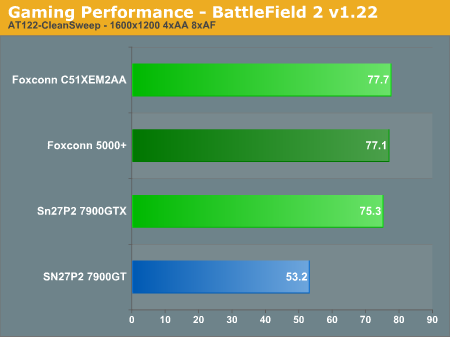
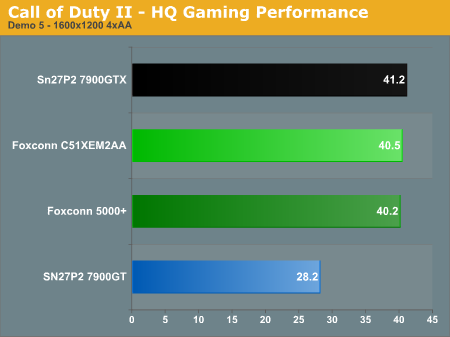
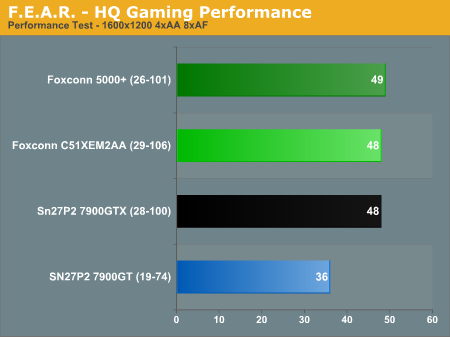
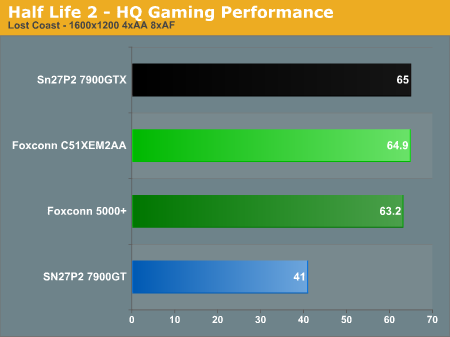
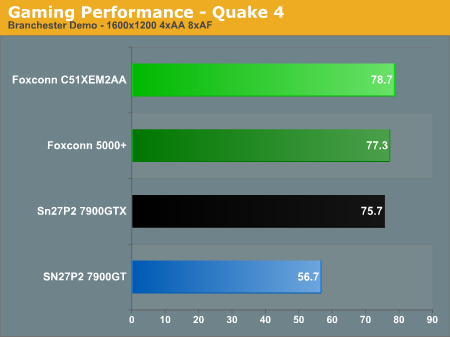
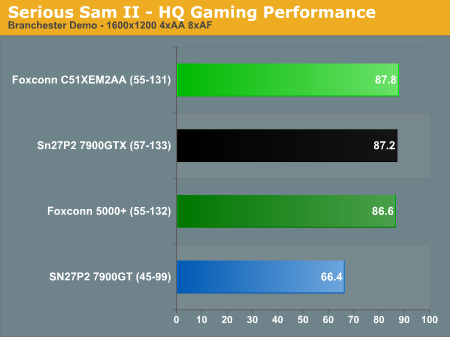
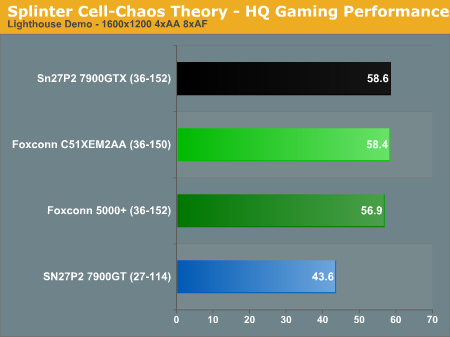
It's not too surprising that the 7900 GT comes in at the bottom of the pack in nearly every benchmark. There are a few games, however -- especially at lower detail levels -- where the CPU is still the primary bottleneck. The particular level that we benchmark in Far Cry is an example of a CPU limited game. Other games like F.E.A.R. are the exact opposite, depending almost entirely on a fast graphics subsystem to get maximum performance. Provided you can live with single GPU performance (and future GPUs will improve performance without requiring multiple cards or slots), the SN27P2 is more than capable of functioning as a moderate gaming platform. It's also far easier to tote it around to LAN parties compared to a large ATX case.
We won't bother with the audio, networking, USB, or FireWire charts, as there is nothing really noteworthy in any of them. The ALC882 audio codec performs just as well in the SN27P2 as it does on ATX motherboards, which is to say that an X-Fi card is still going to be better overall, particularly for gaming. Gigabit networking worked without a hitch, as did FireWire and USB peripherals. We used the system to record quite a few World Cup Football matches via the FireWire port, coming through an HDTV enabled cable set-top box. (Such a configuration may not be as convenient as using a TV tuner card, but for occasional TV recordings it is sufficient for my needs.) Playback of HD content was definitely better on the SN27P2 than on something like the AOpen MiniPC.
Standard Quality
High Quality
It's not too surprising that the 7900 GT comes in at the bottom of the pack in nearly every benchmark. There are a few games, however -- especially at lower detail levels -- where the CPU is still the primary bottleneck. The particular level that we benchmark in Far Cry is an example of a CPU limited game. Other games like F.E.A.R. are the exact opposite, depending almost entirely on a fast graphics subsystem to get maximum performance. Provided you can live with single GPU performance (and future GPUs will improve performance without requiring multiple cards or slots), the SN27P2 is more than capable of functioning as a moderate gaming platform. It's also far easier to tote it around to LAN parties compared to a large ATX case.
We won't bother with the audio, networking, USB, or FireWire charts, as there is nothing really noteworthy in any of them. The ALC882 audio codec performs just as well in the SN27P2 as it does on ATX motherboards, which is to say that an X-Fi card is still going to be better overall, particularly for gaming. Gigabit networking worked without a hitch, as did FireWire and USB peripherals. We used the system to record quite a few World Cup Football matches via the FireWire port, coming through an HDTV enabled cable set-top box. (Such a configuration may not be as convenient as using a TV tuner card, but for occasional TV recordings it is sufficient for my needs.) Playback of HD content was definitely better on the SN27P2 than on something like the AOpen MiniPC.
Originally published at https://www.anandtech.com/show/2038 (Wayback Machine).