
DFI CFX3200-DR: ATI RD580 Tweak Attack
- Posted in
- Motherboards
Audio Performance
Audio testing used the latest version 2.2 of the Rightmark 3D Sound CPU utilization test. This benchmark measures the overhead or CPU utilization required by a codec or hardware audio chip. Versions earlier than 2.2 would not work properly on the RD580 chipset based A8R32-MVP.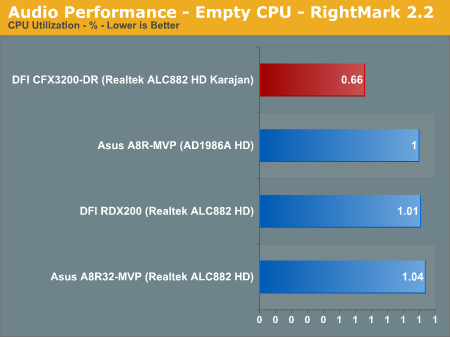
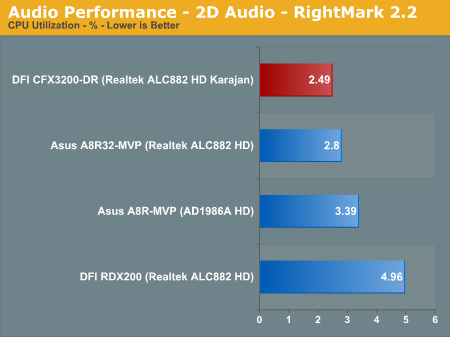
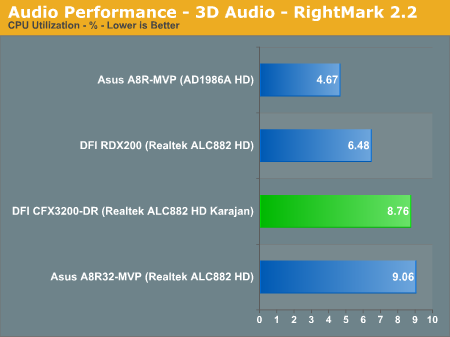
The High Definition audio codecs have generally shown lower CPU utilization in audio benchmarking than earlier AC'97 audio solutions. The Empty CPU and 2D Audio both showed extremely low utilization scores on the DFI, with values of less than 1% in Empty CPU and less than 3% in 2D. However, 3D audio on the Karajan module with the Realtek ALC882 was around 9% - much lower than the 30 to 40% we have seen in the past but still enough to steal a few frames-per-second from games. The most demanding 3D+EAX test showed even lower CPU utilization at 8.48%. In HD audio the Karajan module does not appear to lower CPU utilization compared to the on-board ALC882 used on competing boards.
Realtek has been very consistent in recent months in releasing regular updates to their HD audio drivers, and we suspect that trend will continue with ATI and Intel both firmly committed to HD and NVIDIA also introducing hew HD solutions. Each new Realtek update has lowered CPU utilization and we hope that will continue.
ATI chipset motherboards have the necessary hooks to deliver Azalia High Definition audio. Those who have been complaining about the poor AC'97 audio present on most AMD boards should be very pleased to find Azalia HD on the ATI chipset boards. The nForce4 family does not offer the necessary chipset hooks to support HD Azalia audio on their top Athlon 64 chipsets. However, recent introductions by NVIDIA have included the HD audio option and we expect future NVIDIA chipsets to offer this feature. We also expect upcoming NVIDIA high-end chipsets will soon be supporting HD audio.
Originally published at https://www.anandtech.com/show/2002 (Wayback Machine).